
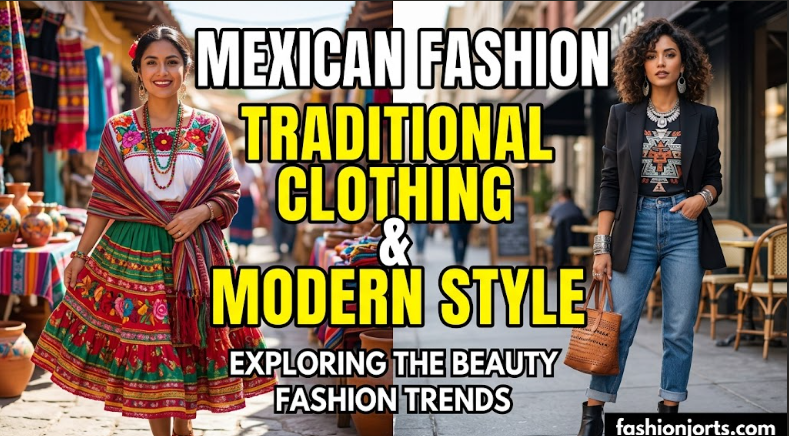
Mexican fashion is difficult to capture with a single image. The country’s clothing traditions change from one region to another, shaped by local communities, climate, available materials, craftsmanship, and generations of cultural exchange. Bright embroidery may be the detail outsiders notice first, but the story behind the clothing goes much deeper than color. Traditional garments remain an important part of that story, while contemporary designers and everyday dress show a very different side of Mexico. Understanding both helps separate genuine cultural traditions from the simplified “Mexican look” often seen in costumes and mass-produced clothing.
The History and Origins of Mexican Fashion
Clothing in Mexico has roots stretching back to the civilizations that lived in the region before Spanish colonization. Indigenous communities developed methods for spinning fibers, weaving fabric, creating dyes, and decorating garments long before European clothing arrived. Colonial rule introduced different materials and European approaches to dress. Over time, these influences mixed with existing practices rather than producing one uniform style. That history is still visible in garments that combine older forms of weaving with techniques and materials adopted in later centuries. Mexico’s size and cultural diversity also prevented clothing from developing in exactly the same way everywhere. A garment associated with southern Mexico may have little in common with traditional clothing from a northern state. This regional variation remains one of the defining characteristics of Mexican dress.
Traditional Mexican Clothing and Its Cultural Meaning
Traditional clothing can communicate where a garment was made, how it was intended to be worn, and sometimes the community connected with it. Details that appear purely decorative to an unfamiliar viewer may have a local history or meaning. It is therefore more accurate to talk about Mexican clothing traditions in the plural. Huipiles, shawls, skirts, blouses, suits, and woven outer garments belong to different histories. Several pieces have become particularly recognizable beyond Mexico.
The Huipil
The huipil is one of the best-known garments associated with Indigenous women in Mexico. Its basic construction often involves rectangular pieces of woven fabric joined together to create a loose-fitting blouse or dress. What makes the garment distinctive is the enormous variety between communities. Some versions feature bold geometric forms, while others use flowers, animals, or combinations of woven and embroidered decoration. Length, fabric, neckline, and color can also change considerably. A handmade huipil shouldn’t be viewed simply as a colorful blouse. The technique and design can reflect knowledge passed between generations. Looking at its place of origin is often essential to understanding the garment properly.
The Rebozo
A rebozo is a long shawl that combines appearance with everyday usefulness. Women have traditionally worn it around the shoulders or head, while it can also be used to carry belongings or young children. Rebozos range from relatively simple everyday pieces to highly detailed handmade textiles. Weaving, dyeing, fringe work, and choice of fiber can give pieces from different areas noticeably different appearances. Its versatility has helped the rebozo remain recognizable even as everyday clothing has changed. Contemporary outfits can incorporate one without reproducing an entire traditional ensemble.
The Charro Suit
The charro suit presents another side of Mexican dress. Connected historically with horsemen, it typically includes fitted trousers, a short jacket, a shirt, and decorative details. A broad-brimmed sombrero is commonly associated with the complete outfit. Charro clothing later became strongly connected with mariachi performance, which helped make its silhouette internationally recognizable. Yet the formal garment is considerably more structured and specific than the inexpensive sombrero-and-poncho image sometimes marketed as Mexican clothing abroad. That difference is worth recognizing. Traditional dress is connected with real communities and practices, while costumes often combine unrelated cultural symbols for instant recognition.
Traditional Mexican Skirts and Blouses
Embroidered blouses and long skirts appear in numerous regional clothing traditions. Their appearance, however, changes dramatically depending on location. Some blouses place colorful floral embroidery around the neckline and chest. Others rely more heavily on woven geometric forms or restrained decoration. Skirts can be plain, patterned, gathered, layered, or paired with additional garments depending on the community and occasion. This variety makes broad descriptions risky. Two pieces sold internationally as “traditional Mexican dresses” may come from completely different cultural traditions.
Mexican Fashion Across Different Regions
Regional identity is essential to understanding clothing in Mexico. Geography, Indigenous heritage, local celebrations, and generations of textile knowledge have all contributed to distinctive forms of dress.
Oaxaca and Tehuana Clothing
Oaxaca is particularly well known for its textile traditions. Different communities within the state produce their own garments, so even “Oaxacan clothing” covers a wide range of designs. Tehuana dress is among the most recognizable. Elaborately decorated blouses and long skirts can create a striking formal appearance, especially during celebrations. The style became internationally familiar partly because Frida Kahlo frequently wore clothing associated with the region.
Chiapas and Indigenous Textiles
Chiapas has strong Indigenous weaving and embroidery traditions. Handmade garments can feature dense patterns, vivid colors, and carefully constructed decorative sections. Designs differ between communities, which makes origin more meaningful than a generic label. The technique used to produce a garment can be just as important as the finished pattern.
Yucatán and Maya Clothing
The Yucatán Peninsula offers another distinct tradition. The hipil, associated with Maya women in the region, is generally a loose white garment decorated around areas such as the neckline and lower portion. White fabric creates a strong visual contrast with colorful decoration. More elaborate versions may be worn for celebrations and special events, while simpler forms have historically served everyday purposes.
Jalisco and Charro Style
Jalisco is strongly associated with charro culture and mariachi imagery. Fitted suits with decorative trim, structured jackets, and large sombreros create a formal silhouette quite different from the flowing garments found in several southern traditions. This style has become a major visual symbol of Mexico internationally. Still, it represents a particular tradition rather than the everyday historical clothing of the entire country.
Fabrics, Embroidery, and Traditional Weaving Techniques
The beauty of many Mexican garments comes from how they are made rather than from decoration added at the end. Weaving can create the structure and visual design of a textile at the same time. Backstrap looms remain closely associated with several Indigenous weaving traditions. Their relatively simple construction allows skilled artisans to control patterns while producing fabric by hand. Other textiles rely heavily on embroidery, dyeing, brocade, fringe work, or combinations of techniques. Handmade production also explains why authentic artisan clothing can cost considerably more than factory-made imitations. A buyer isn’t paying only for fabric. The price may reflect hours of skilled labor and knowledge developed across generations.
The Influence of Frida Kahlo on Mexican Fashion
Frida Kahlo remains one of the figures most closely associated internationally with Mexican clothing. Her portraits and photographs made her distinctive way of dressing almost as recognizable as her paintings. Kahlo frequently combined Indigenous Mexican garments with jewelry, elaborate hairstyles, shawls, and pieces from different origins. Tehuana clothing became especially connected with her public image. Her wardrobe was personal rather than an attempt to represent one standard form of national dress. That distinction matters today. Kahlo helped introduce many international audiences to Mexican textiles, but she didn’t create the traditions she wore. Their histories belong to the communities that developed them long before her lifetime.
Modern Mexican Fashion and Contemporary Designers
Modern style in Mexico isn’t limited to reinterpretations of historical garments. Contemporary designers work with tailoring, casual clothing, eveningwear, streetwear, accessories, experimental silhouettes, and many other approaches. Some designers deliberately collaborate with artisans or incorporate traditional methods into contemporary pieces. Others build collections with little visible connection to historical clothing. Both approaches belong to present-day Mexican fashion. This diversity challenges the idea that clothing must contain embroidery or traditional patterns to appear authentically Mexican. A modern garment can reflect Mexican creativity without borrowing recognizable Indigenous imagery.
Cultural Appropriation and Indigenous Mexican Designs
The popularity of Indigenous-inspired patterns has also created difficult questions. A design can be visually attractive while carrying cultural meaning that isn’t obvious to an outside buyer or fashion company. Problems arise when traditional designs are copied for commercial products without meaningful recognition or participation from the communities connected with them. Removing a motif from its origin can turn cultural knowledge into anonymous decoration. Consumers can approach the issue practically. Learning where a garment was produced, identifying its maker when possible, and buying through businesses that explain how artisans are compensated can provide more context than labels such as “tribal” or “Mexican inspired.”
How to Identify Authentic Mexican Clothing
Authenticity isn’t determined by how colorful a garment looks. Extremely bright embroidery doesn’t automatically mean something was handmade or produced in Mexico. Start with information about origin. Sellers of artisan-made pieces should ideally be able to explain where an item comes from, who made it, or which technique was used. Small variations in handmade stitching and weaving can also distinguish artisan work from identical factory production. Price deserves realistic consideration as well. Hand weaving, embroidery, and detailed finishing require time. An unusually cheap item advertised as entirely handmade should encourage buyers to ask more questions about its production.
Conclusion
The best way to understand Mexican fashion is to look beyond its most familiar symbols. A huipil, rebozo, charro suit, or embroidered dress has a more specific story once its community, technique, and purpose are known. That context also changes how we shop. Handmade textiles deserve to be understood as skilled work rather than inexpensive souvenirs, particularly when their designs come from traditions maintained across generations. Modern Mexican designers are adding another chapter without erasing what came before. Some work directly with traditional craft, while others pursue entirely contemporary ideas and silhouettes. Mexican fashion continues to change because the people making and wearing it continue to change. Paying attention to origin, craftsmanship, and authorship is the simplest way to appreciate that creativity without reducing a diverse culture to a costume.