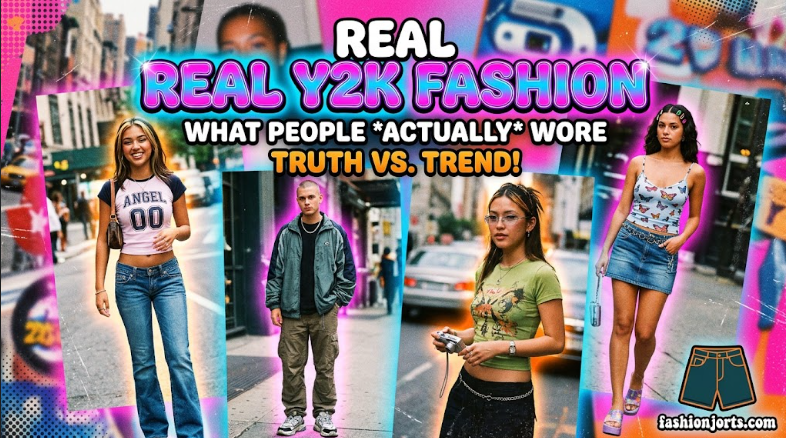
Real Y2K fashion was never as perfectly coordinated as social media makes it look today. At the turn of the millennium, people weren’t dressing according to a named aesthetic. They were combining new trends with whatever was already in their closets, which produced outfits that could be futuristic, casual, sporty, glamorous, or slightly awkward all at once. The strongest looks came from a period fascinated by the future. Low-rise denim met tiny tops, shiny materials appeared beside everyday cotton, and small bags shared space with chunky shoes and tinted sunglasses. Celebrity culture made certain pieces famous, but ordinary street style was much broader than the handful of outfits that dominate nostalgic mood boards today. Looking back at the era accurately means separating what belonged to the millennium moment from trends that arrived later in the decade. It also means accepting that there wasn’t one correct way to dress.
What Is Real Y2K Fashion?
Y2K refers to the cultural period surrounding the arrival of the year 2000. In clothing, it generally describes styles that developed during the late 1990s and continued through the first years of the new century. Technology, pop music, youth culture, movies, and celebrity style all influenced how the period looked. The original aesthetic had a strong futuristic streak. Metallic finishes, shiny fabrics, unusual sunglasses, sleek silhouettes, and technical-looking details reflected the excitement surrounding a more digital future. At the same time, casual staples such as jeans, T-shirts, tanks, and sneakers remained part of everyday wardrobes. That’s why authentic outfits from this period can look surprisingly simple. A fitted tank with low-waisted jeans and a small shoulder bag can represent the era just as well as a more dramatic silver outfit.
Where Did Y2K Fashion Come From?
Fashion at the millennium didn’t suddenly appear on January 1, 2000. Many of its foundations had already developed during the second half of the 1990s, including crop tops, cargo trousers, platform shoes, body-conscious clothing, and increasingly low waistlines. Popular culture accelerated those trends. Music television put performers’ outfits in front of young audiences every day, while magazines turned musicians, actors, and models into style references. Movies also imagined technology-heavy futures filled with dark clothing, shiny surfaces, narrow eyewear, and unconventional silhouettes. The growing visibility of personal technology added another influence. Mobile phones, computers, portable music players, and the expanding internet made the future feel close rather than imaginary. Clothing absorbed some of that excitement.
What People Actually Wore in the Y2K Era
There wasn’t a standard outfit that everyone followed. Age, location, music taste, budget, and social group all affected what someone might wear. Still, several silhouettes became strongly associated with the period. One recurring idea was contrast. A tiny fitted top might be paired with wide trousers, while a simple pair of jeans could be styled with a flashy bag or unusual sunglasses. Clothes often looked more spontaneous than today’s carefully recreated throwback outfits.
Low-Rise Jeans and the Y2K Silhouette
Low-rise jeans became one of the clearest changes in women’s fashion. Waistbands moved downward toward the hips, creating a longer-looking torso and putting more attention on the midriff. Bootcut and flared legs were common companions to the lower waist. Other jeans were straight, fitted, distressed, faded, or decorated, giving shoppers plenty of ways to participate without wearing exactly the same cut. The jeans were frequently paired with short tops. This combination created a recognizable silhouette without requiring complicated styling, which helped it move easily between casual daytime clothes and dressed-up evening outfits.
Baby Tees, Crop Tops, and Camisoles
Small fitted tops were natural partners for low-waisted bottoms. Baby tees hugged the body and often ended around the waist, while crop tops exposed more of the stomach. Graphics, playful phrases, logos, and simple solid colors all appeared. Camisoles provided a slightly softer alternative. Thin straps, fitted shapes, lace details, and lightweight materials allowed them to work alone or as part of layered outfits. Halter and tube tops were another familiar choice. Together, these styles made the upper half of an outfit relatively minimal while leaving room for more noticeable jeans, shoes, bags, or jewelry.
Cargo Pants and Baggy Bottoms
Not everything was skin-tight. Cargo pants brought a looser, more functional shape into women’s wardrobes and created one of the era’s most recognizable contrasts when worn with fitted tops. Pocket-heavy trousers also suited the period’s interest in utility and technology. Some versions looked sporty, while others were styled for nights out with heels or more revealing tops. Baggy pants are especially useful for understanding why reducing the period to low-rise skinny clothing doesn’t work. Loose and fitted proportions existed side by side.
Denim Skirts and Mini Skirts
Denim wasn’t limited to jeans. Short denim skirts offered another way to wear the fabric, often paired with fitted tops, boots, sandals, or casual shoes. Mini skirts in other materials also fitted the body-conscious direction of the period. Pleated designs could create a youthful look, while sleek or fitted versions felt more appropriate for going out. The important detail was often where the skirt sat. Lower waistlines changed the proportions of even familiar garments and helped distinguish early-2000s outfits from many styles that came before them.
The Futuristic Side of Real Y2K Fashion
The futuristic element is one of the easiest parts of the original aesthetic to overlook. Modern recreations often emphasize pink, butterflies, and rhinestones, but millennium fashion could be much colder and more technological. Silver, gray, black, white, and glossy materials worked particularly well for this direction. Shiny jackets, metallic tops, sleek bags, translucent details, and unusual eyewear could make an outfit feel connected to an imagined digital future. This side of the style was also influenced by science-fiction imagery and the rapidly changing relationship between people and technology. It explains why an outfit dominated by black and silver can sometimes feel more authentically Y2K than one covered in bright pink accessories.
Y2K Shoes That Defined the Era
Shoes varied considerably depending on the outfit. Platforms added height and worked with both trousers and skirts, while chunky sneakers offered a casual option that suited cargos and denim. Dressier looks could include strappy sandals, pointed shoes, or heels. Some styles were delicate, while others deliberately exaggerated the shape of the foot. There is no need to find one supposedly definitive Y2K shoe. Footwear should match the particular version of the period being recreated rather than trying to represent an entire era by itself.
Y2K Bags, Sunglasses, and Accessories
Small shoulder bags became an easy companion to fitted clothing. They sat close to the body and could introduce color, texture, logos, or metallic details without dominating an outfit. Sunglasses could make a stronger statement. Tinted lenses, narrow shapes, rimless designs, and futuristic frames helped ordinary clothing feel more distinctive. Belts also attracted attention because waistlines were so visible. Jewelry ranged from subtle pieces to playful designs, while hair accessories could bring color to otherwise straightforward outfits. Accessories worked best as individual points of interest rather than a requirement to wear every recognizable trend together.
Celebrities Who Influenced Y2K Fashion
Pop culture was central to early-2000s style. Britney Spears, Christina Aguilera, Jennifer Lopez, Destiny’s Child, and other highly visible performers introduced audiences to new combinations through music videos, performances, magazines, and public appearances. Celebrity influence wasn’t limited to formal events. Casual photographs made jeans, tracksuits, tanks, sunglasses, and handbags interesting because people could imagine wearing similar outfits themselves. This relationship between celebrity and everyday clothing became stronger as entertainment coverage expanded. What a famous person wore while traveling, shopping, or leaving a restaurant could become nearly as influential as a red-carpet dress.
Popular Y2K Fashion Brands
Several brands became closely connected with different sides of early-2000s style. Baby Phat represented a glamorous intersection of streetwear, hip-hop culture, fitted clothing, and visible branding, while denim labels benefited from the enormous importance of jeans. Luxury houses influenced the era through distinctive handbags, accessories, runway silhouettes, and logo-driven products. At a more accessible level, mall stores translated fashionable shapes into clothes teenagers and young adults could actually buy. Vintage shoppers today don’t need to restrict themselves to famous labels. An unbranded pair of correctly cut jeans or a simple period camisole can produce a more convincing outfit than an expensive item chosen only because its brand was popular.
Real Y2K Fashion vs. McBling
Y2K and McBling overlap, but treating them as identical makes early-2000s fashion harder to understand. The millennium aesthetic leaned more heavily toward futurism, technology, metallic finishes, unusual proportions, and the visual language of a new century. McBling pushed 2000s fashion toward louder glamour. Rhinestones, bright pink, conspicuous logos, embellished denim, velour tracksuits, trucker hats, and flashy accessories became more prominent. Neither category has perfectly fixed boundaries. Trends don’t disappear when a new year begins, and people continued wearing older pieces while buying newer ones. The distinction is most useful as a way to understand how the mood of the decade changed rather than as a strict rule.
Real Y2K vs. Modern Y2K Fashion
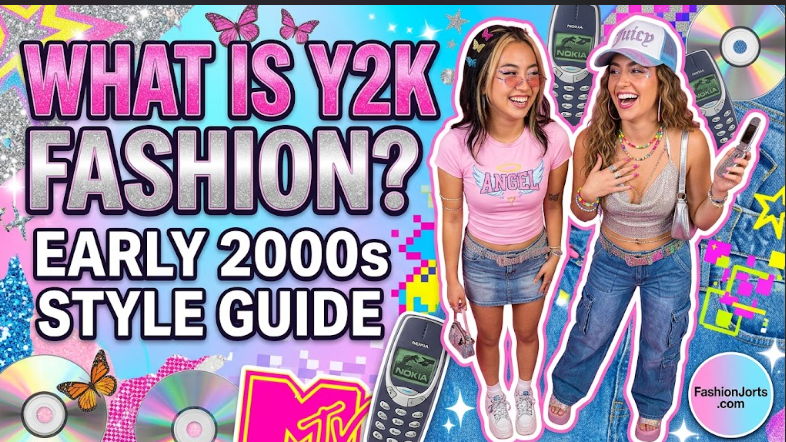
Today’s revival concentrates memorable trends into a much clearer visual identity. A modern outfit might combine a baby tee, low-rise mini skirt, platform shoes, tiny bag, tinted glasses, and several nostalgic accessories at once. Someone living through the original period wouldn’t necessarily have dressed that way. They might have worn one fashionable piece with otherwise ordinary clothes, mixed older ’90s items with something new, or ignored the biggest trends completely. Modern Y2K isn’t less legitimate because of that difference. It’s a reinterpretation, just as previous generations reworked styles from decades before them. Problems arise only when a contemporary recreation is presented as an exact picture of what everyone wore in 2000.
How to Dress in Authentic Y2K Style Today
Start with the shape of the outfit instead of buying every nostalgic accessory you can find. Low-waisted bootcut jeans with a fitted tee are enough to establish the period, while loose cargos with a small tank offer a sportier alternative. Choose accessories according to the specific direction you want. Metallic details and narrow sunglasses can push the outfit toward millennium futurism, while a compact shoulder bag and simple platforms create a more everyday look. Restraint can actually make the result more believable. Original outfits weren’t assembled decades later with historical hindsight, so mixing a few period-specific elements with basic clothing often feels more natural than wearing every trend simultaneously.
Common Misconceptions About Y2K Fashion
The biggest misconception is that everything from the 2000s counts as Y2K. A decade is long enough for trends to appear, peak, disappear, and return in modified forms, so an outfit from 2008 shouldn’t automatically be treated as representative of 2000. Another mistake is reducing the style to pink. Bright colors certainly existed, but black, white, gray, silver, denim blue, and neutral shades were equally capable of creating recognizable millennium outfits. Finally, authentic doesn’t have to mean expensive vintage clothing. Understanding proportions, materials, and styling matters more than owning a particular label. Someone can recreate the period convincingly with modern pieces if the overall silhouette makes sense.
Conclusion
Real Y2K fashion becomes much more interesting once it’s removed from the neat categories created by modern nostalgia. People combined low-rise denim, tiny tops, cargos, metallic fabrics, unusual accessories, and ordinary basics without worrying about whether every piece belonged to the same aesthetic. The futuristic mood is especially useful for understanding the original period. The arrival of a new century gave silver surfaces, technical details, sleek eyewear, and experimental proportions a cultural context that goes beyond simple nostalgia. Later 2000s glamour deserves its place in the story too, but separating it from the earliest millennium style makes both easier to appreciate. You don’t have to choose one over the other when dressing today. If authenticity is the goal, choose a specific moment rather than trying to wear an entire decade at once. A focused 1999-inspired outfit or early-2000s denim look will usually feel more convincing than piling every nostalgic trend into a single outfit.