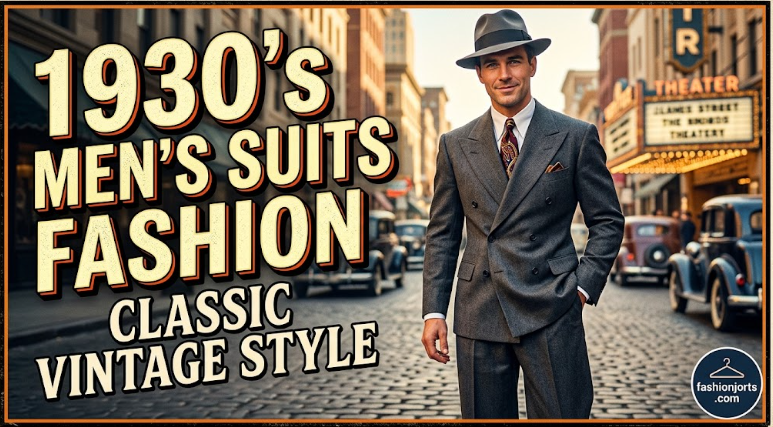
Men’s fashion in the 1930s was built around proportion, craftsmanship, and a well-dressed appearance. Suits were designed to create a strong shoulder line, a defined waist, and trousers that sat naturally above the hips. Although the Great Depression limited spending for many families, traditional tailoring remained an important part of business attire, social events, and public life. The decade also brought a variety of styles rather than one universal look. Some men preferred understated wool suits for the office, while others embraced double-breasted jackets, patterned fabrics, and carefully chosen accessories. Understanding these differences helps explain why 1930s menswear still appeals to vintage collectors and people looking for a more traditional approach to dressing.
How Men’s Suit Fashion Changed During the 1930s
The early 1930s continued many tailoring traditions from the previous decade, but jacket proportions gradually developed a more defined shape. Designers and tailors placed greater emphasis on the chest and shoulders, creating a masculine outline without necessarily making the clothing tight. Economic circumstances also influenced everyday clothing choices. Men who needed to manage limited budgets often relied on versatile suits that could work for professional duties, church, and social occasions. Darker colors and durable fabrics were practical choices because they could be worn repeatedly with different shirts and ties. By the latter part of the decade, fashionable tailoring offered a balance between structure and comfort. The exact look depended on the country, the tailor, and the wearer’s lifestyle, making the period more diverse than vintage photographs sometimes suggest.
The Signature Cut of a 1930s Suit
Broad Shoulders and a Fuller Chest
A strong upper-body silhouette was one of the defining features of the decade. Jackets often had enough room through the chest to allow movement, while the shoulders helped create a balanced outline. The waist was generally shaped to prevent the jacket from hanging like a box. This combination of width above and definition below gave the suit its distinctive appearance.
Wide Lapels and Carefully Shaped Jackets
Lapels were an important visual feature of men’s tailoring. Wider designs complemented the jacket’s chest and shoulders, while peaked lapels were particularly associated with many double-breasted suits. Jacket length also mattered because it balanced the higher waistband of the trousers. When the proportions worked together, the outfit looked composed without requiring excessive decoration.
High-Waisted Trousers
Trousers from the period often sat at the natural waist instead of low on the hips. Pleats provided additional room across the upper legs, making the trousers comfortable for walking, sitting, and working. Cuffed hems were another familiar feature. Suspenders, commonly called braces in Britain, helped support the trousers and maintain their position throughout the day.
Single-Breasted and Double-Breasted Suit Styles
Single-breasted suits offered versatility. They were appropriate for office wear, everyday city life, and many social occasions, with the fabric and accessories determining how formal the outfit appeared. Double-breasted jackets created a more pronounced silhouette through their overlapping fronts and prominent lapels. They could look especially striking in dark wool or subtle pinstripes, particularly when paired with matching high-waisted trousers. Neither style belonged exclusively to one social group or occasion. Personal preference, professional expectations, and local fashion all influenced which design a man chose.
Three-Piece Suits and the Importance of Waistcoats
A three-piece suit included a jacket, trousers, and a matching waistcoat. This additional layer gave the outfit a traditional appearance and kept the wearer looking well-dressed when the jacket was removed. Waistcoats also helped create a continuous line between the shirt and trousers. They could be single-breasted or double-breasted, with button arrangements and pocket details varying by design. For a formal event today, a three-piece suit remains one of the easiest ways to capture the character of 1930s tailoring. A matching waistcoat in charcoal, grey, or brown creates a classic appearance without requiring elaborate accessories.
Fabrics and Patterns That Defined the Decade
Fabric influenced both the appearance and practical use of a suit. Smooth wool was suitable for business clothing, while flannel offered a softer finish and tweed was often associated with country wear and outdoor activities. Grey, navy, brown, and charcoal provided useful foundations for a man’s wardrobe. Pinstripes introduced a more formal business appearance, while herringbone and other woven patterns gave textured fabrics a distinctive character. Season also affected clothing choices. Lightweight materials could be more comfortable in warm weather, whereas heavier wool and tweed were useful during colder months. A suit’s fabric was therefore as much a practical decision as a matter of personal style.
Shirts, Shoes, and Accessories
The smaller details helped distinguish an ordinary suit from a carefully coordinated outfit. White and pale blue shirts worked well with darker jackets, while patterned ties added personality without overpowering the clothing. Leather Oxford shoes and brogues complemented tailored trousers. Their suitability depended on the occasion, with darker polished shoes generally providing a more formal finish. Fedoras and other structured hats were recognizable parts of men’s city clothing during the period. Pocket squares, cufflinks, and suspenders also appeared in well-dressed outfits, although the right combination depended on individual taste and circumstance.
Hollywood’s Influence on Men’s Suit Fashion
Film stars helped make well-tailored clothing desirable beyond traditional business settings. Actors such as Cary Grant, Clark Gable, and Fred Astaire became associated with polished suits and carefully considered personal style. Their screen appearances showed how clothing could communicate confidence and sophistication. A clean jacket line, balanced trousers, and coordinated shoes often made a stronger impression than excessive decoration. However, movie costumes did not represent every man’s wardrobe. Many people wore practical work clothing or affordable ready-to-wear suits, while the most elaborate outfits were often beyond an ordinary household’s budget.
How to Wear a 1930s-Inspired Suit Today
Recreating this style begins with choosing the right proportions. High-rise trousers, a jacket with moderately wide lapels, and a defined waist provide a stronger vintage impression than simply adding a hat to a modern slim-fit suit. For an everyday formal outfit, try grey wool trousers with a matching jacket, a light shirt, and a restrained patterned tie. A waistcoat can make the combination more traditional, while brown tweed works well for a relaxed daytime look. Fit remains essential. The jacket should sit comfortably across the shoulders, the chest should allow natural movement, and the trousers should rest securely at the waist. A tailor can adjust many modern garments to reflect older proportions, although some structural changes may require a different jacket or pair of trousers.
Conclusion
The appeal of 1930s men’s suits comes from their attention to proportion and construction. Broad shoulders, shaped jackets, high-waisted trousers, and carefully selected fabrics gave the clothing a distinctive identity that remains recognizable today. The decade offered options for different budgets and occasions, from practical business suits to more formal three-piece outfits. Its lasting influence comes from the way tailoring balanced appearance with everyday wearability. If you want to adopt this style, begin with the jacket and trouser cut before choosing accessories. A suit that fits well and respects the period’s proportions will create a more convincing vintage look than an outfit built around historical details alone.