The 80s hip hop fashion scene was born from creativity, confidence, and a desire for self-expression. What started on the streets of New York became one of the most influential fashion movements in history. Early hip hop artists did not simply follow trends; they created a new visual identity that reflected their music, communities, and personal stories. During the 1980s, clothing became an extension of the culture itself. Sneakers, tracksuits, oversized jackets, hats, and bold jewelry were not just fashion choices. They represented attitude, originality, and belonging. Decades later, many of these styles continue to influence streetwear and popular culture around the world.
The Beginning of Hip Hop Fashion in the 1980s
Hip hop fashion developed alongside the growth of rap music, breakdancing, and DJ culture. In neighborhoods like the Bronx, young people created their own style using accessible clothing that matched their active lifestyles. Breakdancers needed outfits that allowed freedom of movement, which made athletic clothing an important part of early hip hop style. Tracksuits, sneakers, and comfortable jackets became popular because they worked both on the dance floor and on the streets. As hip hop gained more attention, these everyday clothing choices became symbols of creativity and cultural pride. Artists began using fashion to create recognizable images that separated them from other music genres.
The Rise of Adidas and Sportswear Culture
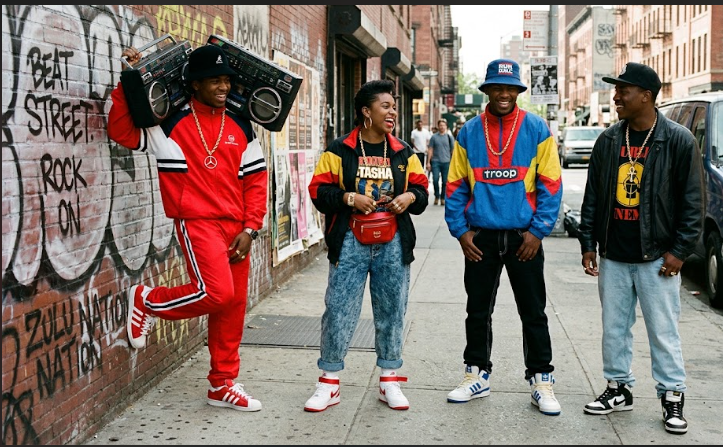
One of the strongest fashion influences of the decade came from sportswear. Adidas became closely connected with hip hop after artists began wearing its tracksuits and sneakers as part of their signature appearance. Run-D.M.C. helped turn Adidas into a cultural icon. Their simple combination of tracksuits, Superstar sneakers, and black hats showed that street style could be powerful without being complicated. The popularity of sportswear also changed how people viewed athletic clothing. Pieces that were once limited to gyms and sports fields became everyday fashion items worn by people who wanted a confident and relaxed look.
Sneakers Became Part of Hip Hop Identity
In the 1980s, sneakers became much more than practical footwear. They became a way for people to show personality and style. Classic shoes like Adidas Superstars, Puma sneakers, Nike models, and Reebok designs became strongly connected with hip hop culture. Keeping sneakers clean and fresh became part of the lifestyle. The decade helped create the foundation for modern sneaker culture, where shoes are collected, customized, and treated as important fashion pieces.
The Influence of Gold Chains and Bold Accessories
Accessories played a major role in creating the unforgettable look of 80s hip hop. Gold chains, rings, bracelets, and large earrings became popular among artists who wanted their appearance to match the confidence of their music. Jewelry represented success and ambition. For many performers, these pieces showed progress and individuality at a time when hip hop was becoming recognized by a wider audience. Accessories were not added quietly. They were designed to stand out and become part of an artist’s public image.
Kangol Hats and Signature Looks
Headwear became one of the easiest ways for artists to create a memorable style. Kangol hats became especially popular during the decade, with rappers using them as a defining part of their appearance. LL Cool J became strongly associated with Kangol hats, helping make the style recognizable among hip hop fans. The accessory showed how one simple piece could become connected to an entire cultural movement. Hats, glasses, and other personal details allowed artists to build unique identities instead of following a single fashion formula.
Leather Jackets, Bomber Jackets, and Street Layers
Outerwear added another dimension to 80s hip hop style. Leather jackets, bomber jackets, denim jackets, and oversized coats were common choices because they created a strong visual presence. These pieces were often combined with sneakers, casual shirts, and accessories to create a balance between toughness and creativity. The layered approach of the decade remains popular today because it allows people to mix different styles while maintaining a streetwear influence.
Dapper Dan and the Growth of Luxury Street Style
The 1980s also introduced a new relationship between hip hop and luxury fashion. Harlem designer Dapper Dan became known for creating custom pieces that combined streetwear designs with luxury-inspired patterns. His work reflected the creativity of the hip hop community and showed that fashion could come from unexpected places. Instead of waiting for traditional fashion houses to define trends, street culture began creating its own luxury language. His influence can still be seen in modern collaborations between luxury brands and streetwear designers.
Female Artists and Their Fashion Influence
Women in hip hop also shaped the style of the decade. Artists such as Salt-N-Pepa brought bold outfits, bright colors, and confident styling choices into the spotlight. Their fashion showed that hip hop style was not limited to one type of look. Women artists used clothing to express personality, independence, and creativity. They helped expand the possibilities of what hip hop fashion could represent.
The Difference Between 80s Hip Hop Fashion and Modern Streetwear
Modern streetwear has borrowed many ideas from 1980s hip hop, including oversized fits, retro sneakers, sportswear influences, and statement accessories. The main difference is that today’s fashion industry has turned many street styles into global commercial trends. In the 1980s, these looks developed naturally from communities and artists creating their own identities. The original appeal of 80s hip hop fashion came from authenticity. People wore these styles because they represented who they were, not because they were following a seasonal trend.
How to Wear 80s Hip Hop Fashion Today
Creating an 80s-inspired outfit does not require wearing every classic piece at once. A modern approach focuses on combining vintage influences with current styles. A tracksuit paired with classic sneakers can create a clean retro look. A bomber jacket with relaxed jeans and accessories can capture the same confidence without looking like a costume. The most important part of the style is the attitude behind it. The original movement was about individuality, so personal interpretation matters more than exact copying.
Conclusion
80s hip hop fashion changed the way people viewed clothing and culture. It proved that style could come from streets, communities, and personal creativity rather than only from traditional fashion institutions. The decade created some of the most recognizable looks in modern fashion history. From sneakers and tracksuits to jewelry and jackets, every piece carried meaning beyond appearance. The lasting influence of 80s hip hop fashion comes from its original message: clothing is a way to express identity, confidence, and creativity. That idea continues to shape fashion generations later.