The elegance of 1940s fashion evening dresses continues to inspire designers, collectors, and vintage fashion lovers around the world. This decade created a unique style that balanced sophistication with practicality, shaped by the challenges of World War II and the renewed optimism that followed. From Hollywood-inspired gowns to carefully tailored silhouettes, eveningwear in the 1940s reflected confidence, femininity, and refined taste. Unlike many fashion eras defined by one dominant look, the 1940s experienced a major transformation. Early designs focused on simplicity and resourcefulness, while later styles embraced luxury, dramatic shapes, and glamorous details. This combination is what makes 1940s evening dresses so memorable and recognizable today.
The History Behind 1940s Evening Dress Fashion
The story of 1940s eveningwear cannot be separated from the events of the decade. During the early years, wartime conditions influenced every aspect of clothing design. Fabric availability became limited, and designers had to create beautiful garments with fewer materials. Even with these restrictions, women still wanted elegant clothing for special occasions. Designers focused on flattering cuts, structured shapes, and thoughtful details instead of excessive decoration. Evening dresses became examples of creativity, proving that style could exist even during difficult times. After the war ended, fashion began changing quickly. Women’s clothing moved toward more glamorous designs with softer fabrics, fuller skirts, and a stronger emphasis on feminine silhouettes. The late 1940s marked the beginning of a new chapter in fashion history, setting the stage for the dramatic styles of the 1950s.
Key Features of 1940s Evening Dresses
One of the most recognizable qualities of 1940s evening dresses was their strong, elegant structure. Designers created shapes that highlighted the natural figure while maintaining a sophisticated appearance.
Defined Waistlines and Structured Shoulders
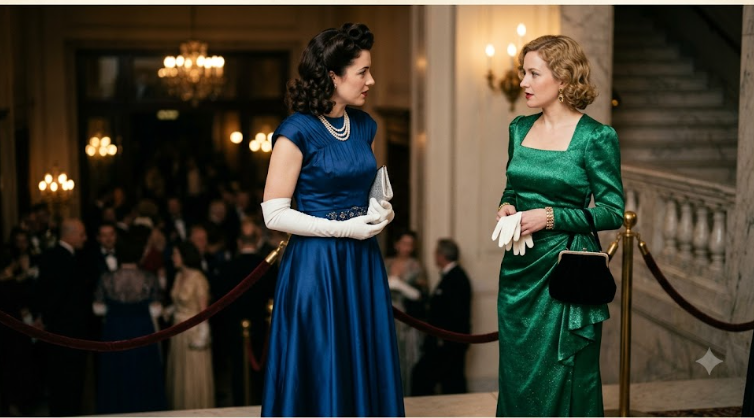
A fitted waist was a signature feature of the decade. Dresses were often designed with a narrow waistline that created a graceful hourglass shape. At the same time, shoulders were given more definition. Padded shoulders became popular during the early 1940s, partly influenced by military-inspired clothing. This detail gave evening dresses a confident and polished appearance.
Long Silhouettes and Flowing Skirts
Formal dresses during this era were usually floor-length. The longer shape created movement and elegance, especially when combined with soft fabrics. Many gowns featured gentle folds, draping, and carefully placed gathers. Instead of relying on heavy decoration, designers used the shape of the dress itself to create visual beauty.
Popular Styles of 1940s Evening Dresses
The 1940s introduced several eveningwear styles that remain popular among vintage fashion enthusiasts.
Hollywood Glamour Gowns
Hollywood had a powerful influence on fashion during this period. Movie stars became style icons, and audiences admired the elegant gowns worn on screen and at public appearances. These dresses often included luxurious fabrics, fitted shapes, dramatic necklines, and sophisticated styling. The connection between cinema and fashion helped create the image of classic 1940s glamour that still exists today.
Satin Evening Dresses
Satin was one of the most admired materials for formal occasions. Its smooth texture and subtle shine made it perfect for creating elegant evening gowns. Satin dresses often appeared in classic colors and were designed with simple but flattering shapes. The fabric itself added enough beauty without requiring excessive decoration.
Velvet Formal Dresses
Velvet became a favorite choice for evening events, especially during colder seasons. Its rich texture created a luxurious appearance and worked especially well with deep colors. Velvet gowns represented sophistication and were often associated with formal dinners, theatre events, and elegant gatherings.
Draped Chiffon and Silk Styles
Soft fabrics allowed designers to create romantic and flowing designs. Draped chiffon and silk gowns gave women a graceful appearance while allowing comfortable movement. These dresses often featured gathered fabric around the neckline or waist, creating a relaxed yet refined look.
Colors and Details That Defined the Era
The color choices of 1940s evening dresses reflected both elegance and practicality. Classic shades such as black, navy, burgundy, emerald green, and ivory were popular choices for formal occasions. Design details were carefully selected to enhance the overall appearance of the gown. Common features included lace accents, embroidery, decorative buttons, subtle beading, and elegant sleeves. The focus was not on excessive decoration but on creating a balanced and polished outfit.
Designers Who Shaped 1940s Evening Fashion
Several influential designers helped define the style of the decade.
Gilbert Adrian
Gilbert Adrian was one of the most important American fashion designers of the era. Known for his work in Hollywood, he created designs that combined glamour with practicality. His eveningwear reflected the changing needs of women during wartime while maintaining elegance and sophistication.
Christian Dior
Christian Dior changed the direction of fashion after introducing his famous New Look collection in 1947. His designs emphasized narrow waists, rounded shoulders, and fuller skirts. Although his influence became even stronger in the 1950s, his late 1940s creations helped reshape women’s formal fashion.
Jean Dessès
Jean Dessès was known for beautifully draped evening gowns that highlighted movement and craftsmanship. His designs represented the luxury and refinement associated with post-war couture.
Accessories That Completed the 1940s Evening Look
The dress was only one part of the complete 1940s formal style. Accessories helped create a polished appearance. Long gloves were a popular choice for elegant occasions, especially with sleeveless or short-sleeved gowns. Jewelry was often simple but refined, with pearls being a favorite option. Small evening handbags, carefully styled hair, and classic makeup completed the glamorous appearance. Hairstyles such as soft waves and victory rolls became closely connected with the fashion identity of the decade.
How to Style a 1940s Inspired Dress Today
Wearing a 1940s-inspired evening dress today does not require creating a completely historical outfit. Many people combine vintage elements with modern fashion choices. A fitted waist, elegant neckline, and quality fabric can capture the spirit of the era. Pairing the dress with simple jewelry, classic shoes, and vintage-inspired hairstyles creates a timeless formal look. The key is balance. A modern interpretation should celebrate the elegance of the 1940s while still feeling comfortable and natural for today’s occasions.
Why 1940s Evening Dresses Remain Popular
The lasting appeal of 1940s evening dresses comes from their ability to combine beauty with purpose. These designs focused on craftsmanship, flattering shapes, and timeless elegance rather than temporary trends. Many modern fashion collections continue borrowing ideas from this period because the silhouettes remain sophisticated and wearable. Vintage-inspired gowns for weddings, formal events, and special occasions often feature elements that first became popular during the 1940s. The decade continues to represent an era where fashion adapted to change while maintaining a sense of grace and individuality.
Conclusion
1940s fashion evening dresses remain a symbol of timeless elegance and creativity. They represent a period when designers transformed challenges into opportunities and created styles that continue to influence fashion today. From Hollywood gowns to carefully tailored formal dresses, the decade produced designs that still feel sophisticated and beautiful. Their appeal comes from simple principles that never go out of style: quality, confidence, and thoughtful design. For anyone interested in vintage fashion, the 1940s offer endless inspiration. These dresses are not only reminders of the past but also examples of how classic style can continue to feel relevant across generations.