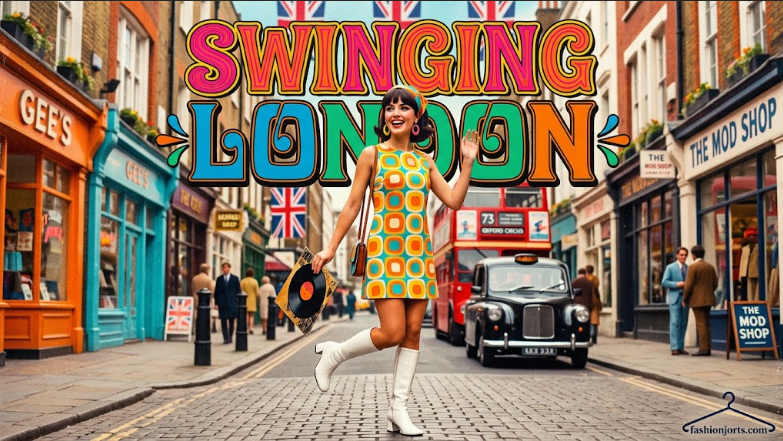
The phrase Swinging London fashion brings to mind short skirts, graphic dresses, dramatic eyeliner, and young women moving through the city in clothes that looked completely different from the polished styles of the previous decade. During the 1960s, London became a center of youth culture, and fashion was one of the clearest ways that change appeared on the streets. Women no longer had to rely on one formal idea of femininity. They could wear a short shift dress with flat shoes, combine a bright skirt with colored tights, or choose a simple outfit with strong geometric patterns. Mod fashion gave young women a fresh visual language built around freedom, experimentation, and modern design.
How Swinging London Created a New Fashion Culture
The rise of Swinging London was closely connected to changes in British youth culture. Music, independent boutiques, photography, television, and fashion magazines helped create an environment where young people could influence what became fashionable rather than simply following styles established for older generations. London’s boutique scene was especially important. Shops around King’s Road and Carnaby Street offered clothing that felt younger and less formal than traditional department-store fashion. These stores also created a social experience around shopping, allowing customers to discover new designers and develop their own combinations. Mod culture formed an important part of this movement. Young Modernists were interested in contemporary European style, clean tailoring, scooters, music, and carefully coordinated clothing. For women, this helped produce a look that was neat and deliberate while still feeling youthful.
What Women Wore in 1960s Mod Fashion
The typical Mod wardrobe relied on simple shapes rather than complicated construction. Shift dresses, miniskirts, tunic dresses, short skirts, fitted sweaters, and straight-cut coats were common choices for creating the youthful silhouette associated with the period. Patterns could be just as striking as the shape of the clothing. Checks, stripes, circles, blocks of color, and other geometric designs gave simple garments a strong visual presence. Bright shades such as orange, yellow, red, pink, and green also became closely associated with the more playful side of 1960s fashion. The styling was usually deliberate but not overly formal. A short dress could be worn with opaque tights and flat shoes, while a simple skirt could be changed completely through the addition of a patterned top, boots, or bold accessories.
Mary Quant and the Rise of the Miniskirt
Mary Quant became one of the defining designers of London’s youth fashion scene. Her Bazaar boutique on King’s Road became a destination for young shoppers, and her clothes captured the energetic spirit of the emerging 1960s style. Quant’s designs favored practical fabrics, simple shapes, short hemlines, and playful details. She understood that young women wanted clothes they could actually wear while shopping, meeting friends, dancing, and moving around London. Her association with the miniskirt is especially strong. Although the idea of the short skirt developed through several designers and changing street fashions, Quant helped turn it into a widely recognized fashion statement. Her designs made the short hemline accessible to a much larger audience.
Why Tights Became Essential to Mod Style
The popularity of short skirts created a greater need for tights. They offered more coverage than traditional stockings while working naturally with the new, higher hemlines. Tights also became an important styling tool. Instead of matching hosiery closely to the skin, young women could choose black, white, bright colors, or patterns to create another strong element within an outfit. This helped produce one of the decade’s most recognizable combinations: a short Mod dress, opaque tights, and simple shoes or boots. The tights weren’t merely practical; they became part of the fashion statement.
Carnaby Street and King’s Road
Fashion in 1960s London was closely tied to particular neighborhoods. Carnaby Street became famous for its concentration of boutiques and its connection with the city’s music scene, while King’s Road developed a reputation for youthful fashion and independent shops. These areas gave young consumers something traditional retailers often didn’t: a place where fashion felt immediate and personal. Customers could browse unusual garments, mix different pieces, and follow trends that were emerging on the streets. The connection with musicians made the effect even stronger. Clothing seen around London’s music scene could quickly become desirable among young shoppers, while boutiques benefited from the attention surrounding popular performers.
Twiggy and the New Image of the Fashionable Woman
Models helped bring London’s new fashion identity to international audiences. Twiggy became one of the most recognizable faces of the 1960s, with her short hair, distinctive eyes, slim figure, and youthful appearance becoming strongly associated with the era. Her image worked particularly well with Mod clothing. Simple dresses and short skirts allowed the model’s distinctive appearance to remain central, while dramatic eye makeup reinforced the graphic quality of the clothes. Other models, including Jean Shrimpton, also helped define the changing image of women’s fashion. The fashion model was becoming a major cultural figure, appearing in magazines and photographs that reached audiences far beyond London’s boutiques.
Biba and the Darker Side of 1960s Fashion
Not every London woman wanted bright colors and playful minidresses. Biba, founded by Barbara Hulanicki, offered a different interpretation of youthful fashion. Biba became known for darker shades, soft fabrics, retro influences, and a more atmospheric appearance. Its clothes often looked glamorous without returning to the rigid formality of earlier women’s fashion. The contrast between Biba and Mary Quant is useful because it shows how varied 1960s London fashion actually was. The decade wasn’t defined by one uniform outfit. Women could choose bright Mod styles, darker Biba looks, tailored clothing, or more experimental designs while still participating in the broader youth-fashion movement.
PVC, Jersey and New Fashion Materials
The 1960s encouraged designers to experiment with materials that had not traditionally dominated women’s everyday wardrobes. PVC, synthetic fabrics, jersey, and other man-made materials helped designers create clothing that looked modern and sometimes deliberately futuristic. Mary Quant became particularly associated with PVC garments and accessories. The material could produce a glossy appearance that immediately separated a garment from conventional wool or cotton clothing. Jersey offered another advantage. It was comfortable, flexible, and well suited to the uncomplicated shapes that became popular during the decade. The combination of new materials and youthful silhouettes helped make 1960s fashion feel connected to the future.
Mod Hair and Makeup in the 1960s
A Mod outfit wasn’t complete without the right hair and makeup. Hairstyles often emphasized clean shapes, while makeup focused heavily on the eyes. Black eyeliner, defined lashes, pale complexions, and carefully shaped brows helped create the dramatic appearance associated with many 1960s fashion photographs. The eyes became one of the strongest visual features of the look. Hair could be short and geometric or styled into a carefully controlled shape. The overall effect was coordinated without requiring an elaborate evening outfit. A simple dress could become unmistakably 1960s through the combination of hairstyle, eye makeup, tights, and footwear.
Why Swinging London Fashion Still Influences Women’s Style
The influence of Swinging London can still be seen whenever designers revisit miniskirts, shift dresses, graphic prints, colorful tights, ankle boots, and geometric silhouettes. These pieces remain useful because their basic shapes are easy to reinterpret for contemporary wardrobes. More importantly, the 1960s changed how fashion could work. Young consumers became a powerful force, boutiques gained cultural importance, and clothing became increasingly connected with music and individual identity. The period also demonstrated that women’s fashion didn’t have to depend on elaborate construction or traditional ideas of elegance. A short dress, strong print, and pair of boots could make just as powerful a statement as a formal outfit.
Conclusion
Swinging London fashion represented a major shift in the way young women could approach clothing. Instead of dressing primarily according to established rules, they could experiment with length, color, materials, makeup, and styling. Mary Quant, Biba, Carnaby Street, King’s Road, Twiggy, and the Mod movement each contributed something different to this change. Together, they helped make London a powerful source of international fashion during the 1960s. The appeal of the period isn’t simply its nostalgia. Its strongest ideas still work because they give women room to create a recognizable look from relatively simple pieces. That combination of practicality, confidence, and experimentation is what keeps 1960s Mod fashion relevant decades later.