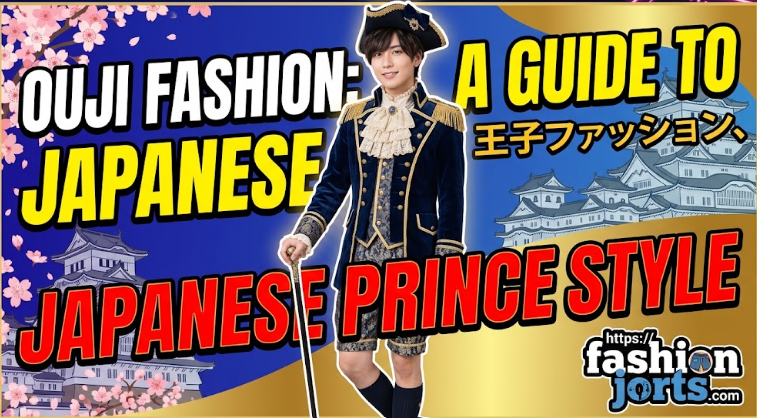
Ouji fashion has a way of looking formal and playful at the same time. Tailored shorts, high-collared shirts, fitted jackets, polished boots, and decorative neckwear create the impression of a young prince without turning the outfit into historical costume. The style comes from Japanese alternative fashion and draws much of its visual inspiration from older European menswear. What makes the look appealing is its flexibility. One outfit might feel dark and gothic, while another uses cream, navy, soft pastels, or decorative prints for a lighter appearance. The common thread is a carefully shaped, masculine-inspired silhouette that values proportion and coordination over simply adding more decoration.
What Is Ouji Fashion?
The Japanese word “ouji” means “prince,” which describes the central idea behind the fashion. Clothing is styled around a youthful, refined character using pieces associated with formal or historical menswear. Breeches, tailored shorts, waistcoats, blouses, coats, and boots are especially common. Ouji is often discussed alongside Lolita because the two styles share an interest in historical clothing, detailed fabrics, and coordinated accessories. Their silhouettes, however, are quite different. Ouji relies primarily on trousers or shorts instead of the full skirts and dresses strongly associated with Lolita. The style is also open to people of any gender. Its masculine influence describes the clothing rather than who is allowed to wear it. For many enthusiasts, that freedom is part of what makes the fashion interesting.
The Origins and History of Ouji Fashion
Ouji developed within Japan’s alternative street-fashion culture rather than emerging as a direct revival of one European historical period. Designers and wearers borrowed ideas from aristocratic clothing and combined them with gothic, punk, romantic, military, and fantasy influences. Over time, those ideas developed into a recognizable style of their own. Its close relationship with Lolita helped shape its identity. Both styles became associated with carefully planned outfits where garments, footwear, headwear, and smaller details work together. Japanese alternative-fashion brands also produced pieces that could suit one style or cross naturally between the two. For this reason, Ouji shouldn’t be treated as historically accurate Victorian or Rococo dress. Modern materials, unusual prints, contemporary footwear, and fantasy-inspired accessories can all appear. Historical clothing provides a reference point rather than a strict set of rules.
What Does an Ouji Outfit Look Like?
The clearest feature of a good Ouji outfit is its silhouette. Clothing usually appears fitted or structured through the upper body, while shorts or trousers establish the prince-like shape below. Layers add interest, but each one should contribute to the overall proportions.
Shirts, Blouses, and Waistcoats
A blouse or shirt often provides the base. High collars, gathered sleeves, lace cuffs, pintucks, ruffles, and decorative buttons can introduce historical character without requiring an especially complicated garment. Plain shirts can also work when the rest of the outfit carries enough detail. Waistcoats are useful because they immediately create a more formal shape. They can be understated or decorated with embroidery, patterned fabric, metal buttons, chains, or contrasting trim. A fitted jacket or coat can then be added when a sharper or more dramatic appearance is wanted.
Ouji Shorts and Trousers
Knee-length shorts and breeches are among the easiest pieces to associate with the style. Some designs are slim and tailored, while others have more volume around the hips or legs. Longer trousers are also suitable, particularly for mature, formal, or darker interpretations. Proportion matters more than choosing one specific cut. The bottoms need to work with the length of the jacket, the height of the socks, and the shape of the shoes. If these elements compete with one another, even expensive clothing can feel poorly coordinated.
Shoes, Socks, and Accessories
Knee-high socks or tights pair naturally with shorter trousers and help create an uninterrupted visual line toward the footwear. Lace-up boots, buckled shoes, and structured dress shoes are common choices. Heavy boots can push the outfit toward gothic or punk styling, while cleaner footwear creates a more classic appearance. Accessories provide character once the foundation is established. Cravats, jabots, bows, brooches, pocket watches, gloves, berets, and hats can all work. Rather than wearing every decorative item available, choosing a few that support the same theme usually creates a stronger result.
Popular Ouji Fashion Styles
There isn’t one required color palette or mood. The same basic silhouette can support several interpretations, allowing a wardrobe to change considerably without losing its identity.
Classic Ouji
Classic styling focuses on polished tailoring and restrained decoration. Cream blouses, fitted waistcoats, dark shorts, subtle patterns, and elegant shoes can create a refined appearance. Burgundy, navy, brown, ivory, and black are easy colors to combine for this approach. The details tend to support the clothing instead of dominating it. A small brooch, neat cravat, or simple hat may be enough to complete the look. This makes classic styling particularly approachable for someone building a first wardrobe.
Gothic Ouji
Gothic outfits bring darker imagery and stronger contrasts into the prince silhouette. Black often provides the base, accompanied by shades such as deep red, white, grey, navy, or purple. Velvet textures, dramatic coats, silver-colored hardware, crosses, and ornate neckwear can deepen the mood. The challenge is avoiding an outfit in which every item becomes a statement piece. A highly decorated coat may need simpler trousers and accessories around it. Giving one or two garments visual priority keeps the look controlled.
Sweet Ouji
A princely outfit doesn’t need to feel serious. Softer colors, bows, playful prints, rounded shapes, and lighter fabrics can produce a younger and more cheerful interpretation. Pastels can work particularly well when the garments still maintain the expected structure. Sweet styling also demonstrates why color alone doesn’t define the fashion. A pastel blouse and decorative shorts can still create a convincing coordinate when their shapes, layers, and accessories support the overall concept.
Military and Punk-Inspired Ouji
Military influences appear through structured coats, rows of decorative buttons, braiding, shoulder details, and uniform-inspired hats. These pieces naturally suit the formal side of the style because they create strong lines through the upper body. Boots can reinforce the sharper appearance. Punk styling takes a less polished direction. Tartan, chains, belts, metal hardware, distressed details, and heavier footwear can introduce more attitude. The prince silhouette remains visible underneath those rebellious elements, which keeps the outfit connected to Ouji rather than becoming a general punk look.
Ouji Fashion vs. Lolita Fashion
The easiest distinction between the two is the lower silhouette. Lolita usually centers on a dress or skirt with noticeable volume, while Ouji generally relies on shorts or trousers. This changes the proportions of the entire outfit even when similar fabrics and accessories are used. There is still plenty of overlap. Both may feature lace blouses, bows, elaborate prints, decorative hats, historical references, and carefully coordinated footwear. A blouse designed for one wardrobe may sometimes fit comfortably into the other. Calling Ouji simply a male version of Lolita can therefore be misleading. The styles are closely related, but Ouji has developed its own shapes and styling conventions. Gender doesn’t provide a useful dividing line because either fashion can be worn by people of different genders.
Ouji vs. Kodona and Aristocrat Fashion
Older discussions of Japanese alternative fashion sometimes use “Kodona” when describing boyish outfits related to Lolita. Today, Ouji is generally a clearer term when referring specifically to prince-inspired fashion. Beginners may still encounter both words while browsing older guides, photographs, and discussions. Aristocrat fashion is another neighboring style, but its visual character tends to feel more mature. Longer coats, full-length trousers, formal shirts, and elongated proportions can create the appearance of an adult noble rather than a young prince. Ouji often feels shorter, more youthful, and more playful by comparison. These boundaries aren’t mathematical. Individual outfits can borrow from neighboring styles without fitting neatly into one category. Looking at the complete silhouette is usually more useful than trying to classify every garment separately.
How to Build Your First Ouji Outfit
Start with clothing rather than accessories. A versatile blouse, well-fitting pair of shorts or trousers, waistcoat, knee-high socks, and suitable shoes can provide enough structure for a convincing first outfit. A jacket can be added later if you want another layer. Choose a limited color palette before shopping. Black and white provide an easy foundation, but navy and cream or brown and ivory can be just as practical. Buying pieces that already coordinate prevents a wardrobe full of attractive garments that cannot comfortably be worn together. Fit should guide purchasing decisions as well. Check shoulder width, sleeve length, waist measurements, trouser length, and garment measurements whenever possible. Specialist fashion sizing can vary, so relying on a familiar size label alone can lead to disappointing results.
Where to Buy Ouji Fashion
Specialist Japanese alternative-fashion brands are an obvious place to look, but they aren’t the only option. Secondhand marketplaces can be valuable for finding older releases, discontinued designs, and pieces that are difficult to buy new. International retailers and independent designers have also made the style easier to access outside Japan. You don’t need every garment to come from a dedicated label. A suitable vintage-inspired shirt, formal pair of shoes, or well-cut waistcoat from another source can fit naturally into the wardrobe. What matters is whether its shape, fabric, and details work with the rest of the coordinate. Beginners should be particularly careful with measurements when shopping online. Product photographs can make coats and trousers appear longer or shorter than expected. Comparing listed measurements with clothing you already own is a practical way to reduce sizing mistakes.
Common Ouji Styling Mistakes to Avoid
Buying too many statement pieces is an easy mistake. Lace, chains, elaborate prints, oversized bows, dramatic hats, decorated boots, and embroidered jackets may all suit the fashion individually, but wearing them together can make an outfit visually crowded. Leaving some areas quieter gives detailed pieces more impact. Another problem is focusing on individual items while ignoring proportion. Shorts, socks, boots, blouse, and jacket need to create a connected silhouette. Testing the full outfit rather than evaluating each garment separately makes these issues much easier to spot. Treating historical accuracy as a requirement can also make the style unnecessarily restrictive. Ouji takes inspiration from the past but remains a modern fashion. The goal is a convincing coordinate, not a museum reconstruction.
Conclusion
Ouji fashion gives historical masculine clothing a distinctly modern Japanese interpretation. It can move from restrained tailoring to gothic drama or playful fantasy while maintaining the prince-inspired silhouette that gives the style its name. That range is one reason there is no single outfit that represents every Ouji wearer. For someone starting out, proportion is more useful than decoration. Build around a strong blouse, appropriate trousers or shorts, structured layering, suitable footwear, and a controlled palette. Accessories become much easier to choose once those foundations are working. There is also no need to build an elaborate wardrobe immediately. A small collection of compatible pieces offers more possibilities than several impressive garments that cannot be coordinated. Understanding how the silhouette works will ultimately take you further than simply collecting items labeled Ouji. The best outfits feel intentional rather than overloaded. Once the fit and proportions are right, you can decide what kind of prince you want the clothing to suggest.