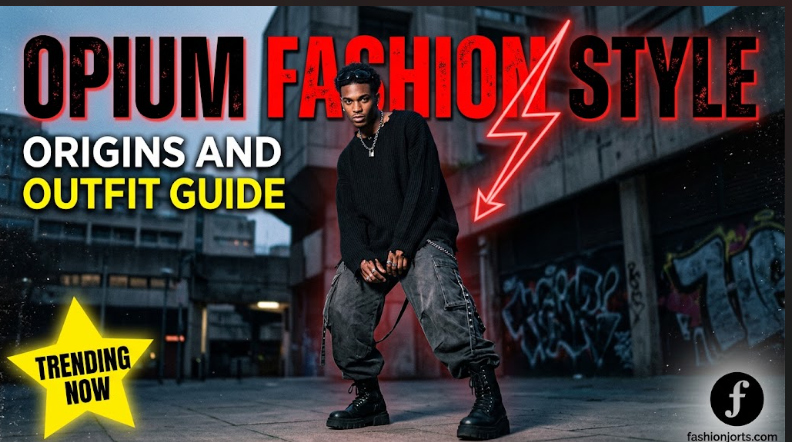
Opium fashion has become one of the most recognizable looks connected with modern underground rap. Dark clothing is its most obvious feature, but the style goes much further than wearing black from head to toe. Distressed fabrics, dramatic pants, leather, heavy footwear, and carefully chosen accessories give the aesthetic its character. The look is closely connected with Playboi Carti and the artists surrounding his Opium label. Music fans picked up on their clothing choices and began using “Opium” as a broader term for the aesthetic. Since then, the style has moved beyond concerts and music videos into social media, streetwear, and everyday outfits.
What Is Opium Fashion?
Opium fashion is a dark streetwear aesthetic that draws ideas from alternative fashion, punk, goth, grunge, and experimental designer clothing. Most outfits use black, charcoal, gray, or other muted shades. Instead of relying heavily on bright colors, they create interest through shape, fabric, and layering. There isn’t an official set of rules that determines whether an outfit belongs to this style. One person might choose oversized jeans and a fitted shirt, while another wears narrow pants with a large leather jacket. What connects these outfits is their darker mood and unconventional approach to proportion.
Where Did Opium Fashion Come From?
The name is linked to Opium, the record label founded by rapper Playboi Carti. As Carti’s music and public image developed, his clothing became darker and more experimental. Fans began connecting this visual identity with the music surrounding the label. The artists associated with Opium also developed individual approaches to clothing. Ken Carson, Destroy Lonely, and Homixide Gang helped make the aesthetic recognizable among younger rap audiences. Their outfits aren’t identical, which is one reason the style continues to change rather than following a strict formula.
How Playboi Carti Shaped the Opium Aesthetic
Playboi Carti has experimented with fashion throughout his career. His earlier looks often mixed skinny jeans, sneakers, vintage pieces, and designer clothing. Later appearances introduced more leather, dark makeup, unusual footwear, dramatic silhouettes, and gothic-inspired details. This change gave his image a stronger connection to the darker atmosphere of his music. Clothing became part of the overall presentation rather than something separate from it. Fans could recognize the mood through an outfit before hearing a song. Carti’s influence also encouraged younger fans to look beyond conventional hip-hop clothing. Designer fashion, archive pieces, punk references, and secondhand garments could all appear in the same outfit. That mixture remains central to the aesthetic today.
What Does Opium Fashion Look Like?
Black usually forms the foundation, although an outfit doesn’t need to be completely black. Faded gray, washed denim, dark red, white details, and metallic accents can break up the palette. The important part is keeping the overall appearance dark and cohesive. Proportion is equally important. Wide jeans may cover much of a pair of boots, while a fitted shirt creates contrast above them. Another outfit might reverse that relationship with narrow pants and oversized outerwear. Texture keeps these combinations from looking flat. Leather, denim, faded cotton, metal hardware, and distressed fabrics react differently to light. Mixing them gives a simple color palette much more visual depth.
Key Clothing Pieces That Define Opium Style
Black and Distressed Tops
Dark T-shirts are an easy starting point, particularly designs with washed or aged finishes. Graphic prints influenced by music, vintage clothing, or alternative culture can add character without dominating the outfit. Long-sleeve shirts also work well for layered combinations. Fit depends on the rest of the clothing. A fitted top can balance very wide pants, while an oversized shirt creates a heavier silhouette. Rather than choosing a piece because it looks “Opium” on its own, consider how it changes the full outfit.
Baggy, Flared, and Distressed Jeans
Denim has become one of the most recognizable parts of the look. Wide-leg, stacked, flared, distressed, and washed jeans can all work because each creates a stronger shape than basic straight-leg denim. Black and faded gray remain particularly easy to style. The length also changes the appearance. Longer pants can stack around footwear or partly cover a boot, creating a relaxed silhouette. Cleaner cuts work better when the shoes are intended to become the main visual feature.
Leather Jackets and Oversized Layers
Leather brings a harder edge that fits naturally with the darker aesthetic. Biker jackets create a relatively structured appearance, while oversized leather coats and bombers can make an outfit feel heavier. Faux leather offers a similar effect without requiring the same budget. Hoodies, zip-ups, and oversized jackets provide more casual alternatives. Layering works best when each garment contributes something different through length, material, or shape. Too many bulky pieces can make the outfit lose its structure.
Heavy Boots and Statement Footwear
Shoes can determine whether a dark outfit feels ordinary or experimental. Chunky boots and platform-style footwear add weight to the bottom half and work particularly well with wide or flared pants. Sleeker boots can complement narrower silhouettes. Sneakers aren’t excluded. Dark sneakers with an unusual profile can work just as effectively, especially for everyday outfits. The footwear should support the proportions rather than feeling disconnected from everything above it.
Silver Jewelry and Dark Accessories
Accessories provide detail without requiring additional layers. Silver rings, chains, belts, sunglasses, and metal hardware can break up an otherwise dark outfit. Small details are usually enough. Over-accessorizing can make the look feel forced. A few pieces that suit the clothing tend to look more natural than covering every available area with chains and symbols. Personal taste should remain visible.
The Fashion Brands Behind the Opium Look
Luxury and experimental designers have influenced the way many people interpret this aesthetic. Rick Owens is perhaps the name most commonly associated with it because of the designer’s dark palette, dramatic footwear, and unconventional silhouettes. Raf Simons has also influenced the broader relationship between underground music and designer clothing. Other fashion labels can fit the look, but brand names aren’t what define it. Someone wearing expensive designer pieces can still put together an unconvincing outfit if the proportions don’t work. Meanwhile, carefully selected vintage and affordable garments can create the desired effect without obvious branding.
How Ken Carson and Destroy Lonely Developed the Style
Ken Carson and Destroy Lonely helped move the aesthetic beyond Playboi Carti’s personal wardrobe. Both artists have experimented with dark clothing, designer pieces, jewelry, oversized shapes, and alternative references. Their individual choices widened what fans considered part of the Opium look. That variation is useful for anyone interested in the style. Copying one artist exactly isn’t necessary because the aesthetic already contains several interpretations. A better approach is identifying the features you like and adapting them to your own wardrobe.
Opium Fashion vs. Goth: What’s the Difference?
The two styles overlap visually, especially through black clothing, leather, boots, jewelry, and darker imagery. Their backgrounds, however, are different. Goth developed from its own music-based subculture long before the Opium label existed. Opium takes selected gothic elements and places them beside contemporary rap, streetwear, and experimental designer fashion. It can therefore look gothic without representing traditional goth culture. Treating the two as identical ignores the history behind each one.
Opium Fashion vs. Grunge and Punk Style
Punk influence appears through leather, distressed clothing, rebellious graphics, and an intentionally rough appearance. Grunge contributes faded fabrics, loose fits, and the idea that clothing doesn’t need to look perfectly new. Both can be seen in modern interpretations of the aesthetic. The difference lies in how those references are assembled. Opium outfits often add more dramatic footwear, unusual proportions, designer influence, and a darker overall palette. The result feels connected to contemporary rap even when individual pieces have much older roots.
How to Dress Opium Without Expensive Designer Clothes
Building the look doesn’t require a luxury wardrobe. Start with pieces you can use repeatedly, such as washed black jeans, a dark shirt, a jacket, and substantial footwear. Once the basic silhouette works, smaller accessories can add personality. Secondhand stores can be especially useful because naturally faded denim and worn leather already have character. Affordable clothes can also be altered, layered, or combined in less predictable ways. Fit matters more than the price tag. Avoid buying everything at once simply because it fits the aesthetic. A wardrobe built gradually usually feels more personal. One unusual jacket or pair of jeans can have more impact than several trend-driven pieces that all look alike.
Why Opium Fashion Became Popular
Music gives fans more than sound. Artists also communicate through album artwork, stage design, photography, merchandise, and clothing. A strong visual identity makes that wider world easier for an audience to recognize. Social media accelerated the process. Concert clips, outfit videos, fan edits, and fashion pages exposed people to the style even if they weren’t deeply involved in underground rap. Clothing then gave fans a practical way to interpret the culture for themselves. There is also room for experimentation. Someone can take the darker palette without copying the extreme silhouettes, while another person can push proportions much further. That flexibility makes the style easier to personalize.
Is Opium Fashion Still Popular in 2026?
The aesthetic remains visible, but it isn’t frozen in its early form. Artists change their wardrobes, fashion trends shift, and fans constantly reinterpret what they see. Pieces that dominate one period can become less important during the next. That change may actually help the style last longer. A rigid uniform becomes dated quickly, while an aesthetic built around experimentation has more room to develop. Its future will likely depend on how artists and fans continue adapting those ideas rather than preserving one specific outfit formula.
Conclusion
Opium fashion sits at the intersection of underground rap, alternative style, streetwear, and experimental fashion. Its recognizable darkness comes from more than color; silhouette, fabric, footwear, and styling give the clothes their identity. Understanding those elements makes the aesthetic much easier to interpret. Playboi Carti remains its central cultural reference, while artists such as Ken Carson and Destroy Lonely have helped broaden the look. Their differences also show that there isn’t one correct way to dress within the aesthetic. Personal interpretation is part of what keeps it interesting. For someone trying the style, starting simple usually works best. Build a strong silhouette, mix a few textures, choose footwear carefully, and add accessories only where they improve the outfit. The goal isn’t to look like a copy of an artist but to understand the visual language and make it your own.