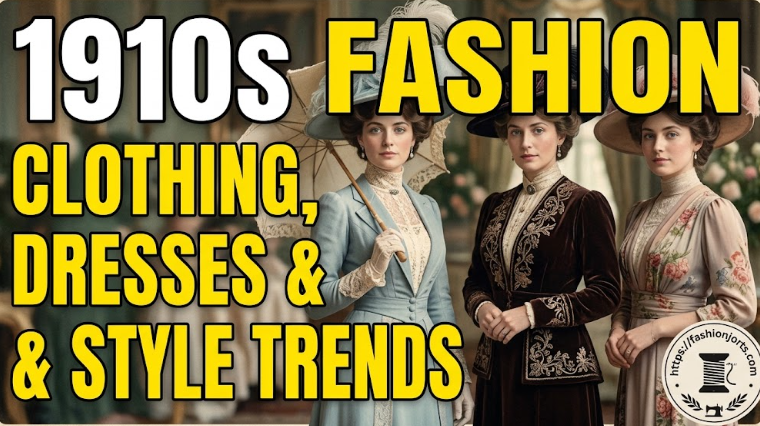
The 1910s were a turning point in the way people dressed. At the beginning of the decade, clothing still reflected the elegance and formality of the Edwardian period. Women wore long dresses and carefully styled hats, while men rarely appeared in respectable public settings without a suit and proper headwear. By the end of the decade, clothing had become noticeably simpler and more practical. Several forces drove that change. Designers experimented with new shapes, social expectations were shifting, and World War I changed how millions of people lived and worked. The result was a decade that connected the formal clothing of the early twentieth century with the freer styles that became famous during the 1920s.
What Did 1910s Fashion Look Like?
There wasn’t one single look that defined the entire decade. Clothing worn around 1910 could appear quite different from an outfit seen in 1918 or 1919. Early styles generally featured long lines, fitted shapes, decorative details, and a strong distinction between clothing for different times of day. Social class mattered as well. Couture gowns seen in fashion illustrations represented wealthy customers rather than the everyday wardrobe of every woman. Working people needed durable clothes that suited their occupations, while affluent families could afford different outfits for daytime visits, travel, dinner, and formal events.
Women’s Fashion in the Early 1910s
Women’s clothing started moving away from the exaggerated curves associated with earlier Edwardian fashion. Dresses developed a more upright appearance, and fashionable waistlines sometimes sat higher than the natural waist. Skirts remained long but became narrower in many fashionable designs. Blouses and skirts were practical choices for daytime wear. Tailored jackets also allowed women to create smart outfits without wearing an elaborate one-piece dress. Decorative details such as lace, embroidery, buttons, and carefully arranged fabric kept many outfits feminine and formal. Clothing still shaped the body considerably. Corsets remained part of many women’s wardrobes, although their construction changed as the preferred silhouette became longer and straighter. The movement away from heavily structured clothing happened gradually rather than overnight.
Paul Poiret and the Changing Female Silhouette
French designer Paul Poiret became closely associated with the new direction of women’s fashion. His designs often relied on flowing fabric and straighter shapes instead of emphasizing a tightly defined waist. This approach gave fashionable dresses a noticeably different appearance from styles popular only a few years earlier. Poiret also experimented with dramatic colors and clothing inspired by European interpretations of Middle Eastern and Asian dress. Loose trousers, draped fabrics, tunics, and unusual proportions appeared in some of his collections. These weren’t ordinary clothes for most women, but they showed how far high-fashion designers were willing to move from established conventions. His influence shouldn’t be treated as the work of one person changing fashion alone. Clothing was already evolving as other designers and consumers responded to changing tastes. Poiret became important because his work captured and pushed forward several changes already taking place.
The Hobble Skirt and Other Popular Dress Styles
Few garments represent early 1910s fashion as clearly as the hobble skirt. Instead of becoming wider toward the bottom, it narrowed around the lower legs. The unusual shape could restrict a woman’s stride, which made it visually striking but hardly ideal for practical movement. Fashion soon continued in other directions. Tunics worn over skirts became popular, while layered dresses created visual interest without requiring extremely complicated silhouettes. By the middle of the decade, some skirts had become fuller and slightly shorter, allowing shoes and ankles to be more visible. Evening clothing remained more decorative than ordinary daywear. Fine dresses could include silk, lace, beads, embroidery, velvet, and carefully draped fabric. Wealthy women still had opportunities to dress extravagantly even as everyday styles moved toward greater simplicity.
How World War I Changed Women’s Fashion
World War I began in Europe in 1914 and disrupted almost every part of daily life. Women took on a wider range of responsibilities in factories, offices, transport, agriculture, nursing, and other areas. Clothing designed primarily for appearance wasn’t always suitable for those environments. Workwear therefore became more visible. Some jobs required uniforms, protective garments, overalls, or trousers, while ordinary civilian clothing generally became less elaborate. Skirts remained common, but practical construction and freedom of movement carried greater importance. The war didn’t create every fashion change seen during these years. Designers had already introduced straighter silhouettes and less restrictive clothing before 1914. Wartime conditions accelerated that movement and gave practicality a much stronger place in women’s wardrobes.
1910s Evening Dresses and Formal Wear
Formal fashion didn’t disappear simply because everyday clothing was changing. Evening events still called for elegant dresses, particularly among wealthy families. These garments gave dressmakers an opportunity to work with luxurious materials and detailed decoration. Evening gowns could feature flowing layers, embroidery, beads, lace, decorative panels, and rich fabrics. Necklines were usually more open than those seen on daytime dresses, while sleeves could be shorter. Draping helped create softness without returning to the heavily shaped silhouettes of previous decades. The contrast between work clothing and eveningwear is an important part of understanding the period. Fashion was becoming more practical, but luxury and ceremony remained important in social life.
Men’s Fashion in the 1910s
Men’s clothing changed more slowly than women’s fashion. The three-piece suit was central to a well-dressed man’s wardrobe and usually consisted of trousers, a waistcoat, and a matching or coordinating jacket. Shirts with structured collars and neckties completed the look. Different occasions still required different levels of formality. Business and everyday social activities increasingly favored lounge suits, while formal events called for more traditional coats and evening clothes. Wealth, profession, age, and location all affected how strictly these conventions were followed. World War I made military uniforms an unavoidable part of men’s clothing during the middle and later years of the decade. Military outerwear also influenced civilian clothing after the conflict. The trench coat became one of the clearest examples of a functional military garment developing a lasting place in everyday fashion.
Popular Shoes, Hats, and Accessories
An outfit in the 1910s was rarely considered complete without appropriate accessories. Women’s hats were especially noticeable during the early years of the decade. Some were broad and heavily decorated with ribbons, flowers, feathers, or other ornaments. Boots were widely worn, while more open shoes could accompany evening dresses. Gloves, handbags, parasols, jewelry, and stockings helped distinguish clothing intended for different settings. The combination of these pieces could make even a relatively simple dress appear carefully finished. Men also relied heavily on accessories. Hats were common in public, with different styles suited to work, ordinary social wear, and formal occasions. Ties, pocket watches, gloves, walking sticks, and polished shoes could complete a respectable outfit.
Hairstyles and Beauty Trends of the 1910s
Women’s hair was generally worn long but arranged so that much of its length wasn’t immediately visible. Hair could be swept upward and gathered into soft buns or other pinned styles. Volume around the sides and top of the head helped balance the large hats fashionable during the earlier part of the decade. As clothing became simpler, hairstyles gradually followed a cleaner direction. Short hair had not yet become the dominant statement it would become during the 1920s, but the foundations for that change were forming. Practical considerations increasingly competed with elaborate styling. Men generally kept their hair considerably shorter. Mustaches were still seen, although facial-hair preferences varied with age, occupation, and personal taste. A neat appearance remained closely connected with respectable men’s dress.
How 1910s Fashion Influenced the 1920s
The dramatic clothing of the 1920s makes more sense when viewed as an extension of changes already underway during the previous decade. Women’s silhouettes had been getting straighter, complicated structures were declining, and practical clothing had become increasingly acceptable. Hemlines were also gradually moving upward. They were still modest compared with later fashions, but the direction represented a clear break from floor-length styles. Greater visibility of the lower leg also gave shoes and stockings a more noticeable place in an outfit. The transformation wasn’t instant. Fashion evolved through experimentation, changing lifestyles, and adjustments to social expectations. By 1919, however, many elements of early Edwardian dress already looked distinctly old-fashioned.
Conclusion
The 1910s were less about one famous style than a steady change in how clothing looked and functioned. Formal Edwardian traditions remained visible at the beginning, but new silhouettes were already challenging the shapes that had dominated women’s wardrobes. War added another pressure toward practicality, while designers continued experimenting with different forms. Men’s clothing evolved more gradually, yet suits and military-inspired outerwear moved closer to styles that remain familiar today. Looking at the decade as a transition explains why it matters. The fashion revolution associated with the 1920s didn’t begin from nothing; many of its foundations were already being built throughout the 1910s.