Medieval fashion was a reflection of everyday life, social position, and cultural values during the Middle Ages. From the 5th century to the late 15th century, clothing changed from simple garments designed for survival into carefully crafted outfits that displayed wealth, occupation, and identity. Many people today picture medieval clothing through movies and fantasy stories, but historical fashion was far more varied. A farmer, merchant, knight, and noblewoman would have dressed very differently depending on their lifestyle and resources. Clothing was not only about appearance; it showed where someone belonged in society and how they wanted to be perceived.
The Evolution of Medieval Clothing Over Time
The Middle Ages lasted for nearly one thousand years, and fashion changed dramatically during that period. Early medieval clothing focused on practicality, with loose garments made from available materials. As trade expanded and cities grew, clothing became more detailed, fitted, and influenced by new fabrics and tailoring methods. During the early medieval period, most people wore simple tunics, cloaks, and dresses made from wool or linen. These garments were comfortable and useful for daily work. Later centuries introduced more structured designs, decorative elements, and fashionable shapes, especially among wealthy communities. By the late medieval period, clothing had become a way for nobles and wealthy citizens to display status. Tailors created more fitted garments, and fashion trends began changing more quickly.
Fabrics That Defined Medieval Fashion
The materials used in medieval clothing depended heavily on a person’s income and location. Fabric production required significant labor, making some textiles much more valuable than others. Wool was the most common material throughout medieval Europe. It provided warmth, lasted for years, and could be produced in many regions. Farmers, workers, and even nobles wore wool garments, although the quality differed between social classes. Linen was another important fabric, especially for shirts, undergarments, and lighter clothing. It was comfortable against the skin and often used as a base layer beneath heavier garments. Silk was considered a luxury material. It was expensive and usually associated with royalty, wealthy nobles, and religious institutions. Velvet, fur, and embroidered fabrics were also signs of wealth and were often used for formal clothing.
Men’s Fashion in the Middle Ages
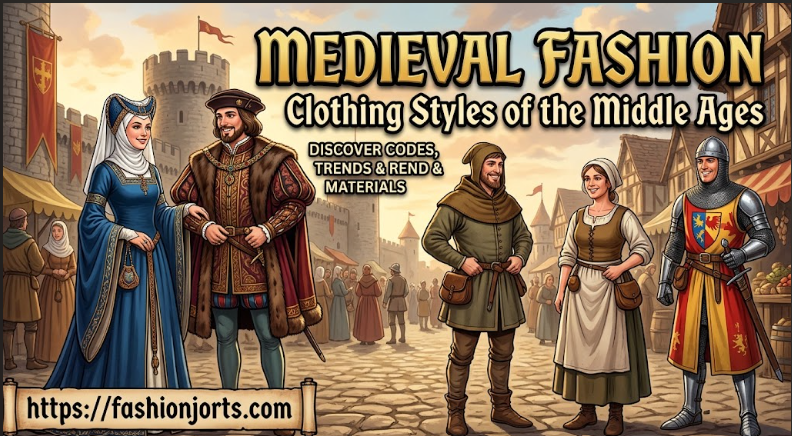
Men’s medieval clothing changed from simple everyday wear to more fitted and decorative styles over time. The tunic remained one of the most recognizable garments, worn by everyone from workers to nobles. Ordinary men often wore a tunic with trousers, a belt, and practical shoes. A cloak was added for warmth, especially during colder seasons. Belts were useful for carrying tools, pouches, and personal items. Knights had a different style because clothing was connected to warfare and reputation. Over armor, they often wore a decorative garment called a surcoat, which could display symbols connected to their family or lord. These designs helped identify knights during battles and ceremonies. In the later Middle Ages, men’s clothing became more shaped around the body. Shorter jackets, fitted sleeves, and fashionable footwear became popular among wealthy men.
Women’s Fashion in the Middle Ages
Women’s medieval clothing usually consisted of several layers. A basic outfit often included an underdress, an outer gown, and additional coverings depending on weather and social expectations. Noblewomen wore long gowns made from higher-quality fabrics with decorative details. Sleeves, necklines, and dress shapes changed over time, especially among court communities where fashion trends developed quickly. Head coverings were an important part of women’s appearance. Many women wore veils, wimples, or other forms of headwear, particularly after marriage. These accessories were not only practical but also connected to social customs of the period. By the later Middle Ages, women’s clothing became more structured, with fitted bodices and detailed sleeves creating elegant silhouettes.
Clothing and Social Class
Medieval society was strongly divided by class, and clothing made those differences visible. The quality of fabric, amount of decoration, and availability of certain colors often showed a person’s wealth. Royal families and nobles could afford expensive textiles, jewelry, embroidery, and imported materials. Their clothing was designed to communicate authority and prestige. Merchants had access to better-quality clothing than many workers because their growing wealth allowed them to purchase finer fabrics. Their clothing often balanced practicality with signs of success. Peasants and laborers focused on durability. Their clothing needed to survive farming, travel, and daily physical work. Simple wool garments were common because they were affordable and easy to repair.
Popular Medieval Garments and Accessories
Several medieval garments became closely associated with the period. The cotehardie was a fitted garment popular during the later Middle Ages, known for its close shape and button details. The houppelande was another fashionable style, especially among wealthy Europeans. It featured a long flowing design and wide sleeves that created an impressive appearance. Accessories also played an important role. Belts, brooches, hats, gloves, jewelry, and decorative shoes helped complete an outfit. For wealthy individuals, accessories were another opportunity to display status.
Colors and Meaning in Medieval Clothing
Color had a strong connection with wealth and symbolism during the Middle Ages. Producing certain dyes required expensive materials and skilled labor, making bright colors more difficult for ordinary people to obtain. Blue, red, green, and purple were among the colors that appeared in medieval clothing. Rich shades often suggested higher social standing, while simpler tones were more common among working communities. However, medieval clothing was not always dull or plain. Many people wore colored garments, although the quality and intensity of the colors depended on their financial ability.
How Medieval Fashion Influences Modern Style
Medieval fashion continues to inspire modern clothing, entertainment, and costume design. Historical dramas, fantasy films, festivals, and fashion collections often borrow ideas from medieval garments. Elements such as flowing gowns, embroidered fabrics, cloaks, structured shapes, and layered clothing remain popular because they create a strong visual connection with history. Modern interpretations do not always perfectly represent historical clothing, but they keep interest in medieval design alive and encourage people to learn more about the real traditions behind these styles.
Conclusion
Medieval fashion tells the story of a society where clothing carried meaning beyond appearance. A garment could reveal someone’s occupation, wealth, beliefs, and place in the social order. Although medieval clothing belonged to a very different time, its creativity and craftsmanship continue to attract attention today. Understanding these styles helps us see how people of the Middle Ages expressed identity through the clothes they created and wore.