
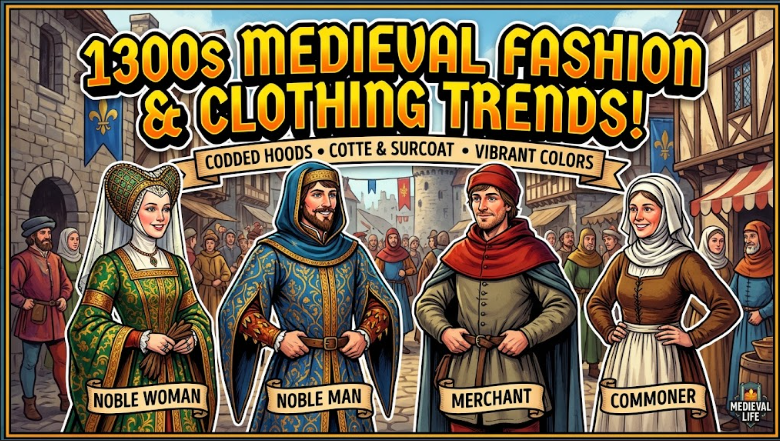
Fashion in the 1300s reflected a society where clothing communicated wealth, occupation, and personal identity. During the 14th century, European dress gradually developed more fitted shapes, distinctive sleeves, colorful fabrics, and decorative footwear. While wealthy people could follow changing court styles, most workers needed clothes that offered warmth, comfort, and durability. The period from 1300 to 1399 brought noticeable changes to the way garments were designed and worn. Men’s outfits became more fitted, women’s gowns featured carefully shaped bodices, and accessories gained greater importance in fashionable dress. Understanding these styles offers a closer look at medieval life and the craftsmanship behind the clothing of the time.
How Fashion Changed During the 1300s
At the beginning of the century, long tunics, loose gowns, and layered garments remained common across much of Europe. Clothing was generally made from wool or linen, with the quality depending on the wearer’s financial circumstances. Belts helped secure garments, while cloaks and hoods provided protection against cold weather. As tailoring techniques developed, garments could be shaped more closely around the body. Buttons, lacing, and fitted sleeves allowed tailors to create more defined silhouettes than those found in many earlier medieval styles. These changes appeared most clearly in fashionable clothing worn by wealthy households and members of the royal courts. By the late 1300s, some European outfits featured shorter upper garments, fitted waists, pointed shoes, and dramatic outer robes. These developments did not replace traditional clothing everywhere, but they marked an important stage in the history of European dress.
Women’s Fashion in the 1300s
Women’s clothing usually consisted of several layers, beginning with a linen chemise worn beneath a kirtle or gown. The outer garment could be simple and practical or carefully fitted and decorated, depending on the occasion and the household’s resources. Long skirts were common, while sleeves and necklines varied according to changing styles. Wealthier women could afford fine wool, silk, embroidered details, and fur-trimmed garments. Some dresses fitted closely around the upper body before falling into a fuller skirt, creating a more defined shape. Decorative belts and brooches provided additional detail without changing the basic structure of the outfit. Head coverings were also a familiar part of medieval women’s clothing. Veils, wimples, and linen coverings served practical and cultural purposes, although the styles worn differed by region and social circumstances. Women’s fashion was therefore not one fixed look but a collection of traditions that changed over time.
Men’s Fashion in the 1300s
Men’s clothing evolved considerably during the 14th century. Earlier outfits often included a tunic, belt, hose, and cloak, but fashionable men increasingly adopted shorter and more fitted garments as the century progressed. This change made the shape of the upper body more visible. The cotehardie was one example of a fitted medieval garment, sometimes featuring buttons and closely shaped sleeves. The pourpoint was another important style, particularly associated with fitted and sometimes padded clothing. Both illustrate the growing skill of medieval tailors and the demand for garments that followed the body’s shape. Men also wore leather shoes, hoods, caps, and belts. Among the wealthy, contrasting colors and decorative fastenings could make an outfit more distinctive, while working men generally favored sturdy clothing suitable for daily tasks.
Popular Clothing Styles of the 1300s
Several garments help explain the variety of medieval fashion. Their popularity differed according to location, period, and social position.
Cotehardie
The cotehardie was a fitted garment associated with fashionable medieval dress. It could feature shaped sleeves, a close-fitting torso, and buttons or other fastenings. Depending on its design, it was worn by men or women and could be adapted for different occasions.
Houppelande
The houppelande became associated with fashionable clothing toward the end of the 14th century. It was a loose outer garment that could have voluminous sleeves, a high collar, and generous folds of fabric. Its size and decoration made it particularly suitable for formal settings.
Pourpoint
The pourpoint was a fitted garment associated with men’s clothing. Some versions used padding or structured construction, helping shape the torso and support other clothing. Its design reflects the increasingly tailored appearance of late-medieval men’s fashion.
Medieval Tunics
Tunics remained practical garments throughout the century. Their length, sleeves, and fit varied, and they could be worn by people from different social groups. A simple tunic was particularly useful for everyday activities because it was easy to layer and repair.
Fabrics, Colors, and Patterns in 1300s Fashion
Wool was widely used for outer garments because it provided warmth and could withstand regular wear. Linen was useful for shirts and undergarments, while silk was a more expensive choice associated with luxury clothing and long-distance trade. The cost of fabric and the labor required to make a garment affected what people could afford. Medieval clothing could feature red, blue, green, yellow, and other colors. Dyeing techniques and the quality of the finished shade influenced the cost, so expensive fabrics could help distinguish the clothing of affluent households. Patterns, embroidery, and contrasting colors added visual interest to formal garments. Not every outfit was richly decorated, however. Many people relied on practical fabrics and simple designs, making repairs and reusing clothing when possible. The difference between everyday dress and court fashion was often as much about material and workmanship as it was about the overall shape.
Medieval Shoes and Accessories
Footwear ranged from practical leather shoes to fashionable designs with elongated, pointed toes. These pointed shoes, often called poulaines, became associated with fashionable dress in parts of Europe during the later Middle Ages. Their exaggerated shapes were not suitable for every activity, which helps explain why practical footwear remained necessary. Belts were useful for securing clothing and carrying small personal items. Some people wore pouches, brooches, or decorative fastenings, while wealthier households could afford more elaborate accessories. Hoods and caps also served as protection against the weather while contributing to an individual’s appearance. Accessories were particularly useful for adding distinction without requiring an entirely new outfit. A well-made belt, a carefully arranged hood, or a decorative fastening could change the appearance of otherwise familiar clothing.
How Social Class Shaped Medieval Clothing
Clothing reflected differences in income, occupation, and access to skilled craftsmanship. Wealthy households could purchase fine textiles, pay for detailed tailoring, and own garments intended for formal occasions. Workers and rural families generally needed clothing that could withstand physical labor and changing weather. These differences did not mean that ordinary people wore only dull or shapeless garments. Colorful fabrics and attractive accessories were not exclusive to the nobility, although particularly expensive materials and elaborate decoration were less accessible. The same type of garment could look very different depending on its fabric, fit, and finish. Clothing also needed to suit daily life. A merchant, a farm worker, and a noble attending court had different reasons for choosing particular garments, even when their outfits shared basic elements such as tunics, belts, or cloaks.
How Fashion Influenced Modern Historical Clothing
The clothing of the 1300s continues to inspire historical costumes, medieval festivals, theatre, and film. Fitted bodices, layered gowns, flowing outer garments, and pointed shoes remain recognizable features of medieval-inspired design. Costume makers often adapt these elements to modern materials and practical requirements. Accurate historical clothing requires attention to more than appearance. The decade, location, social class, and purpose of an outfit all affect whether a design reflects the period. A costume inspired by late-14th-century court fashion, for example, may look very different from practical clothing worn earlier in the century. For anyone recreating medieval dress, choosing a specific historical setting is the most useful first step. It helps narrow down suitable fabrics, garment shapes, and accessories rather than combining unrelated styles from different centuries.
Conclusion
Fashion in the 1300s offers a glimpse into a period when clothing was shaped by craftsmanship, social position, and changing ideas about appearance. From practical wool tunics to fitted garments and elaborate outer robes, medieval dress served both everyday needs and the desire to express status. The most interesting aspect of this period is its variety. Rather than imagining every medieval person in the same costume, consider how clothing changed across decades, regions, and social groups. That perspective provides a more realistic understanding of medieval fashion and makes its distinctive styles easier to appreciate.