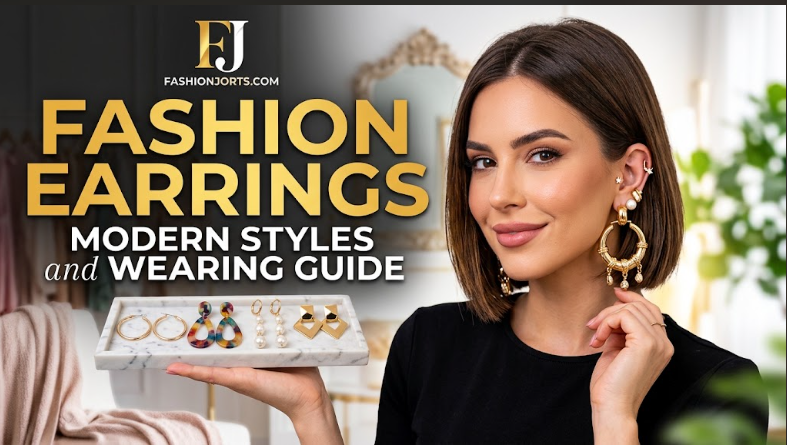
The right earrings can change how an outfit feels before you add anything else. A polished metal hoop brings definition to casual clothing, a long drop adds movement to eveningwear, and a small stud can provide just enough detail for a clean professional look. That flexibility makes earrings one of the easiest accessories to adapt to different wardrobes. Choosing a pair is less about following a strict fashion rule and more about understanding balance. Size, shape, color, hairstyle, neckline, and comfort all affect how an earring looks once it’s worn. A good choice should feel connected to the outfit while still reflecting the wearer’s personality.
Why Fashion Earrings Have Lasting Appeal
Earrings occupy a particularly visible position because they frame the face. Unlike a bracelet hidden beneath a sleeve or a necklace covered by a collar, earrings often remain noticeable throughout the day. Even relatively small changes in shape or size can alter the impression they create. They also offer an accessible way to experiment. Someone who usually wears neutral clothing can introduce brighter colors through jewelry without changing their wardrobe. A person who prefers understated accessories can achieve the opposite effect with slim hoops, tiny studs, or simple metal shapes.
The Main Earring Styles to Know
Understanding basic earring shapes makes shopping easier because each style behaves differently. Some sit close to the ear and remain almost stationary, while others introduce length and movement. Neither approach is automatically better; they simply serve different purposes.
Studs Keep Things Simple
Stud earrings sit directly on the earlobe, making them one of the most compact options available. They can feature plain metal, pearls, crystals, stones, enamel, or small decorative shapes. Because they don’t hang below the ear, they tend to interfere less with clothing and hair. Their simplicity doesn’t mean they have to look ordinary. Geometric forms, uneven shapes, colored stones, and textured surfaces can make a small stud surprisingly distinctive. They are especially useful when the clothing already contains strong patterns or decorative details.
Hoops Offer More Variety Than They Seem
The basic hoop shape is simple, but changing its proportions produces very different results. A thin, small hoop can feel restrained, while a thick oversized version immediately attracts attention. Oval shapes, twisted surfaces, stones, charms, and irregular curves create further variation. Medium hoops often occupy the useful space between subtle and dramatic. They remain visible with many hairstyles without completely dominating the face. This makes them particularly easy to move between daytime and evening outfits.
Huggies Work Well for Minimal Styling
Huggies are small hoops designed to sit closely around the earlobe. Their compact construction gives them a tidy appearance that works well with casual clothing, office outfits, and layered ear combinations. They also tend to move less than larger hoops. People with several piercings can use huggies to create structure without filling the ear with large pieces. Pairing one with a tiny stud or another small hoop can create enough variation while keeping the overall effect controlled.
Drop Earrings Add Length and Movement
Drop earrings extend beneath the lobe, drawing the eye downward. Some remain fairly rigid, while others include linked sections that move with the wearer. The difference can be subtle in a display case but much more noticeable once the earrings are being worn. Short drops can provide a polished alternative to studs for daytime outfits. Longer versions naturally feel more expressive and can work particularly well with open necklines or pulled-back hair. The key is finding a length that complements rather than competes with the clothing.
Statement Earrings Can Carry an Outfit
Statement earrings are designed to be noticed. They may use exaggerated proportions, unusual shapes, strong colors, sparkling surfaces, or several materials at once. Instead of behaving like a small finishing touch, they become part of the outfit’s main visual identity. Simple clothing gives these designs the most room. A monochrome dress, plain top, tailored suit, or clean neckline can act as a background for a dramatic pair. Adding an equally bold necklace isn’t always necessary because too many competing focal points can weaken the effect. Scale should still be considered carefully. A large earring that looks impressive in a photograph may feel distracting if it constantly touches the neck or catches in hair. Strong design works best when it remains wearable.
Pearls Have Moved Beyond Formal Dressing
Pearl earrings are often associated with weddings, formal events, and traditional wardrobes, but their usefulness is much broader. A simple pearl stud can soften a structured blazer, while a hanging pearl design can add contrast to denim or a plain knit. Modern settings also make pearls easier to combine with relaxed clothing. Shape changes their personality considerably. Smooth, symmetrical pearls generally appear more traditional, while irregular forms can create a looser, more contemporary impression. Combining pearls with chains, textured metals, or geometric details can shift the look further. The easiest way to keep pearls from feeling overly formal is to avoid treating them as special-occasion jewelry. Wearing them with everyday clothing creates contrast and allows their natural texture to stand out without making the outfit feel ceremonial.
Ear Cuffs Add Detail Without Dominating the Lobe
Ear cuffs sit around the outer part of the ear rather than hanging from the lobe. They can be narrow and barely visible or wide enough to become a major feature. Their placement makes them useful for anyone who wants jewelry to extend beyond the usual earring position. Cuffs also work naturally with layered styling. A small hoop on the lobe paired with a slim cuff higher on the ear creates separation between the pieces. That spacing can make the arrangement feel cleaner than placing several similarly sized earrings close together. More jewelry isn’t automatically better. Leaving some empty space allows individual pieces to remain visible and prevents a layered arrangement from becoming visually crowded.
How to Match Earrings With Your Clothes
Begin with the amount of detail already present in your outfit. Floral prints, embroidery, sequins, decorative collars, and strong patterns provide plenty for the eye to process. Smaller earrings can support these clothes without creating another competing element. Plain clothing allows more freedom. Bright colors, long drops, oversized hoops, or unusual sculptural shapes can introduce personality to a simple dress or shirt. This is often an easier way to experiment with expressive jewelry because the rest of the outfit provides a neutral foundation. Necklines deserve attention as well. Long earrings can fill some of the visual space created by strapless, off-shoulder, or open-neck clothing. Higher or more detailed necklines may look cleaner with shorter styles that keep the focus around the face.
Consider Your Hairstyle Before Choosing a Pair
Hair changes both the visibility and movement of earrings. Tiny studs may become almost invisible beneath long loose hair, while polished hoops or colorful drops can remain noticeable. Large earrings can also become tangled more easily depending on their shape and construction. Pulled-back hairstyles create very different possibilities. With the ears exposed, small geometric pieces, huggies, cuffs, and delicate drops become much easier to see. This can make relatively restrained jewelry appear more prominent than expected. Short hair offers similar freedom because the earrings remain naturally exposed. In that situation, even modest changes in shape, texture, or metal finish can make a noticeable difference.
Comfort Should Influence What You Buy
An earring isn’t useful if you want to remove it an hour after putting it on. Weight is one of the biggest considerations with larger designs, particularly when the decorative section hangs well below the lobe. Lightweight construction can make dramatic earrings considerably easier to wear. Check the parts that aren’t immediately visible, too. Posts should feel smooth, clasps should close securely, and hooks shouldn’t have rough edges. A beautiful front design can’t compensate for a fastening that constantly opens or irritates the ear. People with sensitive ears should pay particular attention to material information. If a pair repeatedly causes irritation, discontinue wearing it and choose materials that work better for your skin. Persistent reactions deserve professional medical advice rather than repeated experimentation.
Creating a Small but Useful Earring Collection
A versatile jewelry box doesn’t need to contain dozens of pairs. Start with noticeably different options rather than variations of the same design. A small everyday pair, a dependable hoop, an elegant drop, and a stronger statement design can cover many situations. Your wardrobe should guide the details. If you regularly wear warm neutrals and earthy colors, certain metals and natural-looking materials may integrate easily. A wardrobe built around black, white, grey, and denim can provide more room for bright colors or unusual shapes. Pay attention to which earrings you actually wear over several months. Those habits reveal more about your style than a list of current trends ever could. Future purchases can then fill genuine gaps instead of adding another forgotten pair.
Conclusion
Fashion earrings give you room to change an outfit without rebuilding it. A different shape, scale, texture, or color can shift familiar clothes from restrained to expressive with very little effort. The most useful approach is to choose jewelry around your actual wardrobe and routine. A dramatic design has little value if it’s too uncomfortable to wear, while a simple pair that works with ten outfits can become indispensable. Experiment with hoops, pearls, drops, cuffs, or sculptural forms, but don’t feel pressure to collect every style. A few distinct choices are often more useful than a drawer full of nearly identical pieces. Over time, the earrings you reach for repeatedly will reveal what suits you best. Use that knowledge to guide your next purchase rather than treating fashion as a set of rules you need to follow.