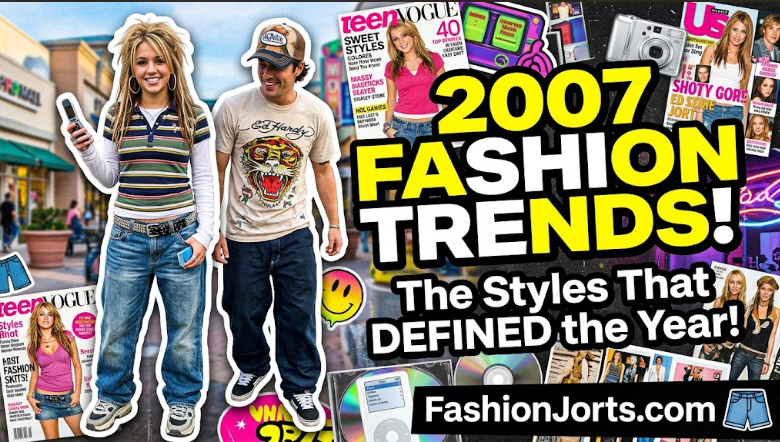
2007 fashion, getting dressed often meant mixing opposites. Jeans could be extremely slim or dramatically wide. Dresses were short and loose, handbags were huge, and simple outfits were finished with oversized sunglasses, thick belts, or shiny accessories. The polished celebrity look existed alongside emo, indie, and pop-punk styles that were becoming increasingly visible among younger people. The year also marked a shift away from some of the most recognizable early-2000s looks. Low-rise bottoms hadn’t vanished, but higher waists were gaining ground. Layering became more common, dresses took a larger role in everyday wardrobes, and retro ideas from previous decades appeared in new forms.
What Did People Wear in 2007?
Everyday style depended heavily on proportion. A fitted pair of jeans might be worn with a long, loose top, while a roomy mini dress could be balanced by tights or leggings. This contrast between narrow and oversized shapes gave many outfits their distinctive late-2000s appearance. Casual wardrobes included denim, tunics, cardigans, graphic T-shirts, hoodies, dresses, leggings, and lightweight tops. For dressier occasions, women could turn to shorter cocktail dresses, heels, metallic fabrics, or statement jewelry. There was plenty of choice, which is why photographs from the period can look surprisingly different from one another. Accessories often provided the finishing touch. Large bags, noticeable belts, sunglasses, scarves, headbands, and jewelry meant that even straightforward jeans-and-top combinations could feel carefully styled.
Dresses Became an Everyday Favorite
Dresses were no longer reserved mainly for formal occasions. Loose shifts, sweater dresses, tunics, babydoll shapes, and mini dresses could all work as everyday clothing. Their relaxed construction also provided a contrast to the fitted jeans and trousers worn at the time. Shorter lengths were especially visible. Rather than pairing every mini with bare legs, women could add opaque tights or leggings, which made the look easier to wear during cooler months. Cardigans and fitted layers underneath dresses provided additional options. Belts changed these loose silhouettes again. A wide belt positioned around the waist could transform a flowing dress into something more structured, giving people two ways to wear essentially the same garment.
Skinny Jeans Faced a New Denim Rival
Skinny jeans became one of the defining pieces of the late 2000s. Dark blue and black versions were particularly versatile because they could move between casual, alternative, and more polished outfits. Longer tops also worked naturally with their narrow shape. Yet wider denim was beginning to challenge them. Wide-leg and trouser-style jeans created a longer, fuller silhouette and looked particularly striking when worn with heels. Instead of disappearing, different denim shapes competed for space in the same wardrobe. Boot-cut jeans remained part of everyday dressing too. This overlap is easy to miss when looking back because fashion nostalgia tends to reduce an era to one or two famous items. In reality, people rarely replace their entire wardrobe because a new silhouette becomes fashionable.
High Waists Began Changing the Silhouette
Ultra-low-rise jeans are inseparable from memories of early-2000s fashion, but waistlines were starting to rise by 2007. High-waisted trousers and wider jeans introduced a shape that placed greater emphasis on the natural waist. Tucking in a fitted top made the effect even clearer. Wide belts reinforced the same idea. They could be worn over dresses, long tops, or coats to pull attention toward the center of the body. That made them functional styling tools rather than purely decorative accessories. Low rises still had plenty of life left in them. The difference was that they were no longer the only silhouette capable of looking current.
Leggings Made Layering Easy
Leggings became a practical bridge between dresses and trousers. Black versions were particularly easy to combine with short dresses, oversized sweaters, and tunic-length tops. They offered coverage without adding the visual weight of jeans. The trend also encouraged experimentation with layers. A dress could sit over leggings with a cardigan on top, while a long sweater could be paired with a belt and flats. These combinations made individual garments more adaptable throughout the year. Layering wasn’t always subtle. Contrasting lengths, visible undershirts, scarves, and accessories could create an intentionally busy outfit that now reads immediately as late 2000s.
Metallics and Glossy Finishes Brought the Shine
Silver and gold weren’t limited to jewelry. Metallic fabrics, handbags, belts, and shoes added a futuristic quality to clothes that otherwise drew heavily from retro fashion. A single reflective accessory could completely change a simple black outfit. Patent finishes provided another source of shine. Glossy shoes and bags felt more dramatic than matte leather, particularly when combined with darker clothing. Sequins offered an even more obvious choice for parties and evening looks. The appeal came from using shine selectively. Metallic details were easy to combine with denim, black leggings, or a plain dress, allowing the trend to stand out without dominating everything else.
Bold Colors and Prints Broke Up the Neutrals
Although black, gray, white, and brown remained dependable choices, stronger colors gave 2007 clothing much of its personality. Purple was particularly memorable, while bright blues, reds, pinks, yellows, and jewel tones appeared across dresses, tops, and accessories. Prints provided another way to make simple silhouettes more interesting. Florals could soften a loose dress, while graphic and geometric patterns produced a sharper appearance. Stripes were also easy to incorporate into casual outfits. Bright accessories offered a less committed approach. A colorful handbag or pair of shoes could provide enough contrast without requiring an equally vivid outfit.
Ballet Flats Became a Wardrobe Staple
Ballet flats suited the proportions of the period particularly well. Their slim profile worked with skinny jeans, leggings, skirts, and dresses, while their practicality made them suitable for everyday wear. They could look feminine without making an outfit feel formal. The footwear story wasn’t entirely flat, though. Platforms, wedges, and heels provided height for evening clothes and worked particularly well beneath wider trousers. Peep-toe designs added another recognizable period detail. Boots became increasingly useful during cooler weather. Worn with narrow jeans or tights, they provided a heavier counterpoint to the softer dresses and longer tops appearing elsewhere in the outfit.
Oversized Bags and Accessories Completed the Look
Handbags grew noticeably large during this period. Big totes and shoulder bags weren’t hidden additions to an outfit; their scale made them part of the overall silhouette. Paired with skinny jeans or a small dress, an oversized bag could appear even more dramatic. Sunglasses followed a similar philosophy. Large frames offered an instantly recognizable celebrity-inspired touch, while wide belts could reshape loose clothing. Headbands, bracelets, long necklaces, and scarves added further opportunities to customize an outfit. The result was a style of accessorizing that rarely aimed for invisibility. Even relatively simple clothing could be accompanied by one prominent item.
Emo and Indie Style Offered an Alternative
Youth culture provided a darker version of the year’s fashion. Emo and pop-punk influences made slim black jeans, band shirts, hoodies, canvas sneakers, and studded belts familiar sights. Darker colors and graphic details separated the aesthetic from the more feminine side of mainstream clothing. Hair was closely tied to the look. Long, side-swept fringes became strongly associated with emo style, while eyeliner and darker styling could push the aesthetic further. Music and clothing worked together as markers of identity. Indie fashion could be harder to define because it borrowed from vintage clothing, music culture, and everyday basics. Slim denim, cardigans, graphic shirts, scarves, and casual footwear offered an understated alternative to more obviously glamorous outfits.
Earlier Decades Were Hiding Inside 2007 Style
Many clothes worn in 2007 fashion weren’t entirely new ideas. Short shift dresses recalled the 1960s, while wide trousers and higher waists drew heavily from 1970s silhouettes. Bright colors, strong shoulders, metallic finishes, and shiny fabrics carried traces of the 1980s. What changed was the way those influences were combined. A retro-shaped dress could be worn with contemporary leggings, while wide trousers might appear with a fitted modern top. People weren’t necessarily attempting to recreate a particular historical decade. This helps explain why the year can be difficult to define with one aesthetic. Its identity came partly from borrowing recognizable ideas and placing them into new combinations.
Celebrity Style Had a Powerful Influence
Celebrity photographs were a major source of fashion inspiration during the period. Red carpets showed formal trends, while paparazzi photographs provided a constant stream of casual outfits featuring jeans, flats, large bags, sunglasses, dresses, and layered basics. The casual celebrity outfit became particularly influential because it appeared achievable. A designer handbag might be expensive, but the jeans, basic top, flats, or oversized sunglasses surrounding it could be imitated at many price levels. That mix of aspirational and accessible dressing helped certain items spread quickly. Instead of waiting for runway trends to filter downward, shoppers could see new combinations constantly through magazines and entertainment coverage.
Why 2007 Style Feels Relevant Again
Several silhouettes that once looked dated have returned to everyday wardrobes in revised forms. Wider denim, ballet flats, large bags, metallic finishes, fitted tops, and retro-inspired dresses no longer automatically look like costume pieces. Modern styling changes the effect, though. A current wide-leg jean may have a different rise or length, and today’s ballet flats may be paired with clothing that would have seemed unusual in 2007. Revival rarely means exact reproduction. For anyone interested in recreating the period, restraint usually works better than wearing every recognizable trend simultaneously. One or two accurate details can communicate the era more convincingly than an outfit built entirely from stereotypes.
Conclusion
2007 fashion was defined less by one dominant trend than by changing proportions. Loose dresses met narrow trousers, wide denim returned while skinny jeans remained popular, and waistlines began climbing after years of low-rise dominance. Accessories gave these clothes much of their character. An oversized handbag, glossy shoe, wide belt, or pair of large sunglasses could turn simple basics into an unmistakably period-specific outfit. Alternative youth culture offered another path entirely, using some of the same garments in darker and more rebellious combinations. That variety is what makes the year worth revisiting. It captures the moment when early-2000s dressing was losing some of its influence but the late-2000s aesthetic had not yet fully settled. Recreating the period today doesn’t require copying an entire outfit. Start with the proportions and choose a few defining details; the result will feel far closer to 2007 than simply adding as many nostalgic pieces as possible.