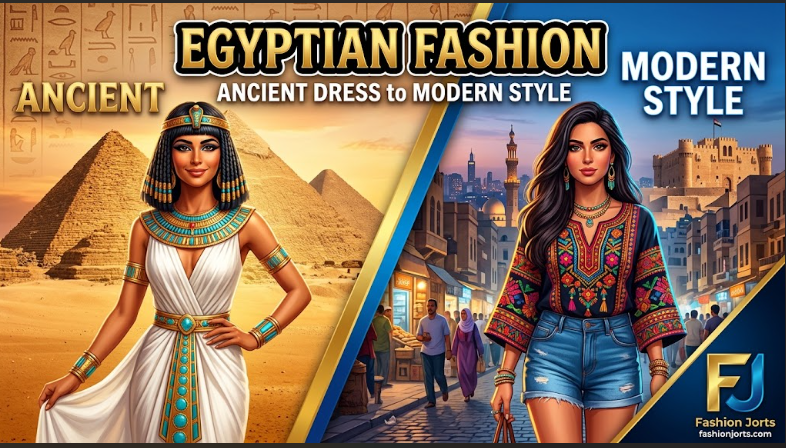
Egyptian fashion has a visual identity that is difficult to mistake. Ancient images of crisp linen, structured collars, pleated clothing, dark eye makeup, and gold ornaments remain familiar thousands of years after they were created. Yet focusing only on pharaohs misses much of what makes the subject interesting. Egypt’s clothing history stretches across many periods, communities, and cultural influences. Practical needs shaped what people wore, but clothing could also express wealth, occupation, social position, regional identity, and personal taste. Modern Egyptian style continues that pattern, combining contemporary wardrobes with traditions that haven’t completely disappeared.
What Did Ancient Egyptians Wear?
Ancient Egyptian clothing was often based on relatively simple shapes. Rather than heavily constructed garments with complicated tailoring, fabric could be wrapped, tied, folded, or draped around the body. The exact appearance changed depending on the period and the person wearing it. Men are frequently shown wearing kilts or wrapped garments around the waist. Women’s clothing included long dresses, fitted forms, and later styles with more visible folds and flowing fabric. Children could wear very little clothing in hot conditions, particularly when they were young. The simplicity of a garment didn’t necessarily mean it was cheap. Fabric quality, craftsmanship, cleanliness, pleating, and accessories could completely change its appearance. A finely produced linen garment worn with expensive jewelry communicated something very different from basic clothing intended for everyday work.
Why Linen Defined Ancient Egyptian Fashion
Linen became closely associated with ancient Egyptian dress because it suited both the environment and local textile production. Made from flax fibers, it could be woven into breathable material that worked well in Egypt’s hot, dry conditions. Depending on the quality of the fibers and workmanship, linen could range from relatively coarse cloth to remarkably fine fabric. Producing high-quality material took skill. Flax had to be processed before fibers could be spun into thread and woven into cloth, making textile production a serious craft rather than a simple household afterthought. Finer fabric demanded greater care and could carry greater value. This helps explain why ancient Egyptian clothing shouldn’t be judged only by its silhouette. Two garments might appear similarly shaped while differing dramatically in texture and quality. In elite dress, the material itself could be part of the display.
Ancient Egyptian Clothing Wasn’t Always White
White and natural linen shades dominate many popular images of ancient Egypt. They created a striking contrast with dark hair, colorful jewelry, and decorated accessories. Light-colored fabric was also well suited to the country’s bright, warm environment. Color, however, wasn’t absent from Egyptian dress. Decorative borders, belts, beads, jewelry, and other accessories introduced blues, reds, greens, and other shades. Dyed textiles also existed, even if surviving examples aren’t as common as undyed linen. The result was often more colorful than the stereotype suggests. Clothing could provide a relatively restrained foundation while accessories supplied stronger visual accents. That contrast remains one reason ancient Egyptian styling is so recognizable.
Jewelry, Sandals, and Personal Appearance
For ancient Egyptians, getting dressed involved more than choosing a garment. Necklaces, broad collars, bracelets, rings, anklets, belts, and decorative beads could become major parts of a finished appearance. Materials and craftsmanship varied, allowing jewelry to serve different sections of society. Gold is strongly associated with royal Egyptian imagery, but jewelry wasn’t limited to precious metal. Beads, stones, glazed materials, and less costly metals could create colorful ornaments. Design and symbolism could matter alongside monetary value. Footwear was another part of dress, although people weren’t necessarily expected to wear shoes constantly. Sandals could be made from plant fibers or leather, while going barefoot was practical in many circumstances. Appearance depended on setting, occupation, wealth, and occasion rather than one rigid dress code.
How Egyptian Fashion Changed Over Time
One common mistake is imagining ancient Egyptian clothing as a single style that remained unchanged. Ancient Egyptian civilization lasted for thousands of years, giving fashion plenty of time to develop. Garment proportions, fabric treatments, accessories, and preferred silhouettes shifted between historical periods. Some earlier clothing appears relatively close-fitting and restrained, while later elite representations show greater use of flowing fabric and elaborate pleating. Increased contact with neighboring societies also brought new materials and aesthetic influences. Political and cultural changes naturally affected dress as well. Egyptian clothing continued changing after the pharaonic age. Greek, Roman, Christian, Arab, Islamic, Ottoman, European, and regional influences all became part of Egypt’s long clothing history. Modern Egyptian style is the result of that continuing process rather than a direct continuation of one ancient wardrobe.
Traditional Egyptian Clothing and Regional Styles
Traditional Egyptian dress varies by region, community, gender, and occasion. Clothing associated with rural communities may differ from garments found in major cities, while Bedouin and Nubian traditions have their own recognizable forms of decoration and styling. Calling all of these traditions simply “Egyptian costume” removes much of their cultural meaning. Embroidery is especially important in some regional traditions. Patterns, colors, decorative stitching, jewelry, and head coverings can give garments a strong local character. Such details may reflect community traditions rather than nationwide fashion rules. Climate also remains an obvious influence. Loose clothing can allow greater airflow and provide coverage from intense sun, making traditional silhouettes practical as well as culturally familiar. Function and appearance frequently work together.
The Galabeya and Everyday Egyptian Dress
The galabeya is among the most familiar traditional garments associated with Egypt. It is generally long and loose, creating an easy silhouette that allows comfortable movement. Different versions can vary in fabric, decoration, color, and cut. The garment shouldn’t be viewed as a historical costume frozen in time. It has been worn as practical clothing, and variations can reflect region, occasion, and personal preference. A simple everyday version may look very different from one prepared for a celebration. The galabeya also demonstrates how clothing traditions survive by remaining useful. Rather than existing only for ceremonies or tourists, traditional forms can continue alongside newer styles. That coexistence is central to understanding Egyptian dress today.
Nubian and Bedouin Clothing Traditions
Nubian clothing adds another distinct dimension to Egyptian style. Bright colors, flowing shapes, decorative details, and accessories can appear in traditional dress, particularly around celebrations and cultural occasions. These traditions have their own history and shouldn’t be treated as generic versions of pharaonic fashion. Bedouin communities also developed clothing suited to their environments and social traditions. Long garments, head coverings, embroidery, and jewelry can form part of traditional appearance. Specific designs may vary considerably between communities. These regional differences show why there is no single authentic Egyptian outfit. Egypt connects North Africa, the Mediterranean, the Nile Valley, and the Middle East, and its clothing reflects that geographic and cultural complexity.
Egyptian Fashion for Men and Women
Traditional men’s clothing often prioritizes loose shapes and ease of movement. Long garments such as the galabeya can be combined with different outer layers or head coverings depending on location and occasion. Contemporary men’s wardrobes, especially in cities, also include the same shirts, trousers, suits, sportswear, and casual clothing found across international fashion. Women’s dress is equally varied. Traditional long dresses may feature embroidery or decorative details, while contemporary wardrobes range from modest fashion to jeans, dresses, business clothing, and international styles. Headscarves are common among many women, but how they are worn and styled differs considerably. Age, profession, family background, location, and personal preference all affect these choices. A young professional in Cairo may dress very differently from someone attending a traditional celebration in another region. Both can still represent modern Egyptian fashion.
Modern Egyptian Fashion and Cultural Identity
Modern Egyptian style doesn’t require choosing between tradition and contemporary fashion. The two frequently exist together. Someone might wear internationally familiar clothing during the working week and choose a traditional garment for a family event, religious celebration, or cultural occasion. Egyptian designers can also draw selectively from the country’s past. Ancient symbols, geometric decoration, embroidery, local craftsmanship, flowing silhouettes, and historical color combinations provide a large source of inspiration. The strongest designs reinterpret those elements rather than simply copying museum imagery. This distinction matters because Egyptian identity extends far beyond pharaonic symbolism. Modern Egypt has its own urban culture, regional traditions, social changes, and creative communities. Fashion becomes more interesting when all of these influences are allowed to exist together.
How Ancient Egyptian Fashion Influences Modern Style
Ancient Egypt continues to inspire designers because its visual language is immediately identifiable. Pleating, metallic accessories, strong geometric shapes, scarab motifs, lotus forms, dramatic collars, and bold eye makeup can suggest Egyptian influence without recreating an entire historical outfit. Fashion inspired by ancient Egypt shouldn’t automatically be mistaken for historically accurate clothing. Runway designers usually reinterpret historical references according to modern materials, silhouettes, and expectations. Their goal may be visual impact rather than archaeological reconstruction. For readers interested in recreating Egyptian-inspired style, subtle references usually work better than combining every recognizable symbol at once. A structured metallic accessory, pleated fabric, geometric jewelry, or linen-inspired neutral palette can communicate the influence without becoming theatrical.
Why Egyptian Fashion Remains So Recognizable
The enduring appeal of Egyptian fashion comes partly from contrast. Simple garment shapes could sit beside highly decorative jewelry, carefully styled hair, strong makeup, and detailed accessories. This created a clear visual identity without requiring every piece of clothing to be complicated. Ancient art has also preserved recognizable silhouettes and styling conventions. Museums, films, exhibitions, books, and popular culture have repeatedly brought those images to new audiences. Some modern interpretations are historically loose, but they have helped keep Egyptian aesthetics visible. Modern Egypt adds another layer to that legacy. Traditional regional clothing continues alongside global fashion, while designers can reinterpret historical references for contemporary audiences. Egyptian style remains recognizable precisely because it has never belonged to only one moment.
Conclusion
Egyptian fashion makes more sense when viewed as a long history rather than one recognizable costume. Ancient linen clothing was shaped by climate and skilled textile production, while jewelry, pleating, cosmetics, and accessories gave dress its distinctive character. Styles also changed significantly as Egyptian society changed. Traditional clothing adds a different dimension. The galabeya, Nubian dress, Bedouin embroidery, and other regional practices show how local communities developed their own approaches to clothing. These traditions belong to Egyptian fashion just as much as the imagery associated with pharaohs. Contemporary style continues moving between local identity and international influence. Modern clothing doesn’t erase older traditions, and historical inspiration doesn’t prevent designers from creating something new. That balance keeps Egyptian fashion culturally meaningful rather than simply nostalgic. Understanding those differences is the best way to appreciate Egyptian style today. Ancient dress, regional clothing, and contemporary fashion each tell a different part of the story, and none needs to stand in for all the others.