The 80s goth fashion movement created one of the most recognizable alternative styles in modern fashion history. Born from the underground music scene, it mixed dark clothing, dramatic beauty choices, vintage influences, and rebellious energy into a look that felt completely different from mainstream trends of the decade. While the 1980s were often associated with bright colors, bold patterns, and oversized fashion, goth style followed another path. It focused on black outfits, mysterious aesthetics, artistic expression, and individuality. The style was not created simply to look different; it became a way for people to show their connection to music, creativity, and alternative culture. Today, 80s goth fashion continues to inspire designers, musicians, and fashion lovers because it represents more than a trend. It shows how clothing can become a personal statement.
The Origins of 80s Goth Fashion
Goth fashion developed from the post-punk movement that grew in the United Kingdom during the late 1970s and early 1980s. As bands began experimenting with darker sounds and emotional themes, their visual styles started influencing fans. The movement became strongly connected with bands such as The Cure, Siouxsie and the Banshees, Bauhaus, and The Sisters of Mercy. Concerts and underground clubs became places where people created their own interpretations of the style using thrifted clothing, vintage pieces, and punk-inspired items. Unlike mainstream fashion trends that often followed commercial rules, goth style grew from personal creativity. People mixed different influences, including Victorian clothing, horror films, punk culture, and romantic fashion, to build a unique appearance.
What Made 80s Goth Fashion Different?
The biggest difference between goth fashion and other 1980s styles was its mood. Instead of focusing on popularity or bright visual appeal, goth fashion explored mystery, emotion, and individuality.
The style usually included:
- Dark-colored clothing
- Layered fabrics
- Dramatic silhouettes
- Vintage-inspired designs
- Bold accessories
- Heavy makeup
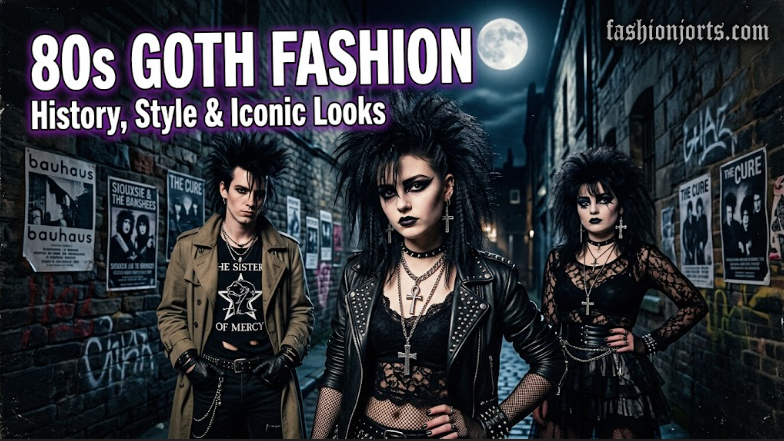
However, there was no single “correct” goth outfit. Some people preferred elegant Victorian-inspired looks, while others leaned toward punk influences with leather jackets and ripped clothing.
Black Clothing and Dramatic Layers
Black became the defining feature of goth fashion, but the style was never just about wearing dark colors. The real focus was creating depth through different materials and shapes. A typical outfit might combine velvet, lace, leather, or satin to create contrast. A flowing black dress could be paired with heavy boots, while a leather jacket could be worn over a delicate lace shirt. Layering was another important part of the look. Long coats, oversized sleeves, skirts over tights, and multiple accessories helped create the dramatic appearance associated with the decade.
Victorian Influence in Goth Style
One of the most interesting parts of 80s goth fashion was its connection to historical clothing. Many goth looks borrowed ideas from Victorian mourning fashion and old romantic styles. High collars, lace details, fitted jackets, and long flowing garments gave outfits a classic appearance while still feeling rebellious. This combination of old and new created a style that felt both elegant and unconventional. Instead of copying historical clothing exactly, goth fashion transformed these influences into something modern for the underground scene.
Punk Elements in 80s Goth Clothing
Although goth developed into its own movement, it kept strong connections with punk culture. Many early goth outfits included details that came from punk fashion. Leather jackets, combat boots, ripped tights, chains, and metal accessories added a rougher edge to softer gothic pieces. The mix of delicate and aggressive elements became one of the most recognizable parts of the style. A lace dress with heavy boots or a romantic shirt with a leather jacket showed how goth fashion combined opposing ideas.
80s Goth Hairstyles and Makeup
Hair and makeup were essential parts of completing the goth appearance. The goal was often to create a dramatic and artistic look rather than follow traditional beauty standards. Popular hairstyles included large teased hair, messy black layers, asymmetrical cuts, and bold shapes. Many people used styling techniques to create volume and movement. Makeup focused on strong contrasts. Pale foundation, dark eyeliner, deep lipstick shades, and heavy eye makeup became common choices. Figures like Siouxsie Sioux and Robert Smith helped popularize these visual elements. Their appearances showed that fashion could be theatrical and connected to personal identity.
Women’s 80s Goth Fashion
Women’s goth fashion during the 1980s combined romantic details with a rebellious attitude. Many outfits featured flowing shapes, dark colors, and vintage-inspired pieces.
Common clothing choices included:
- Lace dresses
- Long skirts
- Corset-style tops
- Velvet jackets
- Fishnet stockings
- Choker necklaces
The style allowed women to experiment with different expressions of femininity. It could appear elegant, mysterious, powerful, or dramatic depending on how pieces were combined.
Men’s 80s Goth Fashion
Men’s goth fashion challenged traditional ideas about masculine clothing during the decade. Many men adopted styles that included jewelry, makeup, and more artistic clothing choices.
Popular pieces included:
- Black coats
- Tight trousers
- Band shirts
- Leather jackets
- Dark boots
- Statement accessories
Artists like Robert Smith showed that alternative fashion could be emotional and expressive without fitting traditional expectations.
The Most Influential 80s Goth Fashion Icons
Siouxsie Sioux
Siouxsie Sioux became one of the strongest influences on early goth fashion. Her sharp makeup, creative hairstyles, and unusual clothing choices helped define the visual identity of the movement.
Robert Smith
Robert Smith’s appearance became closely connected with goth culture. His messy hair, pale makeup, and dark clothing represented a more emotional and artistic side of the style.
Dave Vanian
Dave Vanian brought theatrical elements into alternative fashion. His elegant dark outfits and dramatic stage presence added a strong gothic influence to the scene.
How 80s Goth Fashion Influences Modern Style
Many modern alternative fashion trends still borrow ideas from 80s goth style. Black clothing, platform boots, dark makeup, and Victorian-inspired designs continue appearing in fashion collections and streetwear. However, modern interpretations are often more flexible. Some people mix goth elements with casual clothing, while others combine them with punk, metal, or contemporary fashion. The original message remains the same: clothing can represent personality, creativity, and independence.
How to Create an 80s Goth-Inspired Look Today
Creating an 80s-inspired goth outfit does not require copying every detail from the decade. A modern approach can focus on a few key elements. Start with dark basics such as a black jacket, boots, or trousers. Add texture through lace, velvet, or leather pieces. Accessories like chokers, rings, and silver jewelry can help complete the look. For makeup, focus on contrast rather than perfection. Dark eyeliner, bold lips, and dramatic eyes can create the classic gothic feeling without looking like a costume.
Conclusion
80s goth fashion became memorable because it allowed people to create an identity through clothing. It combined music, art, history, and rebellion into a style that felt personal rather than manufactured. The movement proved that fashion does not always need to follow popular trends. Sometimes the strongest styles come from communities that create their own rules. Decades later, the dark elegance and creative freedom of 80s goth fashion continue to influence anyone looking for a style that feels different, expressive, and uniquely their own.