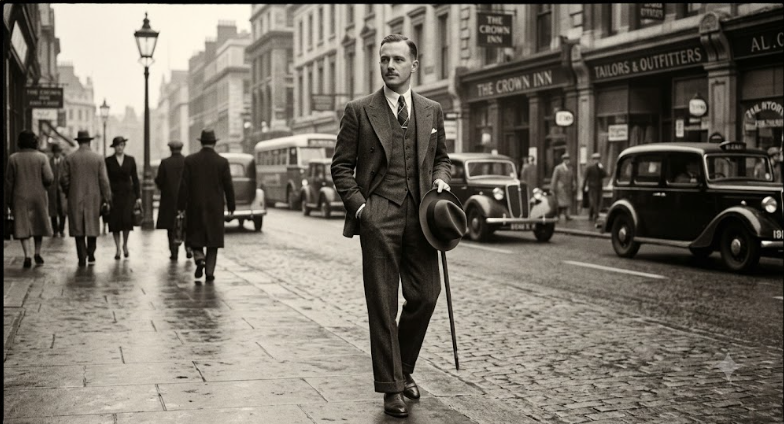
The 1930’s men’s suits fashion era remains one of the most admired periods in menswear history. It was a time when a suit was not simply an outfit but a reflection of personality, professionalism, and social identity. Men paid close attention to fit, fabric, and details, creating a style that looked powerful without losing elegance. The decade introduced some of the most recognizable elements of classic tailoring, including wide shoulders, long jackets, high-waisted trousers, and sophisticated three-piece designs. Although the 1930s were marked by economic difficulties, fashion continued to evolve, with men seeking clothing that offered durability, comfort, and a polished appearance. Today, vintage collectors, fashion designers, and classic menswear enthusiasts still admire 1930s suits because they represent craftsmanship and timeless style.
The Evolution of Men’s Suits During the 1930s
The early 1930s continued some influences from the previous decade, but men’s fashion quickly moved toward a stronger and more structured appearance. Tailors began creating suits that gave men a broader frame and a more confident presence. The ideal silhouette was based on contrast. Jackets emphasized the shoulders and chest, while trousers created a longer, balanced shape. This approach became known as the classic masculine silhouette of the era. Unlike modern slim-fit suits, 1930s tailoring focused on movement and comfort. Clothing was designed to drape naturally over the body rather than tightly follow every shape.
The Distinctive Shape of a 1930s Suit
The most recognizable feature of 1930s suits was their strong upper-body structure. Jackets were designed with wider shoulders, fuller sleeves, and generous chest space. Tailors used careful construction techniques to create a powerful appearance while maintaining comfort. The waist was slightly shaped, giving the jacket a cleaner outline without making it restrictive. Another important feature was jacket length. Compared with many modern styles, 1930s jackets extended lower on the body, creating a balanced connection between the jacket and trousers.
Double-Breasted Suits Became a Symbol of Elegance
Double-breasted suits were among the most iconic styles of the decade. Their overlapping front panels, large lapels, and multiple buttons created a formal and confident appearance. This style became especially popular among businessmen, entertainers, and public figures. The design naturally added width to the chest area, making it appealing to men who wanted a strong and sophisticated look. While double-breasted suits were often associated with formal occasions, they were also worn in professional settings. Their popularity showed how menswear could combine practicality with visual impact.
Three-Piece Suits and the Importance of the Waistcoat
The three-piece suit remained an essential part of a gentleman’s wardrobe during the 1930s. It included a jacket, matching trousers, and a waistcoat. The waistcoat added depth to the outfit and allowed men to maintain a dressed appearance even after removing their jackets. It also gave men more opportunities to experiment with colors, textures, and patterns. Some men wore matching waistcoats, while others preferred contrasting designs to create a more individual style. This attention to small details was a major part of 1930s fashion.
High-Waisted Trousers Defined the Decade
One of the biggest differences between 1930s trousers and modern trousers was the waist position. Men commonly wore trousers much higher, often reaching above the natural waistline. These trousers usually had a fuller cut through the hips and legs. Pleats provided extra room, while cuffs at the bottom added structure and weight. The purpose was not only appearance but also comfort. The relaxed shape allowed men to move easily while maintaining a refined silhouette.
Fabrics and Patterns Popular During the 1930s
Quality materials were central to men’s fashion during this period. Wool was the most common choice because it was durable, versatile, and suitable for different seasons. Common fabrics included flannel, tweed, and textured wool blends. These materials gave suits a rich appearance and helped garments maintain their shape. Patterns were often subtle and sophisticated. Pinstripes, chalk stripes, checks, and herringbone designs were popular choices for men who wanted something more distinctive than a plain suit.
Colors That Defined 1930s Men’s Fashion
Men’s suits during the 1930s usually followed classic color choices. Dark shades were preferred for business and formal clothing because they created a serious and professional appearance. Charcoal gray, navy blue, brown, and black were among the most common colors. Lighter shades appeared more often in summer suits and casual country-inspired clothing. Rather than relying on bright colors, men expressed their style through tailoring, fabric texture, and accessories.
Hollywood’s Role in Popularizing 1930s Suit Styles
Hollywood had a major influence on men’s fashion during the 1930s. Movie stars became style examples for audiences around the world, and their carefully tailored suits helped define the image of the modern gentleman. Actors such as Cary Grant, Clark Gable, and Fred Astaire became associated with sharp tailoring and elegant dressing. Their appearances showed men how a well-fitted suit could create confidence and sophistication. Cinema helped transform certain suit styles from everyday clothing into symbols of glamour and success.
Accessories That Completed the 1930s Gentleman Style
A 1930s suit was rarely worn alone. Accessories played an important part in completing the overall appearance. Men commonly wore leather dress shoes, silk ties, pocket squares, cufflinks, watches, and hats. The fedora became one of the most recognizable accessories of the period. These details allowed men to personalize their clothing while maintaining the formal standards of the era.
How 1930s Suit Fashion Influences Modern Style
The influence of 1930s tailoring can still be seen today. Many modern designers borrow elements from this period, especially wider lapels, double-breasted jackets, and classic trouser cuts. However, wearing a 1930s-inspired suit today does not mean copying the entire look. Many people combine vintage-inspired features with modern fabrics and comfortable fits. A double-breasted jacket paired with contemporary trousers or a classic shirt can create a timeless appearance without looking outdated.
Why 1930s Men’s Suits Remain Popular
The lasting appeal of 1930s suits comes from their focus on quality and proportion. They were created during a period when tailoring was about making clothing that fit well and lasted for years. Modern fashion often changes quickly, but the principles behind 1930s menswear remain attractive because they focus on confidence, craftsmanship, and personal style. For many fashion enthusiasts, the decade represents one of the finest examples of classic men’s dressing.
Conclusion
The 1930’s men’s suits fashion era created a style that continues to inspire designers and fashion lovers nearly a century later. Its focus on strong shapes, quality materials, and careful details made it one of the most memorable periods in menswear. Although fashion has changed, the appeal of a well-tailored suit remains constant. The lessons from the 1930s show that timeless style comes from thoughtful design, proper fit, and confidence. For anyone interested in classic menswear, the suits of the 1930s offer a lasting example of how clothing can express character and individuality.