The 1970s created some of the most recognizable fashion moments in history, and disco style remains one of the most memorable. Built around music, nightlife, and self-expression, 70s disco fashion was designed to capture attention. Shimmering fabrics, dramatic shapes, and confident styling turned ordinary outfits into statements. Disco was not only a music movement; it became a lifestyle. As clubs grew popular across cities, people began dressing for the experience. Clothing had to look impressive under flashing lights, feel comfortable while dancing, and reflect the personality of the person wearing it. This combination of glamour and freedom made disco fashion one of the most influential styles of the decade.
The Rise of Disco Fashion in the 1970s
Disco fashion developed during a period when people were experimenting more with clothing, colors, and personal style. The early 1970s still carried influences from bohemian and casual trends, but by the middle of the decade, nightlife culture began pushing fashion in a more glamorous direction. Dance clubs became places where people could express themselves through clothing. Instead of following traditional rules, many embraced bold designs, bright colors, and eye-catching details. The disco scene encouraged people to create outfits that felt exciting and different from everyday wear. New York nightlife played an important role in spreading this style. Clubs became gathering places for musicians, celebrities, artists, and fashion lovers who helped define the look of the era.
The Fabrics That Defined Disco Style
One of the easiest ways to recognize 70s disco fashion is through its use of reflective and luxurious-looking materials. Designers focused on fabrics that moved well and looked dramatic under nightclub lighting. Sequins became a major trend, appearing on dresses, tops, jackets, and jumpsuits. Metallic fabrics such as gold and silver finishes added a futuristic feeling to outfits, while satin and velvet created a more elegant appearance. Polyester was also widely used during the decade because it was affordable, durable, and easy to shape into fitted clothing. It allowed designers to create colorful pieces that matched the energetic mood of disco culture. The purpose of these fabrics was not simply decoration. They helped clothing become part of the performance, moving with dancers and catching the attention of everyone around them.
Bell-Bottoms and Flared Pants Became Fashion Icons
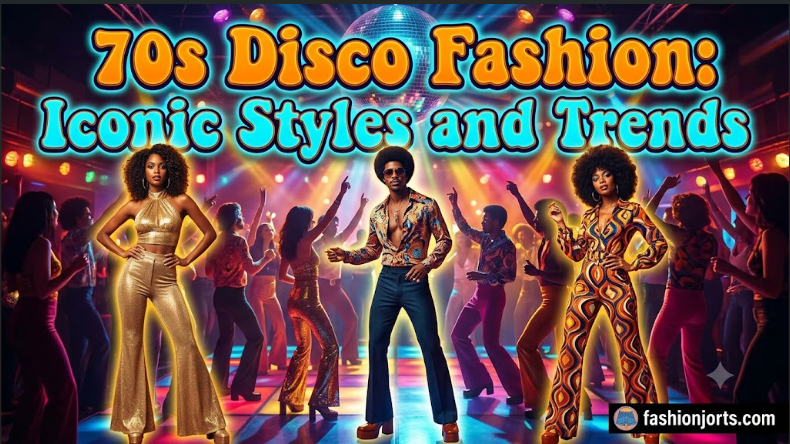
Few items represent the 1970s as strongly as bell-bottom trousers. Originally connected with earlier youth movements, flared pants became a major part of disco wardrobes. The style featured a fitted upper section that widened from the knee downward, creating a dramatic shape. Both men and women wore flared trousers, often pairing them with fitted tops to balance the silhouette. Popular versions included denim flares, high-waisted trousers, and shiny disco pants. When combined with platform shoes, they created the long, flowing appearance that became closely associated with the era.
The Popularity of Disco Jumpsuits
The jumpsuit was one of the most important pieces in 70s disco fashion. It offered a complete outfit while allowing freedom of movement, making it perfect for dancing.
Women often wore fitted jumpsuits with:
- Halter neck designs
- Metallic finishes
- Wide legs
- Sequined details
Men also embraced one-piece styles, especially performers who wanted a strong stage presence. The jumpsuit represented the confidence of disco culture. It was bold, practical, and impossible to ignore.
Women’s Disco Fashion Trends
Women’s fashion during the disco era focused on confidence and glamour. Outfits often combined fitted shapes with dramatic details. Wrap dresses became especially popular because they offered comfort while maintaining an elegant appearance. Designed by Diane von Fürstenberg in the 1970s, the wrap dress became a symbol of modern women’s fashion.
Other popular choices included:
- Shimmering tops
- Halter dresses
- Wide-leg trousers
- Maxi dresses
- Body-hugging evening outfits
Accessories were also important. Large earrings, statement necklaces, and wide belts helped complete the glamorous nightclub look.
Men’s Disco Fashion Trends
Men’s disco style was far from simple. The decade encouraged men to experiment with colors, fabrics, and silhouettes. The classic disco outfit often included a wide-collar shirt, flared trousers, and a fitted jacket. Polyester suits in bright colors or white became especially popular for evening events. The white suit worn by John Travolta in the 1977 film Saturday Night Fever became one of the most recognizable images connected with disco fashion. The look represented the confidence and theatrical style that defined the period. Open shirts, gold chains, and platform shoes added extra personality to men’s outfits.
Shoes and Accessories That Completed the Look
A disco outfit was rarely complete without dramatic accessories. Platform shoes were among the biggest trends of the era, giving both men and women extra height while matching the bold clothing styles. Jewelry also played an important part. Large hoops, chunky bracelets, gold chains, and oversized rings were common choices. Accessories allowed people to personalize their outfits and create a stronger visual identity.
Hair and Makeup Trends of the Disco Era
Disco beauty trends matched the energy of the clothing. Hairstyles were often large, expressive, and full of volume. Popular looks included feathered hairstyles, curls, long waves, and natural textured styles. Makeup often featured glowing skin, glossy lips, and shimmering eye colors. The goal was not minimal beauty. Disco style celebrated confidence and visibility.
The Celebrities Who Influenced Disco Fashion
Music stars helped turn disco clothing into a worldwide trend. Performers such as Donna Summer, Diana Ross, and Cher became known for glamorous outfits that matched their powerful stage performances. Cher especially became famous for dramatic costumes created by designer Bob Mackie. Her outfits showed how fashion could become part of a performer’s identity. These celebrities inspired fans to bring more creativity and confidence into their own wardrobes.
How 70s Disco Fashion Influences Modern Style
Although the disco era ended decades ago, its influence continues in modern fashion. Designers regularly revisit elements such as metallic fabrics, flared trousers, platform shoes, and sparkling evening wear. Today, many people prefer adding small disco-inspired touches rather than wearing a complete vintage outfit. A pair of flared jeans, a shiny jacket, or a statement accessory can bring a 1970s feeling into a modern wardrobe. The lasting appeal of disco fashion comes from its attitude. It encourages people to have fun with clothing and use style as a form of self-expression.
Conclusion
70s disco fashion remains memorable because it represented more than clothing. It reflected a time when people embraced creativity, confidence, and personal expression. The era’s bold designs, sparkling materials, and dramatic silhouettes continue to inspire modern fashion because they bring energy and personality to everyday style. Whether through a vintage-inspired outfit or a single statement piece, disco fashion proves that clothing can be playful, expressive, and unforgettable.