The 1990s produced some of the most recognizable fashion movements in modern history, but few were as expressive and experimental as rave fashion. Built around electronic music, underground parties, and a desire for personal freedom, the style rejected traditional rules and encouraged people to create their own identity through clothing. From oversized trousers and neon colors to futuristic accessories and playful details, rave outfits reflected the energy of the dance floor. The movement was not about following a single trend. It was about movement, creativity, and belonging. Today, many elements of this era continue to influence festival clothing, streetwear, and vintage fashion.
What Made 90s Rave Fashion Unique?
Unlike mainstream fashion trends that often started with designers and magazines, rave fashion grew from music communities. People attending warehouse parties and clubs created looks that matched the atmosphere around them. Comfort was one of the biggest priorities. Ravers needed clothes that allowed them to dance for hours, which is why loose fits, lightweight fabrics, and practical footwear became popular. At the same time, outfits were designed to stand out in dark venues filled with colorful lights. The result was a style that combined function with imagination. A simple pair of pants could become a statement piece when it featured unusual shapes, bright colors, or reflective details.
The Influence of Electronic Music on Rave Style
Rave fashion cannot be separated from the rise of electronic dance music during the late 1980s and early 1990s. As house, techno, and trance communities grew, they created new spaces where young people could experiment with appearance and identity. Different music scenes developed their own visual styles. Some groups preferred bright and playful clothing, while others leaned toward darker, futuristic outfits inspired by technology and science fiction. Music was the foundation, but clothing became a way for people to show which communities they belonged to.
Phat Pants Became the Symbol of Rave Clothing
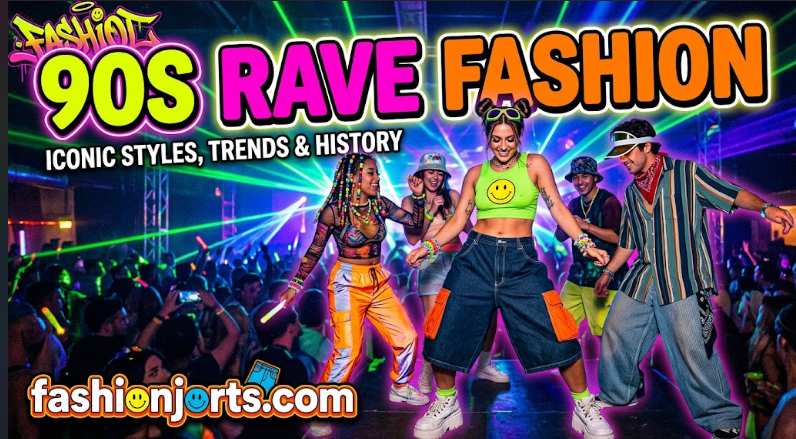
One of the most memorable pieces from the era was the famous pair of oversized rave pants, often called phat pants. These extremely wide trousers became popular because they offered freedom of movement and created a dramatic look while dancing.
Many designs included:
- Wide legs
- Multiple pockets
- Bright colors
- Reflective strips
- Durable synthetic fabrics
The oversized shape represented the relaxed attitude of rave culture. Instead of focusing on fitted clothing and formal appearances, the style celebrated comfort and individuality.
Neon Colors and Futuristic Fabrics
Color played a major role in rave fashion. Bright shades such as electric blue, neon green, pink, and orange were common because they created a strong visual effect under club lighting. Ravers also experimented with materials that felt modern and unusual. Reflective fabrics, metallic finishes, mesh, PVC, and nylon helped create a futuristic appearance. These materials reflected the excitement of the 1990s, a decade fascinated by computers, technology, and ideas about the future.
Candy Raver Style and Colorful Expression
One of the most recognizable branches of 90s rave fashion was the candy raver aesthetic. This style focused on fun, bright colors, and playful accessories. Candy ravers often wore colorful tops, decorated pants, bead bracelets, fluffy accessories, and creative hairstyles. The look was energetic and youthful, reflecting the social side of rave communities. The style also became connected with the idea of friendship and connection. Accessories such as handmade bead bracelets were often exchanged between people as symbols of shared experiences.
Cyber Rave Fashion and the Future-Inspired Look
Not every rave outfit was colorful and playful. Another major influence came from cyber and industrial aesthetics. Cyber rave fashion featured darker colors, metallic materials, and futuristic accessories. Inspired by science fiction and emerging digital culture, these outfits often included:
- PVC clothing
- Goggles
- Reflective details
- Platform footwear
- Metallic accessories
This style represented a different vision of the future compared with candy rave fashion. Instead of bright fantasy, it focused on technology, machines, and urban environments.
The Role of Accessories in 90s Rave Outfits
Accessories helped transform basic clothing into complete rave looks. Many people used small details to create outfits that felt personal and unique. Popular accessories included glow sticks, colorful bracelets, sunglasses, hats, whistles, and unusual jewelry. These items were not just decorative; they became part of the experience of attending a rave. The ability to customize an outfit was one of the reasons rave fashion felt different from many other trends of the decade.
How Sportswear Influenced Rave Clothing
Sportswear had a strong connection with rave culture because it offered both comfort and style. Sneakers, tracksuits, and athletic clothing became common choices for people who spent long nights dancing. Brands known for casual athletic wear became popular within youth culture because their designs matched the relaxed attitude of rave communities. This connection between music and sportswear helped shape the streetwear movement that became even stronger in later decades.
Why 90s Rave Fashion Is Returning
The renewed interest in 90s rave fashion comes from a wider comeback of vintage styles. Younger generations have been drawn to the decade’s bold colors, relaxed silhouettes, and creative approach to dressing. Modern festival outfits often borrow ideas from rave culture through wide-leg pants, reflective clothing, futuristic accessories, and bright colors. However, today’s fashion usually adapts these ideas rather than copying them completely. Many people combine rave influences with modern streetwear to create a more updated look.
How to Wear 90s Rave Style Today
A modern interpretation of rave fashion does not require wearing an entire retro outfit. Small details can create the same feeling. A simple approach could include wide-leg trousers, a colorful graphic shirt, comfortable sneakers, and a statement accessory. For a futuristic style, metallic fabrics, reflective pieces, and darker tones can create a cyber-inspired appearance. The key idea is the same as it was in the 1990s: clothing should reflect personality and creativity.
The Lasting Impact of Rave Fashion
90s rave fashion remains memorable because it represented more than clothing. It captured a period when young people used music and style to build communities and express themselves differently. The movement showed that fashion could be playful, practical, and personal at the same time. Decades later, its influence continues because the ideas behind it — creativity, freedom, and individuality — remain relevant.
Conclusion
90s rave fashion was created by people who wanted clothing to match their music, movement, and personality. It challenged traditional ideas about what clubwear could look like and turned the dance floor into a place for creative expression. The style continues to inspire because it was never only about appearance. It represented freedom, experimentation, and the idea that fashion could bring people together. Whether through neon colors, oversized silhouettes, or futuristic details, the spirit of 90s rave fashion continues to influence how people dress, create, and express themselves today.