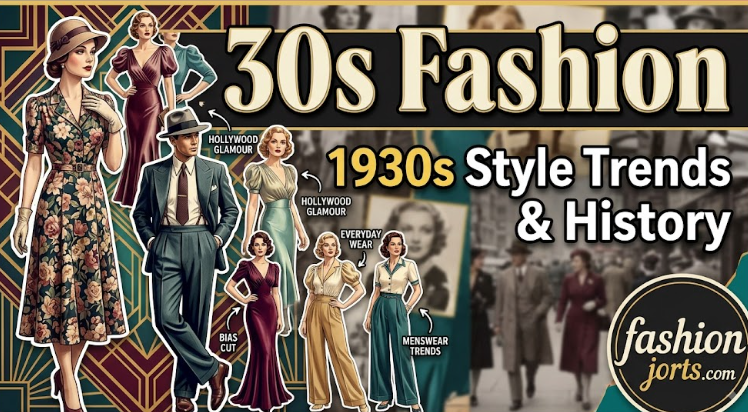
The 1930s was a decade of contrast in fashion. While the world faced economic uncertainty during the Great Depression, clothing continued to evolve with elegance, creativity, and individuality. The bold styles of the 1920s slowly disappeared, making way for longer silhouettes, defined waistlines, refined tailoring, and a more polished appearance. Fashion in the 1930s was shaped by changing lifestyles, Hollywood influence, and the need for practical yet attractive clothing. Women embraced flowing gowns and sophisticated daywear, while men adopted sharper suits with broader shoulders and classic details. Many of the designs created during this period continue to inspire modern vintage fashion.
The Evolution of Fashion During the 1930s
The early 1930s marked a shift away from the loose, straight shapes of the previous decade. Clothing became more fitted, with designers focusing on creating a natural body shape rather than hiding it. Women’s dresses featured longer skirts, narrow waistlines, and softer fabrics that moved with the body. Instead of the youthful and rebellious look of the 1920s flapper, the new style represented maturity and elegance. For men, the decade brought a stronger and more structured appearance. Suits became wider through the shoulders, trousers became fuller, and accessories played an important role in completing a polished outfit.
Women’s Fashion Trends in the 1930s
The Rise of Elegant Dresses
Dresses were the foundation of women’s wardrobes during the 1930s. Everyday dresses focused on comfort and practicality, while evening gowns created a glamorous appearance. Day dresses often included details such as collars, buttons, belts, and patterned fabrics. Many designs were inspired by traditional femininity, with shapes that highlighted the waist and created a balanced silhouette. Evening dresses were more dramatic. Long skirts, flowing materials, and carefully designed necklines created the sophisticated style associated with the decade.
Bias-Cut Gowns and Hollywood Glamour
One of the most recognizable features of 1930s fashion was the bias-cut gown. This technique allowed fabric to fall naturally around the body, creating a smooth and elegant shape. The style became closely connected with Hollywood because actresses wore similar designs in films and public appearances. Stars such as Greta Garbo and Jean Harlow influenced the way women viewed beauty and evening fashion. The popularity of these gowns helped create the idea of Old Hollywood glamour, a style still referenced in modern fashion.
Everyday Clothing and Practical Style
Not all 1930s clothing was designed for luxury. Many people needed affordable and durable garments because of the economic conditions of the time. Women often wore simple dresses made from cotton or rayon. These fabrics allowed people to maintain a fashionable appearance without the cost of expensive materials. Practical clothing also became more common. Women began wearing trousers for activities such as travel, sports, and leisure. Wide-leg pants and beach pajamas represented a new level of freedom in women’s fashion.
Men’s Fashion in the 1930s
Men’s clothing in the 1930s focused on confidence and structure. The typical suit had a strong shape, with wider shoulders and a longer jacket compared with earlier styles. Three-piece suits were especially popular among professionals and formal dressers. They usually included a jacket, trousers, and matching waistcoat.
Common details included:
- Double-breasted jackets
- High-waisted trousers
- Patterned ties
- Leather shoes
- Fedora hats
Casual clothing also developed during this period. Sweaters, sports jackets, and lighter fabrics became popular for outdoor activities and relaxed occasions.
The Influence of Hollywood on 1930s Style
Hollywood became one of the strongest fashion influences of the decade. Movies provided audiences with an escape from everyday struggles, and film stars became examples of elegance and sophistication. Costume designers created memorable looks that shaped public taste. Glamorous gowns, stylish suits, and carefully arranged hairstyles seen on screen quickly influenced everyday fashion. The connection between cinema and clothing grew stronger during the 1930s. People looked to actors not only for entertainment but also for inspiration about how to dress and present themselves.
Fabrics, Colors, and Patterns of the Decade
The fabrics used during the 1930s reflected both luxury and practicality. Silk and satin were popular for formal clothing because they created smooth, elegant shapes. Rayon became widely used because it offered a similar appearance to silk at a lower price.
Common colors included:
- Deep blues
- Burgundy
- Brown tones
- Cream shades
- Black
- Soft pastels
Patterns such as floral prints, checks, and subtle geometric designs were common in everyday clothing.
Hairstyles and Accessories That Defined the Era
Accessories were essential to completing a 1930s outfit. Hats, gloves, and jewelry added personality even when clothing designs were simple.
Women commonly wore:
- Finger-wave hairstyles
- Short curls
- Elegant hats
- Pearl jewelry
- Handbags
- Gloves
Men often completed their appearance with hats, pocket squares, and carefully styled hair. These small details helped create the polished image associated with the decade.
How 1930s Fashion Influences Modern Style
The appeal of 1930s fashion has remained strong because its designs focus on shape, quality, and elegance rather than temporary trends. Modern designers continue to borrow elements from the era, including flowing dresses, tailored suits, vintage accessories, and classic silhouettes. People interested in vintage fashion often recreate the look through original garments, inspired designs, or modern pieces that use 1930s details. The style works because it combines sophistication with simplicity.
Conclusion
The fashion of the 1930s reflected a unique combination of practicality and elegance. Despite economic challenges, designers and consumers created styles that were both functional and beautiful. From flowing evening gowns to structured men’s suits, the decade introduced designs that continue to influence fashion today. The lasting appeal of 1930s style comes from its attention to detail, balanced silhouettes, and classic sense of sophistication.