The 1860s fashion era was a time of dramatic change, elegance, and careful attention to detail. It was a period when clothing reflected social values, personal identity, and changing ideas of beauty. From enormous skirts and fitted bodices to tailored men’s suits and carefully chosen accessories, the decade created some of the most recognisable styles in fashion history. Unlike earlier periods where clothing remained relatively consistent, the 1860s saw noticeable changes throughout the decade. Women moved from extremely wide crinoline-supported skirts toward new shapes that placed more volume at the back, while men’s clothing became more structured and closer to modern formalwear. The decade’s fashion was shaped by Victorian traditions, new manufacturing methods, and major historical events.
What Made 1860s Fashion Unique?
The defining feature of 1860s clothing was its strong silhouette. Fashion focused on creating a contrast between a narrow waist and a fuller lower shape. Women’s outfits were designed to appear graceful and refined, while men’s clothing emphasised respectability and confidence. During this period, clothing was closely connected with social expectations. A person’s outfit could show their lifestyle, wealth, age, and the type of occasion they were attending. Formal events required carefully designed garments, while everyday clothing was usually simpler but still followed popular trends. The decade also introduced changes in how clothes were made. Improvements in textile production and sewing technology allowed fashionable styles to become available to more people.
Women’s Fashion in the 1860s
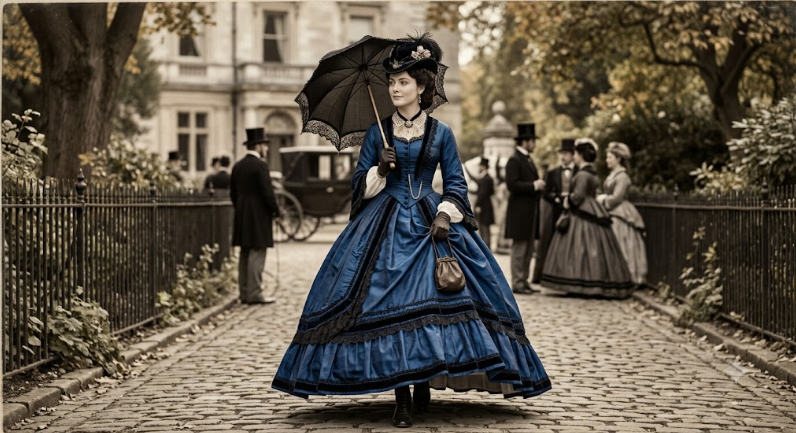
Women’s clothing during the decade was known for its dramatic shape and detailed construction. Dresses usually consisted of a fitted upper section and a large skirt that created the famous Victorian outline. The bodice was often closely shaped around the waist, creating a slim appearance. Many women wore supportive undergarments beneath their dresses to achieve the desired figure. However, comfort and practicality varied depending on the individual garment, fabric, and occasion. Skirts were the centre of attention. Early in the decade, they were extremely wide and rounded. These large shapes were created using supportive frames underneath the fabric, allowing dresses to appear fuller without requiring countless heavy layers.
The Changing Shape of Victorian Dresses
The silhouette of women’s dresses did not remain the same throughout the 1860s. At the beginning of the decade, the focus was on a wide, circular skirt that extended evenly around the body. By the late 1860s, designers began shifting fabric toward the back, creating a shape that would later develop into the bustle style. This gradual change shows how fashion constantly evolved. Even during a period often associated with tradition, designers and wearers were experimenting with new ideas. Dress designs also varied depending on the purpose. Day dresses were usually more practical, featuring higher necklines and covered sleeves. Evening gowns allowed for more decoration, luxurious fabrics, and elegant details.
Fabrics and Decorative Details
The beauty of 1860s clothing came from both its shape and craftsmanship. Different fabrics were chosen depending on the season, occasion, and social status of the wearer. Silk was highly valued for formal dresses because of its smooth appearance and luxurious feel. Velvet, cotton, wool, and patterned fabrics were also commonly used. Decorative elements such as lace, ribbons, embroidery, and layered trims added personality to garments. Colours during the decade ranged from soft creams and whites to rich shades such as deep green, purple, burgundy, and navy. Advances in dye production made stronger colours easier to achieve, giving clothing a more varied appearance.
Accessories That Completed the Look
Victorian fashion was never only about the main garment. Accessories played an important part in creating a complete outfit. Women often wore hats or bonnets decorated with ribbons, flowers, and fabric details. Gloves were considered an important part of polite dress, especially for formal occasions. Parasols were both practical and fashionable, protecting the wearer from sunlight while adding elegance to an outfit. Jewellery also carried meaning. Lockets, brooches, and necklaces were popular choices and were often connected with personal memories or family traditions. Hairstyles were usually carefully arranged. Women commonly wore their hair parted in the centre and styled into buns, curls, or pinned arrangements that worked well with their headwear.
Men’s Fashion During the 1860s
Men’s clothing in the 1860s moved toward a cleaner and more modern appearance. Instead of extremely decorative outfits, men increasingly preferred structured garments that showed professionalism and confidence. The three-piece suit became an important style during this period. A typical outfit included a coat, waistcoat, and trousers, often combined with a formal shirt and neckwear. Coats varied in length and style, while waistcoats allowed men to add colour or pattern to their appearance. Accessories such as pocket watches, gloves, and hats completed the look. Facial hair was also fashionable among men. Beards, moustaches, and sideburns became common features of Victorian male appearance.
Fashion During a Changing World
The 1860s were not only a fashion decade; they were also a period of major social change. Events such as the American Civil War influenced clothing choices, especially in regions affected by the conflict. Many women adapted their clothing for practical activities while still maintaining Victorian standards of appearance. Simpler designs became more common in some situations, while formal fashion continued among those attending social events. Photography also became more widespread during this period. Portraits from the era provide valuable examples of how people actually dressed, helping historians understand everyday fashion beyond idealised illustrations.
How 1860s Fashion Influences Modern Style
The influence of 1860s fashion can still be seen today. Costume designers often use Victorian clothing ideas in historical films, theatre productions, and themed events because the style immediately creates a sense of a particular time period. Modern designers also borrow elements from the decade, including structured shapes, vintage-inspired details, lace decoration, and romantic silhouettes. While everyday clothing has changed greatly, the craftsmanship and visual identity of Victorian fashion continue to attract attention. The lasting appeal of the 1860s comes from its balance of elegance and individuality. Each garment was carefully designed, and even small details contributed to the overall impression.
Conclusion
The fashion of the 1860s remains one of the most memorable periods in clothing history because of its strong shapes, detailed designs, and connection with Victorian society. The decade captured a moment when traditional ideas met new technology and changing lifestyles. From grand dresses and carefully arranged accessories to the rise of modern menswear, the period created styles that continue to inspire designers and historians. Its influence proves that fashion is not only about clothing but also about the culture and values of the people who wear it. The 1860s may belong to the past, but its distinctive style continues to shape how we understand elegance, craftsmanship, and historical fashion today.