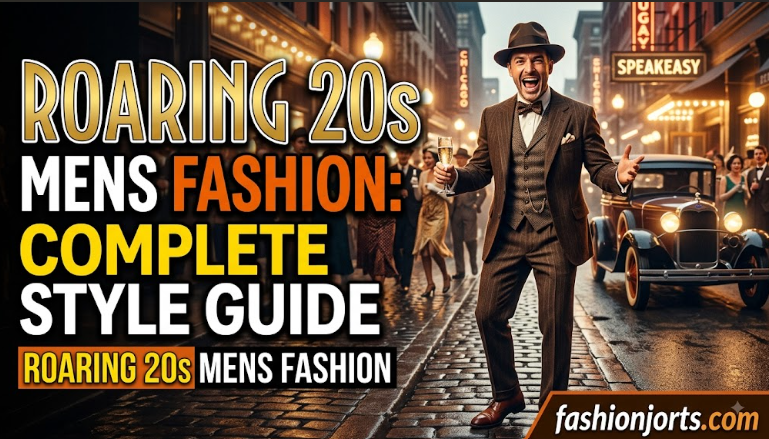
The Roaring 20s mens fashion era remains one of the most recognizable periods in clothing history. The decade between 1920 and 1929 introduced a new attitude toward men’s style, combining traditional tailoring with a growing desire for comfort, individuality, and self-expression. Men still dressed formally in many situations, but their clothing became less restrictive and more connected to the changing social culture of the Jazz Age. The popularity of jazz music, nightlife, sports, cinema, and urban lifestyles influenced how men presented themselves. A gentleman’s appearance was no longer only about social status or professional expectations; it became a way to show personality. From sharp suits and elegant hats to relaxed sportswear, 1920s fashion created many styles that continue to influence menswear today.
The Rise of a New Era in Men’s Clothing
The beginning of the 1920s marked a major shift in men’s fashion. Before this period, formal clothing often featured stiff designs and strict rules. After World War I, many men wanted clothing that reflected a more active and modern lifestyle. The suit remained the center of a man’s wardrobe, but designers began creating styles that allowed more movement. Jackets became easier to wear, trousers gained a looser shape, and fabrics became more comfortable. The decade created a balance between elegance and practicality that defined the modern gentleman.
The Three-Piece Suit Became the Signature Look
The three-piece suit was the defining outfit of the Roaring Twenties. It usually included a jacket, matching trousers, and a waistcoat worn underneath. This layered style gave men a polished appearance suitable for offices, social gatherings, and formal events. During the early part of the decade, suits maintained a traditional shape with narrower trousers and structured jackets. By the late 1920s, men started choosing broader shoulders, wider lapels, and roomier trousers. This created a more relaxed silhouette that represented the confidence of the Jazz Age. Materials such as wool, tweed, and flannel were popular choices. Dark shades like navy, gray, and brown were common for professional wear, while lighter colors and patterns became fashionable for social occasions.
Wide-Leg Trousers and the Popularity of Oxford Bags
One of the most recognizable features of 1920s menswear was the rise of wide-leg trousers. Known as Oxford bags, these trousers became especially popular among young men and university students. Unlike modern slim trousers, Oxford bags focused on comfort and movement. They were designed with a high waist and generous width, creating a distinctive shape that reflected youthful confidence. Although extremely wide trousers became associated with the decade, not every man adopted the trend. Many professionals continued wearing traditional suit styles, showing that 1920s fashion included both classic and experimental looks.
Waistcoats Added Elegance and Structure
The waistcoat was an essential part of a fashionable man’s outfit during the 1920s. It provided a finished appearance even when a jacket was removed and allowed men to introduce different textures and patterns into their clothing. Some men preferred matching waistcoats, while others chose contrasting designs to create a stronger visual style. This attention to layering helped make 1920s fashion more detailed than earlier menswear. Today, the waistcoat remains one of the easiest ways to add a vintage influence to a modern formal outfit.
Shirts, Ties, and Small Details That Made the Difference
Accessories played an important part in completing a 1920s gentleman’s appearance. A simple suit could be transformed through carefully selected shirts, ties, and decorative details. White shirts remained a popular choice for formal occasions, while striped and patterned shirts became more common for men who wanted a fashionable look. Silk ties with geometric designs, stripes, and bold colors reflected the artistic influence of the period. Pocket squares, cufflinks, tie pins, and watches were also important. These details showed that style was not only about expensive clothing but also about careful presentation.
Hats Were a Daily Part of Men’s Style
During the Roaring Twenties, hats were considered an important part of a man’s everyday appearance. Many men would not leave home without one. The fedora became one of the most famous styles of the decade, offering a combination of sophistication and practicality. The Homburg hat was associated with more formal dressing, while flat caps were popular for casual and working-class styles. The type of hat a man wore often reflected his lifestyle, occupation, and social environment.
Gatsby Style and 1920s Formal Fashion
Modern discussions about Roaring Twenties fashion often focus on the glamorous image shown in The Great Gatsby. While this represents the wealthier side of the decade, it captures the elegance associated with evening fashion. Formal events often featured tuxedos, crisp white shirts, bow ties, polished shoes, and carefully styled accessories. Men attending parties and social events used clothing to create a sophisticated appearance. The Gatsby influence remains popular because it represents confidence, luxury, and classic elegance rather than a simple historical costume.
Casual Fashion Started Becoming More Important
The 1920s also changed the way men dressed outside formal settings. As sports and leisure activities became more popular, casual clothing gained greater acceptance.
Men began wearing:
- Sweaters and cardigans
- Sport coats
- Knitted clothing
- Comfortable trousers
- Athletic-inspired outfits
This movement helped create the foundation for modern casual menswear. The idea that men could dress stylishly without wearing a full suit became increasingly accepted during this period.
Shoes and Grooming Completed the Look
Footwear was an important part of the well-dressed man’s appearance. Leather Oxford shoes, brogues, boots, and two-tone spectator shoes were popular choices. A polished pair of shoes could enhance even a simple outfit. Men also paid close attention to grooming, with neat hairstyles becoming a major part of the fashionable appearance. Short side-parted hair and slicked-back styles were common, often maintained with hair products to create a clean and controlled look.
How to Wear Roaring 20s Style Today
Modern fashion enthusiasts can incorporate 1920s influences without looking like they are wearing a costume. The key is choosing classic elements and combining them with contemporary clothing. A tailored three-piece suit, leather dress shoes, a vintage-inspired tie, or a textured jacket can create a subtle Jazz Age influence. For special events, adding a waistcoat or classic hat can create a stronger connection to the era. The most important part of the style is not copying every detail but understanding the principles behind it: good tailoring, quality materials, and confidence.
Why Roaring 20s Mens Fashion Still Inspires Today
The appeal of 1920s menswear comes from its ability to combine sophistication with personality. The decade introduced styles that felt both traditional and modern, creating a lasting influence on men’s clothing. Many current fashion trends borrow ideas from this period, including tailored suits, vintage accessories, relaxed trousers, and classic formalwear. The Roaring Twenties proved that clothing could communicate identity, lifestyle, and confidence. The era continues to attract attention because it represents a time when men’s fashion became more expressive while keeping the elegance that makes classic style timeless.
Conclusion
Roaring 20s mens fashion represents a defining moment in the history of men’s style. It was a period when traditional tailoring met a new sense of freedom, creating clothing that looked elegant while allowing more individuality. The decade’s influence can still be seen in modern suits, formalwear, and vintage-inspired fashion. The appeal comes from its focus on details, confidence, and timeless design. Whether through a classic three-piece suit or a simple vintage-inspired accessory, the spirit of the Jazz Age continues to remind us that great style is built on personality and thoughtful choices.