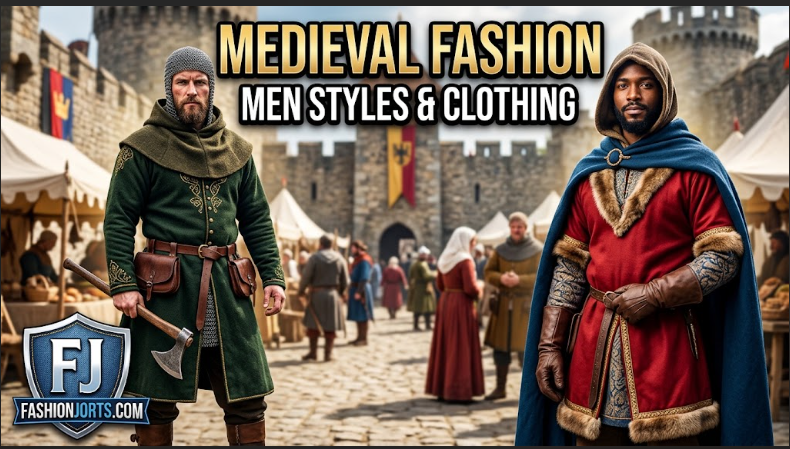
Medieval men’s fashion combined practicality, craftsmanship, and personal status in ways that changed considerably over the centuries. A farmer working in the fields needed durable clothing, while a nobleman attending court could afford finely tailored garments and expensive fabrics. These differences made men’s clothing an important part of everyday life, not simply a matter of appearance. From loose tunics and woolen cloaks to fitted doublets and colorful leg coverings, medieval styles offered a surprising range of shapes and materials. Understanding these garments helps explain how men dressed for work, travel, ceremonies, and social occasions. It also provides useful inspiration for anyone interested in historical clothing, medieval costumes, or classic men’s style.
What Made Medieval Men’s Fashion Different?
Medieval clothing developed around the needs of daily life. Most garments were designed to provide warmth, allow movement, and withstand regular wear, but their appearance also reflected regional traditions and personal circumstances. Fabric quality, garment length, decoration, and fit could distinguish one man’s wardrobe from another. Clothing was usually worn in layers, with lighter garments beneath heavier outer pieces. Belts helped secure tunics and carry small belongings, while cloaks offered protection against cold weather. Over time, changes in tailoring introduced more fitted garments, creating new silhouettes that became fashionable among wealthier men.
Popular Types of Medieval Men’s Clothing
Tunics and Everyday Shirts
The tunic was a familiar garment throughout much of medieval European history. Its length and cut varied, with some versions reaching the knees and others extending farther down the body. Men wore tunics for everyday activities, although fabric quality and decoration differed according to their circumstances. Linen shirts were commonly worn beneath outer clothing. These lighter garments provided a layer between the skin and heavier fabrics, helping make everyday clothing more comfortable.
Hose and Leg Coverings
Hose covered the legs and became particularly important in later medieval fashion. Earlier examples could consist of separate coverings, while later versions often fitted closely and were secured to other garments. Their shape changed the appearance of men’s outfits, especially when worn with shorter tunics or fitted doublets. Some fashionable men wore hose in contrasting colors, creating a distinctive appearance. Practical versions, however, remained essential for everyday wear.
Doublets and Fitted Jackets
Doublets became a defining feature of many late medieval men’s wardrobes. These fitted garments shaped the upper body and could include lining, padding, buttons, or lacing. Their construction reflected developments in tailoring and offered a more structured alternative to the looser tunics common in earlier periods. Doublets were not restricted to formal occasions. Depending on the wearer and the design, they could be part of ordinary clothing or worn beneath protective equipment.
Cloaks, Gowns, and Outerwear
Outer garments served both practical and social purposes. Woolen cloaks and mantles helped protect men from cold and wind, while longer gowns offered additional coverage and could communicate wealth through their fabric and finishing. Some late medieval gowns featured generous sleeves and flowing shapes. These garments required more material than simple everyday tunics, making their quality and decoration particularly noticeable.
How Social Status Influenced Medieval Men’s Style
Clothing for Farmers and Laborers
Working men generally needed garments that could handle physical activity and regular use. Woolen tunics, basic shirts, leg coverings, and sturdy footwear formed practical combinations for outdoor work. Clothing was often repaired and reused rather than replaced whenever styles changed. Their wardrobes were not necessarily limited to dull colors. Available dyes, local production, and household resources affected what people wore, even when their clothing remained simple.
Fashion Among Merchants and Craftsmen
Merchants and skilled craftsmen occupied a wide range of economic positions, so their clothing varied considerably. A prosperous trader might own better-quality fabric, a well-fitted outer garment, and decorative accessories, while someone with fewer resources relied on simpler pieces. Their outfits needed to suit their occupations. Comfortable footwear, belts, and practical outerwear were useful for travel, trading, and work, while cleaner and more carefully finished garments could be appropriate for business meetings or public occasions.
Noblemen and Wealthy Households
Wealthy men had greater access to fine textiles, decorative finishing, and fashionable tailoring. Their wardrobes could include silk, richly colored wool, fitted doublets, long gowns, and elaborate belts. Clothing was often part of the way they presented themselves at court and during important social events. Fashion also changed according to region and century. An outfit suitable for a nobleman in the 12th century would not necessarily resemble the clothing of a fashionable courtier in the late 15th century.
Knights and Military Clothing
A knight’s appearance depended on whether he was preparing for combat or dressing for civilian life. Military equipment could include padded garments, chain mail, plate armor, helmets, and surcoats, depending on the period and circumstances. These items served protective or identifying purposes rather than functioning as ordinary everyday clothing. Outside military settings, knights wore many of the same civilian garments found in other households. Tunics, cloaks, doublets, hose, and practical footwear remained part of medieval men’s dress.
Fabrics, Colors, and Details That Defined the Look
Wool and linen were among the most important materials in medieval European clothing. Wool could provide warmth in outer garments, while linen was widely used for lighter layers and undergarments. Silk and other expensive textiles were available to wealthier households, although access depended on location, trade, and period. Color also contributed to the appearance of an outfit. Medieval clothing could include red, blue, green, yellow, black, and other shades, depending on available dyes and the quality of the textile. Decorative borders, embroidery, buttons, and contrasting fabrics added character to some garments without being present in every wardrobe. Small details often made a noticeable difference. A carefully finished neckline, a decorative buckle, or a well-fitted sleeve could change the appearance of an otherwise simple outfit. These features also help explain why surviving garments and historical illustrations are useful when identifying styles from particular periods.
Accessories That Completed Medieval Men’s Outfits
Accessories combined everyday usefulness with personal expression. Leather belts held garments in place and provided a way to carry pouches or small tools, while bags offered storage for items needed during work or travel. Buckles and brooches could secure clothing or provide decoration. Headwear was another common feature of medieval dress. Hoods offered protection from the weather, while caps and hats varied according to local customs and fashion. Footwear ranged from practical leather shoes to more fashionable pointed designs in parts of late medieval Europe. These accessories should be considered alongside the main garments rather than as universal features of every outfit. Their use depended on the occasion, occupation, available resources, and historical period.
How to Wear Medieval-Inspired Fashion Today
Medieval clothing can inspire modern outfits without requiring a complete historical costume. A plain tunic-style shirt, dark trousers, a leather belt, and simple boots create a restrained look suitable for themed events or casual costume styling. Adding a hood or cloak introduces a more recognizable historical element. For a more formal appearance, a fitted jacket inspired by a doublet can be paired with tailored trousers and a decorative belt. Rich textures and restrained embroidery can suggest historical influences while keeping the outfit wearable. If authenticity matters, choose garments based on one century and region rather than combining unrelated historical styles. For reenactment or educational use, museum collections and historical artwork are better guides than fantasy costumes alone. Small differences in garment length, sleeve shape, footwear, and fabric can make an outfit more convincing.
Conclusion
Medieval men’s clothing reflected the practical demands of everyday life as well as differences in wealth, occupation, and social expectations. Familiar garments such as tunics and cloaks remained important, while changes in tailoring introduced fitted doublets, shaped hose, and new fashionable silhouettes. The appeal of these styles today comes from their distinctive materials, construction, and attention to detail. Studying historical garments offers a clearer understanding of how people dressed than relying on familiar images of kings and knights alone. Whether you are researching historical dress or planning a medieval-inspired outfit, begin with the period and the person whose clothing you want to understand. That simple choice makes it easier to distinguish practical everyday garments from the fashions worn by wealthy households.