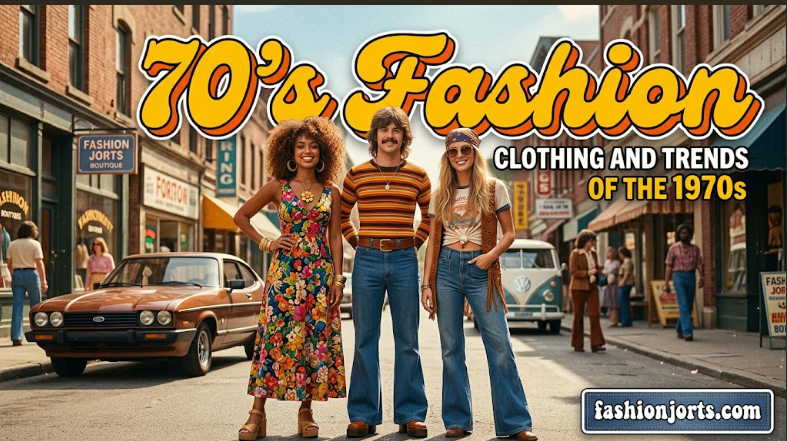
The 1970s were not built around a single way of dressing. Fashion changed quickly as music, nightlife, youth culture, and everyday habits pulled style in different directions. A flowing dress could look completely at home beside flared denim, while a glittering nightclub outfit belonged to another side of the same decade. That freedom explains much of the lasting interest in 70s fashion. People experimented with wider shapes, stronger prints, unusual fabrics, and clothes that felt less restricted than many earlier styles. By the end of the decade, fashion had traveled from bohemian softness to the deliberately rough appearance of punk.
What Was 70s Fashion Like?
Comfort and self-expression became increasingly visible in everyday clothing. Jeans were no longer simply practical trousers, and casual pieces could become part of a carefully styled outfit. Long dresses, fitted shirts, high-waisted bottoms, and loose layers gave people very different ways to build a wardrobe. The decade was also full of contrast. Natural-looking fabrics and earthy shades appeared alongside synthetic materials and brilliant party clothes. Instead of replacing one trend with another, new styles often existed beside older ones.
How 70s Style Changed Through the Decade
Early 70s Hippie and Bohemian Fashion
Early-decade clothing retained the relaxed mood associated with the previous few years. Flowing skirts, long dresses, loose blouses, embroidery, crochet, and fringe helped create an informal appearance. Outfits often favored movement rather than sharp tailoring. Bohemian dressing also encouraged mixing. A printed blouse could sit above faded jeans, while a long skirt might be paired with boots and a simple top. Clothes did not always need to match perfectly, which gave this style much of its casual character.
Mid-70s Fashion Became More Polished
Around the middle of the decade, cleaner shapes became more noticeable. High-waisted trousers, fitted tops, jumpsuits, and dresses that followed the body’s shape offered an alternative to loose bohemian layers. Clothing could still be comfortable without looking oversized. This period also showed how quickly day and evening styles were separating. Daywear could remain practical and understated, while clothes for restaurants, parties, and clubs allowed stronger colors and more dramatic shapes. That difference became even clearer as disco grew.
Late-70s Punk Changed the Mood
Punk offered almost the opposite of polished fashion. Leather, distressed clothing, ripped fabric, chains, unusual graphics, and deliberately rough details became part of a style that challenged conventional ideas of good taste. The clothes were meant to communicate attitude as much as appearance. Punk did not erase the other styles of the decade. Most people continued wearing ordinary shirts, trousers, jeans, dresses, and knitwear. Its influence came from showing that clothing could deliberately reject mainstream expectations.
70s Fashion for Women
Women had an unusually broad range of silhouettes to choose from. Long skirts and dresses offered one direction, while trousers, jeans, shorter skirts, and jumpsuits provided very different alternatives. Clothing could move from soft and flowing to fitted and sharply styled without leaving the decade’s fashion vocabulary. High-waisted bottoms helped create one of the period’s recognizable proportions. A fitted blouse or knit top could emphasize the waist before trousers widened toward the floor. Dresses offered another route, with wrap shapes providing a neat appearance without heavy construction. Work clothing was changing as well. Trousers and coordinated separates gave women options beyond traditional dresses and skirts. These practical choices mattered because they could move between professional and social settings without requiring an entirely different wardrobe.
70s Fashion for Men
Men’s clothing became more expressive than the conservative suit-and-shirt image associated with earlier periods. Shirts could carry large prints and broad collars, while trousers often featured higher waists and wider legs. Color was also used with greater confidence. Casual wardrobes included denim, knit tops, jackets, and patterned shirts. For smarter occasions, suits and matching outfits could use softer construction or more noticeable fabrics. The distinction between formal and casual clothing became less rigid in some settings. Popular music pushed men’s style further. Performers wore dramatic footwear, fitted outfits, unusual fabrics, and eye-catching stage clothes. Everyday dress was usually less extreme, but the broader message was clear: menswear did not have to be quiet.
Disco Fashion and Nightlife
Disco brought movement and spectacle to evening clothing. A dance-floor outfit needed to be comfortable enough for hours of movement while still standing out in a crowded club. Jumpsuits, fitted shirts, flowing dresses, and reflective materials suited that environment. Shoes helped create the exaggerated proportions associated with the look. Platforms added height and worked particularly well beneath wide trousers. Jewelry and shiny details could catch changing club lights and make relatively simple clothing appear more dramatic. It is easy to mistake disco for the whole decade because its visual style is so memorable. In reality, it represented one part of 1970s clothing culture. Everyday wardrobes were generally much less theatrical.
Colors, Prints, and Fabrics
Earthy colors gave many daytime outfits their familiar appearance. Brown, tan, rust, mustard, olive, cream, and burnt orange worked naturally with denim and textured materials. These shades could be combined rather than used as isolated accents. Prints offered a louder alternative. Florals, checks, stripes, geometric shapes, and abstract patterns appeared across shirts, dresses, and skirts. Large designs could turn a straightforward garment into the main feature of an outfit. Fabric choice changed the character of clothing too. Denim suggested casual wear, suede added texture, and soft knits worked well for layering. Synthetic fabrics supported brighter colors and easy-care clothing, particularly in pieces designed for a smoother or more fitted appearance.
Shoes and Accessories
Footwear often completed the proportions of an outfit rather than simply matching its color. Platforms were the most dramatic example, but boots, sandals, clogs, heels, and everyday shoes all had their place. Different footwear could make the same trousers or dress look casual or ready for an evening out. Accessories offered another way to experiment. Wide belts could emphasize a high waist, while scarves, sunglasses, bags, and jewelry brought pattern or texture into simpler outfits. People could adopt a fashionable detail without changing everything they wore. Hair was equally important to the finished appearance. Longer styles, natural texture, feathered cuts, and fuller shapes appeared at different points in the decade. The hairstyle often changed how strongly an otherwise simple outfit read as 1970s.
Designers Who Influenced the 1970s
Diane von Furstenberg became closely associated with the wrap dress, a design that combined a defined waist with practical wear. Halston represented a sleeker American direction, producing clothes that suited the decade’s interest in uncomplicated shapes and sophisticated evening style. Yves Saint Laurent offered another perspective through tailoring and strong references beyond conventional women’s dress. His work showed how ideas traditionally associated with menswear could become part of a confident female wardrobe. Vivienne Westwood moved in a very different direction. Her association with punk placed provocation, distressed details, and anti-establishment style against the polished side of mainstream fashion. These contrasting designers help explain why the decade cannot be represented by one silhouette.
Why 70s Fashion Keeps Returning
Many pieces from the decade are easy to separate from their original setting. Flared jeans do not require platforms, and a long printed dress does not need a complete bohemian outfit around it. That makes individual 1970s ideas simple to bring into contemporary wardrobes. Modern styling usually works best when the reference is controlled. One strong period element can create the effect without turning an outfit into costume. A flare, textured jacket, wide collar, or vintage-inspired print can be enough. The decade also offers several different moods to choose from. Someone interested in understated clothing can draw from denim and earthy colors, while a person who prefers something louder can look toward disco or glam. That range gives the period unusual staying power.
Conclusion
The 1970s gave fashion room to move in several directions at once. Relaxed clothing suited everyday life, disco made evening wear more theatrical, and punk demonstrated that style could deliberately reject polished expectations. What survived was not one complete 1970s uniform. Individual ideas proved more durable, especially flared shapes, high waists, long dresses, denim, strong prints, and textured fabrics. For anyone interested in the period now, choosing a specific side of the decade is more useful than combining every famous trend. Understanding that difference is what separates a convincing 70s-inspired look from a collection of clichés.