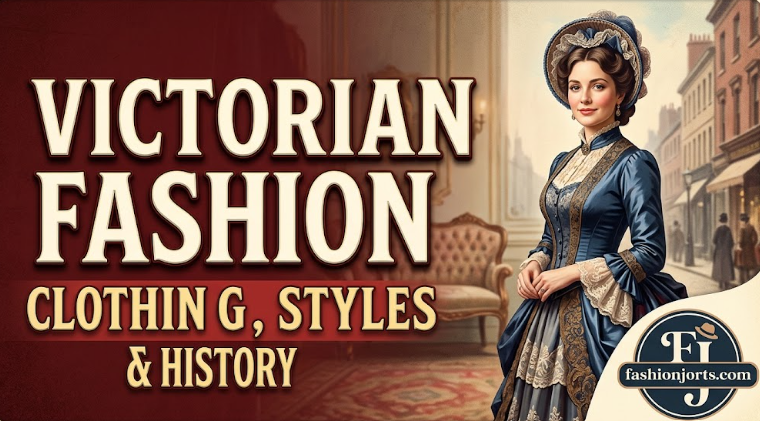
Victorian fashion covered more than six decades of changing clothing styles. The period stretched from 1837 to 1901, during the reign of Queen Victoria. Although people often picture long dresses, corsets, and top hats, clothing did not remain the same throughout those years. Each part of the era brought different shapes, fabrics, details, and ideas about how people should dress. Fashion was also closely tied to everyday life. Wealth, occupation, gender, and social events could affect what someone wore. At the same time, new manufacturing methods made clothing easier to produce and helped fashionable ideas reach a wider public. Looking at these changes gives us a clearer picture of what Victorian clothing was really like.
What Is Victorian Fashion?
Victorian fashion refers mainly to clothing associated with the Victorian era in Britain. Similar trends could also be seen in other parts of Europe and North America. Women’s clothing is especially famous because its shape changed dramatically as different types of undergarments came into fashion. There was no single Victorian outfit. A dress from the 1840s could look very different from one made forty years later. Skirt width, sleeve size, waist shape, decoration, and accessories all changed over time. This variety is one reason the period remains so interesting to costume designers, historians, and fashion enthusiasts.
How Victorian Fashion Changed From 1837 to 1901
Early Victorian Fashion: 1837–1849
During the early Victorian period, women’s dresses commonly featured fitted bodices and long, full skirts. Layers of petticoats helped give skirts their shape. Sleeves also changed during these years, moving between fuller and narrower designs as fashions developed. Clothing tended to follow the occasion. Day dresses usually provided greater coverage, while evening gowns could expose more of the shoulders and neckline. Wealthier women could choose fine materials and detailed decoration, while ordinary working clothes needed to survive regular use. These differences are easy to miss when looking only at formal museum dresses.
Crinolines and Wider Skirts: 1850s–1860s
Skirts grew dramatically during the middle decades of the century. The cage crinoline allowed a skirt to spread outward without relying entirely on layers of heavy petticoats. This created the rounded, bell-shaped silhouette that many people now immediately associate with Victorian women. By the 1860s, skirt volume began moving away from a perfectly circular shape. The front gradually became flatter while more fullness appeared toward the back. This shift prepared the way for another famous Victorian garment. The age of the bustle was approaching.
Bustle Fashion: 1870s–1880s
Bustles changed the balance of women’s clothing. Instead of spreading a skirt widely around the whole body, they supported extra fabric behind the waist. Dresses could then feature gathered material, trains, pleats, and decorative layers concentrated at the back. The size of the bustle changed with fashion. Some designs produced a softer shape, while later versions could create a much sharper projection. This gave late Victorian dresses a profile quite different from the rounded gowns of the crinoline years. It also shows why identifying Victorian clothing by decade is more accurate than treating the period as one style.
Late Victorian Fashion: 1890–1901
By the 1890s, large bustles had fallen out of favor. Skirts became smoother and less heavily supported at the back. Attention shifted toward the upper body, where very large sleeves became one of the decade’s defining features. The famous leg-of-mutton sleeve was narrow near the lower arm but extremely full around the shoulder. Combined with a fitted waist and long skirt, it created a strong hourglass effect. Women’s growing participation in cycling, sport, education, and employment also encouraged interest in clothing that allowed greater movement.
Victorian Women’s Fashion
Women’s wardrobes depended heavily on time, place, and social position. A wealthy woman might own separate clothes for daytime visits, dinners, evenings, outdoor activities, and mourning. A working woman needed far more practical garments that could handle household duties, factory work, farm work, or other physical tasks. The dress visible on the outside was only part of the outfit. Undergarments helped create the fashionable shape expected during a particular decade. As that ideal shape changed, the structures underneath the dress changed with it. This explains why women’s Victorian fashion could transform so dramatically without abandoning the long skirt.
Dresses and Skirt Styles
Most fashionable women’s dresses emphasized the waist while keeping skirts long. What changed was the distribution of fabric. Early skirts relied on petticoats, mid-century skirts expanded outward, and later dresses concentrated volume behind the body. Different occasions also called for different designs. Evening clothing could show more skin around the neck and shoulders, while everyday dresses were usually more covered. Practical clothing was generally less decorated than expensive formal wear. The familiar image of an extremely ornate Victorian gown therefore represents only one part of women’s clothing.
Corsets, Crinolines, and Bustles
Corsets formed a structured base beneath many fashionable dresses. They supported and shaped the torso, helping outer garments sit according to the desired silhouette. Their construction and shape changed during the century rather than remaining fixed. Crinolines and bustles performed another job. A crinoline supported the skirt and created width, while a bustle concentrated fullness behind the wearer. Confusing these garments can make clothing from very different Victorian decades appear more similar than it actually was.
Fabrics, Colors, and Decoration
Victorian clothes were not always dark and plain. Fashionable garments could appear in rich reds, blues, greens, purples, creams, and patterned fabrics. Black had particular importance in mourning dress, but it did not define the entire Victorian wardrobe. Material depended partly on money and purpose. Silk and velvet could appear in expensive clothing, while cotton, linen, and wool served many everyday needs. Lace, ribbons, embroidery, fringe, pleats, and buttons could provide additional decoration. The amount and quality of these details often reflected what the wearer could afford.
Victorian Men’s Fashion
Victorian men’s clothing generally changed less dramatically in shape than women’s dress. Shirts, trousers, waistcoats, and coats formed the foundation of many respectable outfits. The type of coat, hat, neckwear, and other details depended on the decade and occasion. Formal clothing was only one side of men’s fashion. Work, travel, sport, business, and leisure created different clothing needs. A laborer’s everyday clothes were far removed from the carefully tailored outfit of an upper-class gentleman attending a formal event. Treating one as representative of every Victorian man gives a misleading picture of the period.
Suits, Waistcoats, and Coats
Waistcoats were an important part of men’s dress and could provide more color or pattern than an outer coat. Frock coats became strongly associated with respectable daytime clothing, while other coat styles suited less formal settings. Trousers gradually became a standard feature of adult male wardrobes. Tailoring mattered because men’s fashion depended heavily on fit. Instead of achieving visual impact through huge skirts or sleeves, men’s clothing often relied on clean lines, fabric quality, and carefully chosen details. A well-made coat could therefore communicate status without elaborate decoration.
Hats, Shoes, and Accessories
Going outdoors without suitable headwear was uncommon in many social settings. Top hats became closely linked with formal Victorian dress, while other hat styles served everyday and less formal purposes. Footwear also varied according to work, weather, wealth, and occasion. Accessories added another layer to men’s appearance. Pocket watches, watch chains, gloves, walking sticks, ties, and cravats could complete an outfit. Facial hair also became a striking feature of male appearance during parts of the century. These details helped distinguish personal style within otherwise restrained clothing.
Victorian Fashion and Social Class
The best-preserved Victorian garments can create a distorted view of the past. Elaborate silk gowns survive in museums partly because people valued and protected them. Everyday clothing worn repeatedly by workers was more likely to be damaged, altered, reused, or discarded. For families with limited money, clothing needed to last. Garments could be repaired, passed to relatives, bought second-hand, or altered as bodies and fashions changed. Expensive fabrics and frequent wardrobe changes were simply unrealistic for much of the population. Victorian fashion was therefore as much about economic difference as changing taste.
How Technology Changed Victorian Clothing
Industrial development changed how clothes were made. Sewing machines reduced the amount of hand sewing required for many garments, while factories could produce clothing and accessories in larger quantities. Ready-made clothing became increasingly important as the century progressed. New chemical dyes also expanded the colors available to consumers. Fashion magazines and improved printing helped spread information about changing styles. Instead of fashionable ideas remaining within a small social circle, more people could see what was being worn elsewhere. Fashion was becoming increasingly connected to manufacturing and mass consumption.
Queen Victoria’s Influence on Fashion
Queen Victoria naturally attracted attention because her clothing was widely observed. Her white wedding dress for her marriage to Prince Albert in 1840 became one of the best-known outfits connected with her reign. White bridal clothing already existed, but Victoria’s highly visible choice helped strengthen its fashionable appeal. Her later appearance also affected how people remember the period. After Prince Albert died in 1861, Victoria became closely associated with mourning and dark clothing. This has helped create the modern idea that Victorian fashion was mostly black, even though everyday fashionable dress could contain strong colors and rich patterns.
Victorian Fashion Accessories and Hairstyles
A fashionable outfit extended beyond the dress or suit. Women could wear bonnets, hats, gloves, shawls, jewelry, parasols, and other accessories according to the occasion. These pieces could provide color and decoration while also following social expectations about appropriate public dress. Hairstyles changed alongside clothing. Hair could be arranged around the face, gathered at the back, braided, curled, or styled to work with changing hats and bonnets. Later hairstyles had to balance the increasingly dramatic proportions of late-century clothing. Hair, headwear, and dress were therefore designed to work visually as a complete appearance.
How Victorian Fashion Influences Modern Style
Victorian ideas still appear in modern clothing, even when designers don’t reproduce historical outfits exactly. High collars, lace, corset-inspired bodices, puffed sleeves, fitted jackets, long skirts, and decorative buttons regularly return in new forms. Bridal wear also continues to borrow details associated with nineteenth-century dress. The influence is particularly visible in Gothic and steampunk styles, historical dramas, theater, and period-inspired collections. Modern versions often combine elements from several Victorian decades, so they aren’t always historically accurate. They show something different: how strongly the visual language of the period still captures people’s imagination.
Conclusion
Victorian fashion makes more sense when viewed as a period of constant change rather than a single historical costume. Skirts expanded, shifted backward, and narrowed again, while sleeves and bodices moved through their own cycles. Men’s clothing followed quieter changes centered on tailoring, formality, and accessories. The clothes also reveal sharp differences in Victorian life. Wealthy consumers could follow new fashions closely, while working families often repaired and reused garments for practical reasons. What a person wore could therefore say as much about money and daily work as personal taste. Modern interpretations often mix corsets, crinolines, bustles, lace, and top hats into one recognizable Victorian image. Historical clothing was much more specific to its decade. Knowing those differences makes Victorian dress easier to identify, understand, and recreate accurately. More than a century later, its influence hasn’t disappeared. Designers and costume makers still return to Victorian shapes because they offer such a wide range of distinctive ideas, from restrained tailoring to some of the most dramatic silhouettes in fashion history.