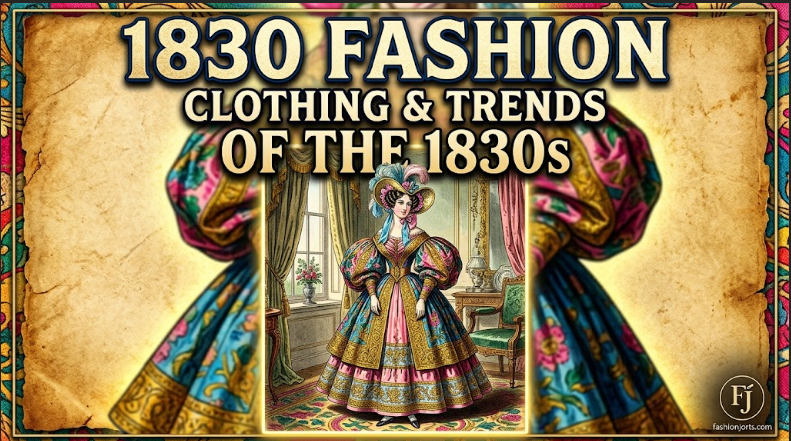
Fashion in 1830 was easy to recognize because of its dramatic shapes and carefully constructed clothing. Women’s dresses featured oversized sleeves, fitted waists, and full skirts, while men wore tailored coats, patterned waistcoats, and high-collared shirts. These styles reflected the Romantic era, when clothing emphasized elegance, individuality, and a carefully arranged appearance. The decade also marked a transition in European and American dress. Early in the 1830s, exaggerated proportions dominated fashionable clothing, but these shapes gradually became less extreme toward the end of the decade. Understanding these changes helps explain why clothing from 1830 looked different from the styles that became popular during the 1840s.
What Defined Fashion in 1830?
The defining feature of 1830s clothing was the contrast between a narrow waist and exaggerated proportions elsewhere. Women’s dresses created volume around the shoulders and hips, while fitted bodices helped maintain a distinct waistline. Men’s clothing followed a more restrained approach, using structured coats and carefully tailored garments to create a strong outline. Social expectations influenced how people dressed for different occasions. Wealthier individuals could afford expensive fabrics, custom tailoring, and decorative accessories, while working people generally favored garments that suited their jobs and daily routines. As a result, fashionable portraits provide only one part of the story of nineteenth-century clothing.
Women’s Clothing in the 1830s
Women’s fashion during this period emphasized shape, texture, and decorative detail. Dresses were designed to create a balanced silhouette, with the upper body appearing broad and the skirt spreading outward from the waist.
Gigot Sleeves and Broad Shoulders
Oversized gigot sleeves were among the most recognizable features of early-1830s fashion. Also known as leg-of-mutton sleeves, they were full around the shoulders and upper arms before narrowing toward the wrists. Their dramatic size made the upper body appear wider and gave dresses a distinctive outline. Creating these sleeves required more than simply using extra fabric. Dressmakers carefully arranged gathers and seams, sometimes adding internal supports to preserve the rounded shape. As the decade progressed, the exaggerated volume gradually declined, allowing the sleeves to take on a more restrained appearance.
Fitted Bodices and Full Skirts
Bodices generally fitted closely around the torso, with the waist sitting near its natural position rather than directly beneath the bust. This differed from the high-waisted Empire-style gowns that had been fashionable around the beginning of the nineteenth century. The change produced a more defined waist and altered the proportions of the entire dress. Full skirts were another essential feature. Petticoats helped support the fabric, while gathers and pleats added volume around the hips. The resulting shape looked rounded and substantial without requiring the large metal hoops associated with later nineteenth-century fashion.
Fabrics, Patterns, and Decoration
Cotton, linen, wool, and silk were used according to the garment’s purpose and the wearer’s budget. Printed cotton worked well for many day dresses, while silk offered a more luxurious choice for formal clothing. Floral designs, woven patterns, lace, ribbons, and contrasting collars provided decoration. Not every dress was elaborate. Some garments had relatively simple surfaces, allowing their shape and construction to define their appearance. Differences in fabric quality and ornamentation often reflected practical needs, personal taste, and financial circumstances.
Men’s Fashion in 1830
Men’s clothing emphasized structure, fit, and carefully chosen details. Although it generally appeared less exaggerated than women’s fashion, achieving the fashionable silhouette still required considerable attention to tailoring.
Tailcoats and Frock Coats
Tailcoats featured a relatively short front and longer sections at the back. They were suitable for formal occasions, while frock coats provided another option for daytime wear. Wool was widely used for outer garments because it offered warmth and could hold a tailored shape. Coats were often fitted around the waist and shaped through the shoulders and chest. Dark colors were common in formal clothing, although other shades appeared in everyday garments and fashionable ensembles.
Waistcoats, Shirts, and Cravats
A waistcoat added another layer beneath a coat and provided an opportunity to introduce contrasting colors or decorative patterns. Some were made from silk or satin, while others used more modest fabrics. White shirts and high collars helped create a clean outline around the neck. Cravats were an important part of men’s appearance. These neckcloths could be tied in different ways, ranging from relatively simple arrangements to elaborate folds across the chest. The choice of neckwear helped distinguish everyday dress from more formal attire.
Trousers and Accessories
Long trousers had become an established part of fashionable men’s clothing by the 1830s. Their cut varied, but many styles followed the leg closely to maintain the outfit’s tailored appearance. Breeches and riding boots remained suitable for certain activities and occasions. Top hats, gloves, watches, and walking sticks completed many outfits. These accessories served practical purposes as well as decorative ones, helping men present a polished appearance in public.
Hairstyles and Accessories of the 1830s
Accessories played an important part in completing a fashionable outfit. Women often wore bonnets decorated with ribbons, shawls, gloves, jewelry, and short cape-like collars known as pelerines. These items added detail while complementing the broad shoulders and full skirts of the period. Women’s hairstyles commonly included curls and ringlets arranged around the face, with hair gathered or braided at the back. The arrangement depended on personal preference, occasion, and current fashion. Bonnets and other headwear could also affect how the hairstyle was arranged. Men generally favored hats, gloves, watches, and carefully styled neckcloths. The combination of these details with a tailored coat and waistcoat created an appearance suited to the wearer’s social setting.
How Fashion Changed Between 1830 and 1839
Fashion did not remain the same throughout the decade. During the early 1830s, women’s clothing emphasized exceptionally large sleeves and broad shoulders. By the middle of the decade, these proportions began to soften, and the silhouette gradually became less exaggerated. Toward the late 1830s, sleeves were generally narrower, and clothing developed a more restrained appearance. These changes helped prepare the way for the styles of the 1840s, when women’s dresses typically featured slimmer sleeves and a different distribution of volume. Men’s clothing also changed in its details, although the overall tailored silhouette remained recognizable. Coat shapes, waistcoat designs, and neckwear continued to reflect changing preferences. The transition was gradual, and styles from different years could overlap rather than changing all at once.
What Did Children Wear in the 1830s?
Children’s clothing often borrowed elements from adult fashion while allowing more freedom of movement. Infants commonly wore long dresses made from washable fabrics, particularly cotton. As children grew, their clothes became shorter and more suitable for everyday activities. Young girls wore dresses with decorative details and full skirts, although their garments were often shorter than those worn by adult women. Young boys could also wear dresses during early childhood before moving into trousers and jackets. These practices varied according to family circumstances, age, and social customs. Practicality mattered as much as appearance in children’s clothing. Garments needed to accommodate growth, movement, and regular washing, so their construction often differed from the elaborate outfits worn for formal occasions.
Why 1830s Fashion Still Interests People
The clothing of the 1830s offers a clear example of how fashion changes alongside cultural expectations. The dramatic sleeves and carefully shaped waists of the period created a distinctive appearance that remains recognizable in historical paintings, museum collections, and period productions. The decade is also useful for understanding the development of nineteenth-century dress. Comparing early- and late-1830s garments reveals how small changes in sleeve shape, waist placement, and skirt volume could alter an entire silhouette. These details matter to costume designers, historical researchers, and anyone interested in recreating clothing from the period. Modern interpretations sometimes combine features from several decades, so a costume described as historically accurate should be checked against garments or illustrations from the specific year. Original clothing provides valuable evidence about fabric, stitching, closures, and construction that modern reproductions may overlook.
Conclusion
Fashion in 1830 combined dramatic silhouettes with skilled dressmaking and carefully selected accessories. Women’s clothing emphasized oversized sleeves, fitted bodices, and full skirts, while men’s outfits relied on tailored coats, waistcoats, and structured neckwear. The changes that occurred during the decade show that historical fashion was never completely static. Styles evolved gradually as tastes and social expectations changed, creating noticeable differences between early- and late-1830s clothing. For anyone exploring this period, comparing dated garments and historical illustrations is a practical way to understand the details. It also helps separate authentic period features from modern interpretations inspired by nineteenth-century fashion.