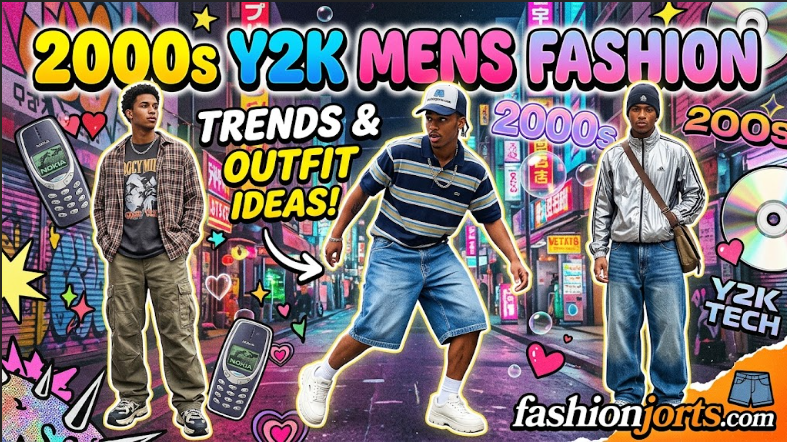
Men’s style at the start of the 2000s was hard to ignore. Jeans were wider, T-shirts were longer, sneakers were heavier, and accessories often demanded as much attention as the clothes themselves. Yet that oversized look tells only part of the story because the decade eventually moved toward fitted shirts, narrow denim, and rock-inspired styling. 2000s Y2K men’s fashion makes more sense when you see it as a period of rapid change rather than a single dress code. That variety is also why the style has returned so easily. You can borrow the relaxed proportions of early streetwear, the practical feel of skate clothing, or the cleaner shape of later rock outfits. The best modern interpretation starts by understanding which part of the era you actually want to wear.
What Defined 2000s Y2k Mens Fashion?
Y2K style arrived at a moment when popular culture was fascinated by the future. Clothing reflected that mood through glossy finishes, unusual sunglasses, technical fabrics, bold graphics, and athletic details. At the same time, familiar pieces such as denim, hoodies, polos, and sneakers remained at the center of everyday wardrobes. Fit gave these clothes much of their identity. Early outfits often created a large silhouette from shoulder to ankle, while later styles moved much closer to the body. That change means two outfits from the same decade can look surprisingly unrelated while still representing their time accurately.
Baggy Jeans Became an Early-2000s Essential
Loose denim is one of the easiest ways to capture an early Y2K look. Jeans often had generous legs and enough length to gather around the shoes, creating a deliberately relaxed shape. Faded washes, distressed areas, and visible stitching gave otherwise simple denim extra character. These jeans worked because the rest of the outfit usually carried similar visual weight. Long tees, roomy sweatshirts, and substantial shoes kept the proportions balanced rather than making the trousers appear accidentally oversized. The overall impression was casual, confident, and far removed from tightly fitted tailoring. Bootcut denim offered a more restrained alternative. It could be paired with polos, graphic shirts, casual jackets, or sneakers without creating the extreme volume associated with wider streetwear. This made it useful across several different 2000s style groups.
Hip-Hop Changed Everyday Menswear
Hip-hop’s influence reached far beyond music during the decade. Oversized jerseys, loose trousers, tracksuits, hoodies, puffer jackets, baseball caps, and basketball shoes became familiar streetwear choices. The clothes emphasized presence, with generous proportions making even straightforward outfits visually distinctive. Sports clothing was especially important to this look. A basketball jersey could function as a regular top, while athletic jackets and sneakers moved easily into everyday outfits. Team colors and recognizable sports references also gave men another way to personalize what they wore. Accessories added another level of expression. Chains, watches, caps, and statement belts could turn a basic combination into something far more noticeable. Modern Y2K styling can borrow that confidence without needing to reproduce every oversized detail at once.
Graphic Tees Put Personality Up Front
A plain T-shirt had plenty of competition in the 2000s. Large prints, logos, band artwork, slogans, and decorative designs made graphic tees a central part of casual menswear. Many early examples were cut wide and long, allowing the shirt itself to shape the entire outfit. Graphic styles also varied depending on the scene. Skate and rock wardrobes favored different imagery from hip-hop or mainstream fashion, even when the basic garment was similar. That distinction made the T-shirt an easy way to signal musical taste and cultural interests. For a current outfit, the graphic doesn’t need to be enormous. A slightly relaxed vintage-style tee can create the reference when paired with the right denim and shoes. The goal is to capture the attitude rather than force every detail to look twenty years old.
Cargo Pants and Tracksuits Expanded the Y2K Wardrobe
Denim wasn’t the only route to a relaxed silhouette. Cargo pants brought roomy legs, practical pockets, and a utilitarian feel that worked naturally with casual tops. They could sit comfortably in skate, streetwear, and sports-inspired outfits without looking out of place. Tracksuits offered something different because they created a complete look with very little effort. Matching jackets and trousers made sportswear highly visible, while individual track jackets could be mixed with jeans or casual pants. Both approaches helped athletic clothing become an ordinary part of men’s wardrobes. Today’s relaxed fits make these pieces especially easy to revisit. Cargos can be worn with a simple sweatshirt, while a retro track jacket works over an otherwise understated outfit. Keeping the surrounding pieces clean prevents the styling from becoming overly nostalgic.
Trucker Hats and Sunglasses Made Accessories Matter
Few accessories immediately suggest the 2000s like a trucker hat. Its high front panel and mesh back created a distinctive shape, especially when worn with casual denim and graphic clothing. Baseball caps provided another option and fitted naturally into sports and streetwear outfits. Eyewear could be equally expressive. Narrow frames, tinted lenses, rimless designs, and wraparound shapes reflected different sides of the era. Rather than simply serving a practical purpose, sunglasses often became a central visual feature. Belts, chains, wristbands, and watches could add further detail, but piling them together isn’t necessary today. One recognizable accessory can establish the period more effectively than several competing pieces. A restrained approach also leaves room for the clothes themselves to stand out.
Skate and Pop-Punk Style Took a Different Route
Skate fashion shared the loose proportions of early streetwear but gave them a more practical character. Wide jeans, cargo trousers, hoodies, graphic shirts, and durable skate shoes formed the basic wardrobe. Clothes looked comfortable enough for movement rather than carefully coordinated for display. Pop-punk added darker colors, band graphics, studded accessories, and stronger rock references. Hoodies and casual shoes remained useful, but the mood became sharper and more rebellious. As the decade continued, this side of fashion increasingly embraced narrower trousers. That progression matters for anyone looking for authentic outfit inspiration. Early skate style and later pop-punk fashion shouldn’t be treated as interchangeable. Each creates a different silhouette even though some individual pieces overlap.
Preppy Style Offered a Cleaner Alternative
The oversized look never represented every man in the 2000s. Preppy casualwear developed around polo shirts, rugby-inspired tops, button-downs, jeans, and branded basics. The clothes were relaxed enough for everyday wear but generally appeared tidier than streetwear. Layering helped give these outfits their period character. A shirt might appear underneath another top, while polos could be combined with denim and casual footwear. Visible branding was common enough to make even relatively simple clothes feel recognizable. This style offers useful inspiration for people who like Y2K fashion but don’t want extreme proportions. A polo with straight or relaxed denim can suggest the era without relying on baggy jerseys or oversized graphics. Small styling choices can do much of the work.
Skinny Jeans Changed the Second Half of the Decade
Men’s silhouettes eventually moved in almost the opposite direction. Skinny and slim jeans gained visibility as indie, emo, and rock-inspired fashion became more influential. Fitted tees, narrow jackets, cardigans, and slim ties replaced the oversized layers associated with many earlier looks. Footwear changed with the proportions too. Slimmer skate shoes and simple sneakers worked better beneath narrow trousers than bulky basketball footwear. Hair, accessories, and darker color combinations reinforced the change.
This shift is one reason the decade remains interesting. Within a relatively short period, fashionable menswear moved from intentionally oversized clothing toward fits that could be extremely narrow. Looking only at baggy outfits misses that major transition.
Early 2000s vs. Late 2000s Men’s Fashion
Early-2000s outfits generally favored greater volume. Wide jeans, large shirts, jerseys, cargos, tracksuits, and heavier sneakers created a broad silhouette. Futuristic accessories and conspicuous branding added the distinctive Y2K character. Later in the decade, rock and alternative influences helped narrow the shape. Skinny denim, fitted shirts, lightweight jackets, and simpler shoes became increasingly familiar. Darker colors also worked naturally with the indie and emo styles associated with this period. Neither approach represents the entire decade by itself. If you’re building a Y2K-inspired wardrobe, deciding between these two directions is more useful than buying random retro pieces. A clear silhouette gives the outfit consistency.
How to Wear Y2K Men’s Fashion Today
Start with the trousers because they determine much of the outfit’s shape. Relaxed jeans or cargos create a strong early-2000s foundation, while slim dark denim points toward the later years. Once that choice is made, selecting the top and shoes becomes much easier. For a relaxed outfit, try faded wide-leg jeans with a roomy graphic tee and retro sneakers. A zip hoodie or track jacket can provide an extra layer, while a cap adds a subtle period reference. Keeping the colors relatively controlled allows the proportions to make the statement. A later-2000s look needs a different approach. Slim denim can work with a fitted graphic tee and a simple leather or casual jacket, finished with low-profile sneakers. Whichever direction you choose, adapting the original ideas usually looks better than recreating an old outfit piece for piece.
Conclusion
The 2000s weren’t defined by one menswear uniform. Hip-hop encouraged volume, skate culture favored practical casual clothing, preppy style offered a cleaner alternative, and rock scenes eventually pulled silhouettes much closer to the body. That variety gives the decade more depth than its most famous trends suggest. Recreating the style works best when you choose a direction first. Build around loose early-2000s proportions or the slimmer shape that followed, then use accessories to strengthen the reference. Mixing everything together usually makes the outfit less convincing. Y2K fashion doesn’t require dressing as though you’ve stepped out of an old music video. Take the proportions and pieces that still work, leave behind what doesn’t, and make the final outfit fit your own wardrobe.