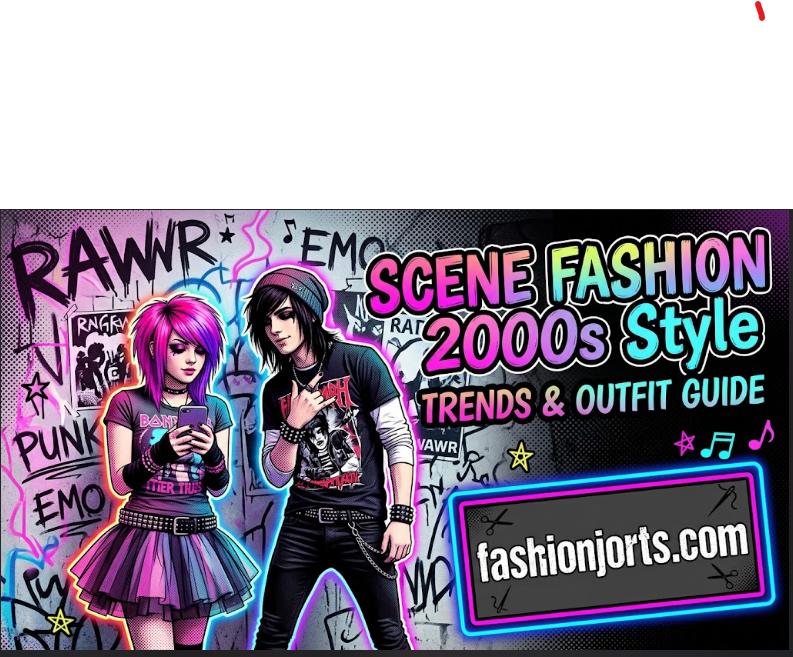
Scene fashion was one of the most recognizable youth styles of the 2000s, blending music, internet culture, and personal expression into a look that was impossible to ignore. With colorful hair, skinny jeans, graphic shirts, dramatic makeup, and eye-catching accessories, the style created a visual identity for people who wanted their appearance to reflect their personality. More than just a clothing trend, scene fashion represented a time when online communities were becoming a major part of everyday life. Platforms like MySpace allowed people to share their outfits, discover new music, and connect with others who enjoyed the same alternative culture. The style became a way for young people to show creativity and build a sense of belonging.
What Is Scene Fashion?
Scene fashion is an alternative style that developed during the mid-2000s, influenced by emo, punk, pop-punk, hardcore, and other underground music communities. While it shared some elements with emo fashion, scene style introduced brighter colors, more playful designs, and a stronger focus on visual creativity. The look was often built around contrast. Dark clothing was mixed with neon colors, edgy pieces were combined with cute designs, and simple outfits were transformed through bold hairstyles and accessories.
Common elements of the style included:
- Skinny jeans in black or bright colors
- Graphic band T-shirts
- Layered tops and hoodies
- Colorful sneakers
- Statement accessories
- Dramatic eyeliner
- Brightly dyed hair
Scene fashion encouraged people to experiment rather than follow strict rules. The goal was to create a style that felt personal and memorable.
How Scene Fashion Started
The roots of scene fashion can be traced back to alternative music scenes of the early 2000s. Young fans connected through concerts, online forums, and social networks where music and fashion often influenced each other. The style grew from communities surrounding genres like metalcore, pop-punk, post-hardcore, and electronic-influenced alternative music. Fans wanted their appearance to match the energy of the music they loved, leading to a more expressive and dramatic approach to fashion. Unlike traditional punk styles that often focused on rebellion through simplicity, scene fashion embraced a more polished and colorful appearance. It combined the attitude of alternative culture with a strong interest in photography, styling, and online presentation.
The Importance of Scene Hair
Hair was one of the defining features of scene fashion. For many people, the hairstyle was the first thing that made the style recognizable.
The classic scene haircut usually included:
- Long side-swept bangs
- Heavy layers
- Extra volume at the top
- Straightened sections
- Bright colors or highlights
Many people experimented with shades like pink, blue, purple, green, and platinum blonde. Some added extensions or contrasting streaks to make their hair stand out even more. The hairstyle was not simply about appearance. It became a form of self-expression and often reflected a person’s creativity, favorite music, or personality.
Clothing Choices That Defined the Style
The clothing associated with scene fashion was designed to attract attention while remaining connected to alternative culture. Skinny jeans became one of the most important pieces because they created a sharper silhouette compared with the looser styles popular in previous decades. Many people chose colorful denim, patterned leggings, or distressed designs instead of plain jeans. Graphic shirts were another essential part of the look. Band merchandise was especially popular because music was at the center of scene culture. Wearing a shirt from a favorite band often showed personal interests and helped people connect with others who shared similar tastes. Layering was also common. Hoodies, jackets, vests, and accessories were combined to create outfits that felt unique rather than carefully matched.
Accessories and Makeup in Scene Style
Accessories played a major part in completing a scene outfit. Small details often made a simple look feel more expressive.
Popular accessories included:
- Studded belts
- Bracelets
- Colorful necklaces
- Oversized sunglasses
- Hair bows
- Unique jewelry pieces
Makeup also became an important part of the style. Heavy eyeliner, bold eye makeup, and dramatic looks helped create the recognizable scene appearance. Many people used makeup as another way to experiment with identity and creativity.
Scene Fashion and Emo Fashion: The Difference
Scene fashion and emo fashion are often grouped together because they developed during a similar period and shared some influences. However, they had different visual identities. Emo fashion generally leaned toward darker colors, emotional themes, and a more understated alternative appearance. Scene fashion took some of those ideas but made them brighter, louder, and more focused on visual impact. A scene outfit might include neon colors, playful accessories, and dramatic hair, while an emo outfit was more likely to rely on black clothing and simpler styling. The two styles often overlapped, and many people were influenced by both communities.
How the Internet Changed Scene Fashion
The internet helped scene fashion become a worldwide trend. Before modern social media platforms became dominant, websites like MySpace allowed users to share photos, customize profiles, and create online identities. Fashion became part of how people presented themselves digitally. A carefully styled photo, unique hairstyle, and favorite music choices could communicate a lot about someone’s personality. This connection between fashion and online identity influenced many later internet aesthetics. Modern trends on platforms like TikTok continue to use similar ideas, where appearance, music, and personal branding come together.
Why Scene Fashion Is Returning
Fashion trends often return when new generations rediscover older styles. Scene fashion has gained attention again because of renewed interest in 2000s culture, nostalgic fashion, and alternative aesthetics. Today’s version is usually more flexible. Instead of copying the original look completely, people often combine scene influences with modern clothing, vintage pieces, and current streetwear. Colored hair, bold accessories, graphic shirts, and alternative styling continue to appear in updated forms.
How to Create a Modern Scene-Inspired Look
Creating a scene-inspired outfit today does not require wearing every classic element at once. The strongest looks usually take inspiration from the original style while adding personal choices. A modern approach might include a graphic shirt, fitted jeans, colorful accessories, bold shoes, or a creative hairstyle. The focus should be on individuality rather than perfectly recreating a specific era. The original appeal of scene fashion came from experimentation, so personal creativity remains the most important part of the style.
Conclusion
Scene fashion remains memorable because it represented more than clothing. It reflected a period when music, creativity, and early internet culture came together to create new forms of identity. The style encouraged people to experiment, take risks, and express themselves without worrying about traditional fashion expectations. Even years later, its influence can still be seen in alternative fashion and online communities. The biggest lesson from scene fashion is that personal style does not need to follow a formula. The most lasting trends are often the ones that allow people to show who they are.