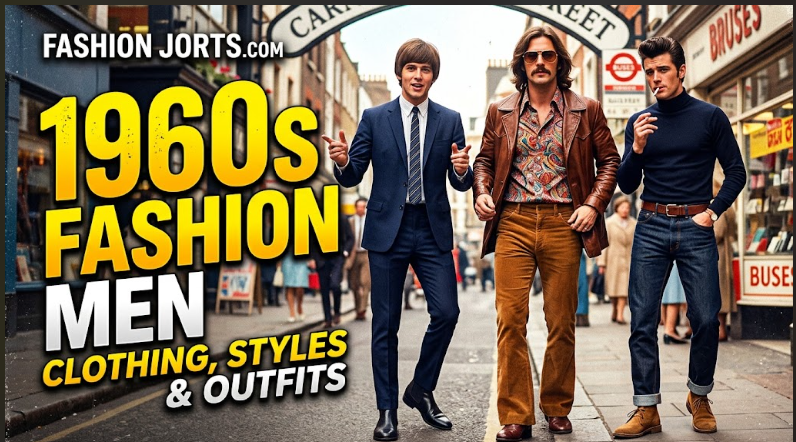
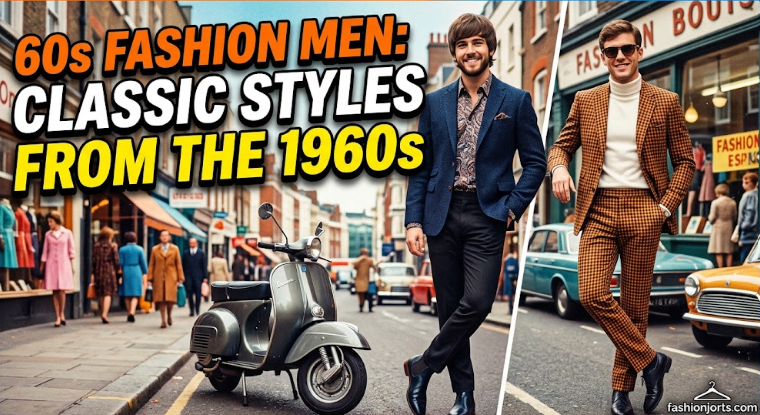
The 1960s was a decade when men’s fashion moved from strict tradition toward personal expression. At the beginning of the era, many men still followed the formal style of the 1950s, wearing structured suits, polished shoes, and neatly styled hair. As the decade progressed, younger generations began experimenting with new silhouettes, colors, fabrics, and hairstyles. Men’s clothing in the 1960s was shaped by music, cinema, youth culture, and social change. From sharp Mod tailoring to relaxed hippie-inspired outfits, the decade offered many different ways for men to present themselves. Many of these styles continue to influence modern fashion because they combined confidence, creativity, and strong visual identity.
The Evolution of Men’s Style During the 1960s
The early 1960s still valued a clean and professional appearance. A well-dressed man was often associated with a fitted suit, a pressed shirt, and carefully chosen accessories. However, fashion started becoming less about following strict rules and more about showing personality. Young men especially pushed for change. They looked toward European fashion, popular musicians, and new youth movements for inspiration. Clothing became a way to show interests, attitudes, and individuality rather than simply fitting into social expectations. By the end of the decade, men’s wardrobes had expanded dramatically. A person could choose between a classic business suit, a sharp Mod outfit, a casual denim look, or a colorful bohemian style.
Early 1960s Men’s Fashion: Classic and Polished Looks
At the start of the decade, traditional menswear remained popular. Men commonly wore tailored suits for work, social events, and even everyday activities. Compared with previous decades, suits became slightly slimmer and cleaner in shape. Jackets featured narrower lapels, trousers had a closer fit, and ties became thinner. Neutral shades such as grey, navy, and brown dominated formal clothing, creating a sophisticated appearance. Accessories were also important. Leather shoes, watches, pocket squares, and simple cufflinks completed the polished look. This style represented confidence and professionalism, especially among businessmen and public figures.
Mod Fashion and the Rise of Youth Style
One of the biggest changes in 1960s menswear came from the Mod movement. Originating in Britain, Mod fashion introduced a younger and more modern approach to dressing. Instead of copying traditional adult clothing, young men created a style that felt fresh and different. The Mod look focused on sharp tailoring and attention to detail. Slim suits, fitted trousers, button-down shirts, and stylish boots became key elements of the movement. Chelsea boots became one of the most recognizable footwear choices of the decade. Their simple design worked well with narrow trousers and fitted jackets, creating a clean and fashionable appearance. Mod style was not only about clothing. It represented a lifestyle connected with music, scooters, nightlife, and urban culture. It showed that men’s fashion could be stylish without being overly formal.
How Music Changed 1960s Men’s Fashion
Music had a powerful effect on what men wore during the decade. Bands and performers became fashion influences, with fans copying their hairstyles, clothing choices, and overall appearance. The Beatles were among the most influential figures in 1960s style. Their early matching suits, slim trousers, and distinctive hairstyles helped popularize a new image of young men. Later, their clothing became more experimental, featuring colorful patterns and unconventional designs. Other musicians, including Jimi Hendrix, brought a more artistic approach to menswear. Bright colors, military-inspired jackets, and unusual combinations became part of a new fashion attitude.
Casual Clothing Trends in the 1960s
The 1960s changed how men approached everyday clothing. Casual wear became more acceptable, especially among younger generations who wanted comfortable alternatives to formal suits. Jeans became an important part of youth fashion. Once considered mainly workwear, denim gained popularity as a symbol of independence and a relaxed lifestyle. Other popular casual pieces included knit sweaters, polo shirts, corduroy jackets, leather jackets, and casual button-down shirts. Men started mixing formal and casual items, creating outfits that felt less restricted.
Late 1960s Hippie Fashion for Men
The final years of the decade introduced a completely different style direction. The hippie movement encouraged creativity, individuality, and a rejection of traditional fashion rules. Men’s hippie fashion often included flared trousers, patterned shirts, suede jackets, loose-fitting clothing, and natural fabrics. Bright colors and artistic prints became more common as people looked for clothing that reflected freedom and self-expression. Longer hairstyles also became associated with this period. Hair was no longer just about looking neat; it became part of a person’s identity and cultural expression.
Hairstyles That Defined 1960s Men’s Fashion
Men’s hairstyles changed as dramatically as clothing during the decade. Early 1960s hairstyles were still conservative, with short cuts, side parts, and neatly combed styles remaining popular. The middle of the decade introduced longer hairstyles. The Beatles’ mop-top haircut became one of the most recognizable looks among young men worldwide. By the late 1960s, longer hair, fuller sideburns, and more natural styles became common. These changes reflected a wider cultural shift toward individuality and personal choice.
How to Create a Modern 1960s-Inspired Look
A modern take on 1960s fashion does not require wearing a complete vintage outfit. The best approach is to include a few recognizable elements while keeping the overall look current. A slim jacket with Chelsea boots can create a Mod-inspired appearance. A patterned shirt with denim offers a relaxed late-60s feel. A simple turtleneck paired with tailored trousers creates a refined vintage style. The most important factor is fit. The 1960s was known for clothing that looked intentional and well-shaped, so choosing pieces that suit your body creates a stronger connection to the era.
Why 1960s Men’s Fashion Remains Popular
The lasting appeal of 1960s menswear comes from its variety. The decade offered different styles for different personalities, from elegant tailoring to creative street fashion. Modern designers continue to borrow ideas from the era because many of its key elements still feel fresh. Slim silhouettes, vintage footwear, patterned shirts, and relaxed denim remain common in contemporary wardrobes. The 1960s changed men’s fashion by making personal style more important. It proved that clothing could communicate personality, interests, and confidence.
Conclusion
The 1960s was a turning point for men’s fashion because it introduced freedom and variety. The decade moved beyond one traditional idea of how men should dress and opened the door to personal style. From refined suits to bold youth movements, every part of 1960s fashion reflected the changing attitudes of the time. The decade remains influential because its clothing was not only about appearance but also about identity. Today, 1960s-inspired menswear continues to attract attention because it balances classic design with creativity. A carefully chosen piece from this era can still make a modern wardrobe feel distinctive and confident.