The 1940s was a defining decade for men’s style, shaped by global conflict, social change, and a renewed appreciation for quality clothing. Unlike many fashion periods that focused only on appearance, 1940s mens fashion reflected the realities of everyday life. Men needed clothing that was practical, durable, and respectable, but they also wanted garments that expressed confidence and individuality. The decade moved through two distinct phases. The early 1940s were influenced heavily by World War II, with simpler designs and military-inspired clothing becoming common. After the war ended in 1945, menswear became more expressive, bringing back wider suits, stronger silhouettes, and a greater focus on personal style. The result was a fashion era that continues to inspire vintage enthusiasts, designers, and modern menswear lovers.
How War Changed the Way Men Dressed in the 1940s
World War II had a direct effect on men’s clothing. During the early part of the decade, governments introduced restrictions on fabric usage because materials were needed for military production. This changed the way suits and everyday clothing were designed. Men’s suits became more practical, with fewer decorative details and simpler construction. Extra fabric was reduced, but clothing still maintained a professional appearance. The focus shifted toward durability, comfort, and versatility. Military uniforms also influenced civilian clothing. Strong shoulders, structured jackets, and functional designs became popular because they represented discipline and confidence. Many styles that began as military necessities later became permanent parts of menswear.
The 1940s Suit: Strong Shoulders and Powerful Silhouettes
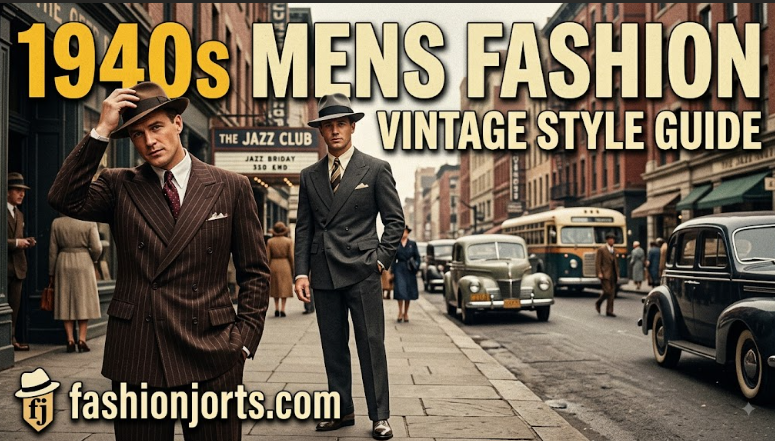
The suit was the most important piece in a man’s wardrobe during the 1940s. Whether worn for business, social gatherings, or formal occasions, a well-tailored suit represented respect and maturity. Unlike today’s slim and fitted suits, 1940s suits were designed to create a broader masculine shape. Jackets often had padded shoulders, wider lapels, and longer cuts. Trousers were worn higher on the waist and usually had a fuller leg for a comfortable yet elegant appearance Double-breasted suits became especially popular after the war. These jackets created a bold silhouette and gave men a more confident appearance. Wool remained the preferred fabric because it provided warmth, durability, and a refined look. Popular suit colors included navy, charcoal, brown, and gray. Patterns such as pinstripes and subtle checks added personality while keeping the overall appearance sophisticated.
Everyday Clothing Beyond the Formal Suit
Although suits were common, everyday life required more relaxed clothing. Men’s casual fashion during the 1940s still maintained a neat and organized appearance. Button-up shirts were a major part of daily wardrobes. Many men wore shirts with simple patterns, including stripes and checks, usually paired with high-waisted trousers. A tucked-in shirt and polished shoes were considered signs of good grooming. Knitwear also became popular, especially during colder seasons. Sweaters, cardigans, and sweater vests were often layered over collared shirts to create a smart casual look. Workwear gained importance as millions of men worked in factories, transportation, and other industries connected to wartime production. Durable jackets, denim garments, and practical shirts became essential clothing choices for working men.
Military Jackets and Outerwear Trends
The influence of military clothing was one of the strongest features of 1940s mens fashion. Many outerwear styles from this period remain popular today because of their combination of function and style. Bomber jackets became associated with pilots and military aviation. Their rugged appearance and practical design helped them move from military use into everyday fashion. Trench coats were another important style. They provided protection from bad weather while maintaining a sophisticated appearance. The long silhouette and structured design made them popular among businessmen and later became strongly connected with classic film characters. Peacoats, field jackets, and leather flight jackets also became recognizable symbols of the decade’s practical approach to clothing.
The Zoot Suit and the Expression of Individual Style
The zoot suit was one of the most distinctive fashion movements of the 1940s. It challenged traditional ideas about menswear with its oversized shape and dramatic appearance. The style featured extremely high-waisted trousers, wide legs, long jackets, and large lapels. It became popular among young men in jazz communities, especially within African American and Mexican American communities. For many wearers, the zoot suit represented creativity, confidence, and cultural identity. However, it also became connected with social tensions during wartime, especially during the Zoot Suit Riots in Los Angeles in 1943. The zoot suit remains an important part of fashion history because it showed how clothing could represent more than personal taste. It became a symbol of identity and self-expression.
Hairstyles and Grooming in the 1940s
Men’s grooming during the decade focused on neatness and structure. A clean, organized appearance was considered an important part of being well-dressed. Popular hairstyles included side parts, slicked-back looks, and shorter military-inspired cuts. Hair was often styled with pomade to keep it controlled throughout the day. Facial hair was less common compared with earlier periods. Many men preferred a clean-shaven appearance, which was associated with professionalism and modern style.
Accessories That Defined 1940s Menswear
Accessories completed the carefully planned appearance of a well-dressed man. Hats were especially important during this period, and many men considered them an essential part of leaving the house. The fedora was one of the most recognizable accessories of the decade. It was commonly worn with suits, coats, and formal clothing. Ties were wider than modern styles and often featured bold patterns, stripes, or darker shades. Pocket squares, leather belts, watches, and polished shoes added small details that elevated an outfit. Footwear focused on quality and craftsmanship. Oxford shoes, brogues, and leather dress shoes were popular choices because they worked well with both professional and formal clothing.
Hollywood’s Influence on Men’s Style
Hollywood played a major role in spreading fashion trends during the 1940s. Movie stars became style examples, and audiences looked to films for inspiration. Actors popularized sharp suits, elegant coats, and carefully styled appearances. Film noir especially influenced men’s fashion by creating an association between dark suits, trench coats, and a sophisticated image. The connection between Hollywood and fashion helped transform certain clothing styles into symbols of confidence and sophistication.
How to Wear 1940s Mens Fashion Today
Modern interpretations of 1940s style work best when they focus on key elements rather than copying an entire historical outfit. A structured blazer, high-waisted trousers, leather shoes, or a classic shirt can add vintage influence without looking outdated. Leather jackets and wool coats also provide an easy way to bring elements of the decade into modern wardrobes. The most important lesson from 1940s fashion is the value of fit and quality. Clothing from the era was designed to last, and attention to small details created a polished appearance.
Why 1940s Mens Fashion Still Inspires Modern Style
The popularity of 1940s mens fashion comes from its balance between practicality and elegance. The decade produced clothing that was functional enough for everyday life while still maintaining a strong sense of personality. Modern fashion continues to borrow from this period because the designs remain recognizable and adaptable. Structured jackets, classic trousers, leather footwear, and timeless accessories still appear in contemporary menswear collections. The 1940s proved that style does not depend on constant change. Good tailoring, quality materials, and thoughtful details can remain relevant for generations.
Conclusion
1940s mens fashion reflected a period of challenge, adaptation, and change. Clothing had to meet practical needs during wartime, but men still valued appearance, confidence, and personal expression. The decade created some of the most recognizable elements of classic menswear, from powerful suits to military jackets and carefully styled accessories. These designs continue to influence fashion because they combine function with timeless appeal. For anyone interested in vintage style, the 1940s offers more than a historical look. It represents an approach to dressing built around quality, confidence, and attention to detail. A well-chosen piece inspired by this era can still feel modern, stylish, and authentic today.