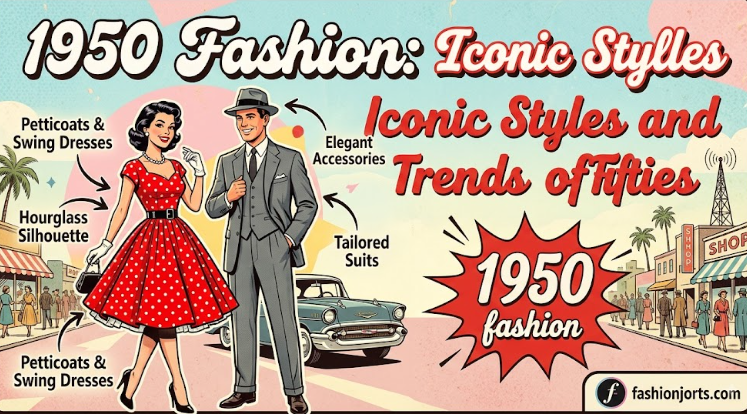
The 1950s was a decade when fashion became a symbol of confidence, elegance, and personal identity. After years of wartime restrictions, clothing returned to a more polished and expressive style. Women embraced structured dresses, fitted silhouettes, and carefully chosen accessories, while men balanced traditional tailoring with new casual trends inspired by youth culture. 1950 fashion was not defined by one single look. It included glamorous evening wear, practical everyday clothing, rebellious teenage styles, and the influence of Hollywood celebrities. The decade created some of the most recognizable fashion images of the 20th century, many of which continue to inspire designers today.
The Return of Elegance After the War
Fashion in the early 1950s reflected a desire for refinement and luxury. During the 1940s, clothing was often practical because of fabric shortages and wartime production limits. The following decade brought a renewed focus on shape, detail, and craftsmanship. Women’s clothing emphasized a feminine silhouette with defined waists and carefully structured designs. Clothing was often coordinated from head to toe, with matching shoes, handbags, jewelry, and hairstyles completing the overall appearance. Men’s fashion also maintained a strong sense of tradition. Suits remained a major part of everyday life, especially for office workers and formal occasions. Clean tailoring and classic accessories represented professionalism and social status.
Women’s Fashion Trends of the 1950s
Women’s fashion in the 1950s focused on creating elegant shapes while offering different options for daily life. A woman could wear a dramatic dress for an evening event or choose a simple outfit for shopping, work, or casual activities.
The Popularity of Full Skirt Dresses
The full skirt dress became one of the most recognizable styles of the decade. These dresses usually featured a fitted upper section with a wide skirt that created movement and volume.
Many dresses included:
- Floral patterns
- Polka dots
- Button details
- Defined waistlines
- Decorative collars
Petticoats were often worn underneath skirts to add extra fullness. This style became strongly associated with the cheerful and feminine image of the 1950s.
Pencil Skirts and Sophisticated Outfits
Not every woman followed the wide skirt trend. Pencil skirts offered a more refined and mature alternative. Their narrow shape created a sleek appearance and became popular among working women and Hollywood stars. These skirts were often paired with fitted sweaters, blouses, jackets, and high heels. The result was a polished style that represented confidence and sophistication.
Everyday Casual Clothing
The 1950s also introduced more relaxed fashion choices. Women began wearing practical clothing that allowed greater movement while still maintaining a stylish appearance.
Popular casual pieces included:
- Capri pants
- Cardigans
- Cotton dresses
- Denim jeans
- Simple blouses
These styles became especially popular among younger women who wanted fashion that matched their changing lifestyles.
Men’s Fashion During the 1950s
Men’s clothing in the 1950s showed a contrast between traditional style and youthful rebellion. Older generations often followed formal dress codes, while teenagers created new trends influenced by music and movies.
Traditional Suits and Formal Wear
The typical 1950s man often wore a tailored suit for work and important occasions. Suits usually featured structured jackets, straight trousers, dress shirts, and ties. Accessories such as watches, leather shoes, and hats completed the formal appearance. The overall style focused on neatness and simplicity.
The Influence of Rock and Roll Style
The rise of rock and roll changed men’s fashion, especially among teenagers. Young men began adopting clothing that represented independence and a rebellious attitude. The greaser style became famous through movies and popular culture. It featured leather jackets, white T-shirts, jeans, boots, and slicked-back hairstyles. This style moved away from traditional formal clothing and helped create a separate identity for younger generations.
How Hollywood Shaped 1950s Fashion
Hollywood had a powerful effect on fashion trends during the decade. Movie stars became style references, and audiences often copied their clothing, hairstyles, and beauty choices. Marilyn Monroe represented glamorous femininity through fitted dresses, elegant makeup, and confident styling. Her image became closely connected with the beauty standards of the era. Audrey Hepburn offered a different approach with simple silhouettes, graceful outfits, and understated accessories. Her style showed that elegance could also come from simplicity. For men, actors such as James Dean influenced casual fashion. His combination of jeans, jackets, and relaxed clothing became a lasting symbol of youthful confidence.
Fabrics, Colors, and Patterns That Defined the Era
The 1950s introduced a wide range of fashionable materials and designs. Advances in textile production made clothing more accessible and allowed designers to experiment with different styles. Common fabrics included cotton, wool, nylon, rayon, satin, and leather. Each material served a different purpose, from everyday dresses to formal evening clothing.
Popular patterns included:
- Floral designs
- Checks
- Polka dots
- Gingham
- Stripes
Pastel colors were especially associated with women’s fashion, while darker shades remained common in men’s suits and outerwear.
Accessories and Beauty Trends of the 1950s
Accessories were an important part of creating a complete 1950s appearance. Outfits were often finished with carefully selected details that added personality and elegance.
Women commonly wore pearl necklaces, gloves, scarves, small handbags, and high heels. Cat-eye sunglasses also became a popular accessory during the decade. Beauty trends focused on polished appearances. Curled hairstyles, red lipstick, and defined eyeliner became signature elements of the era. Men often wore watches, leather belts, dress shoes, ties, and classic hats to complete their outfits.
Why 1950s Fashion Still Inspires Today
The influence of 1950 fashion remains visible because its designs are easy to recognize and adapt. Modern brands continue to use elements from the decade, including high-waisted clothing, vintage prints, tailored jackets, and classic silhouettes. The popularity of 1950s fashion comes from its strong sense of identity. The clothing was designed to express personality, whether through elegance, professionalism, or rebellion. Vintage enthusiasts, costume designers, and modern fashion creators continue to revisit the decade because it offers styles that feel distinctive without losing their timeless appeal.
Conclusion
1950 fashion represented a balance between tradition and change. The decade celebrated elegance through structured dresses and tailored suits while also introducing new youth styles that challenged older fashion rules. Its influence continues because the clothing of the 1950s carried a strong sense of character. From glamorous evening looks to everyday casual outfits, the decade created styles that remain recognizable and relevant. Modern fashion continues to borrow from the fifties because its designs offer something many people still appreciate: clothing that feels intentional, expressive, and timeless.