The 1970s gave men’s fashion a new sense of freedom. Instead of following the strict, polished styles that dominated earlier decades, men began experimenting with color, texture, shape, and personal expression. Clothing became a way to show personality, whether through a bold disco suit, a worn-in denim jacket, or a relaxed bohemian outfit. What makes 70s men’s fashion interesting is its variety. The decade did not have one single identity. It included the natural, relaxed influence of the early 1970s, the glamorous disco movement of the middle years, and the rebellious rock-inspired styles that continued into the late decade. Many of these looks still influence modern menswear because they introduced ideas that feel creative and individual.
The Cultural Changes Behind 70s Men’s Fashion
The fashion of the 1970s reflected a period of social change. Younger generations were challenging traditional ideas about appearance, and men’s clothing became less formal and more expressive. Music, television, cinema, and celebrity culture helped spread new styles quickly. During the early part of the decade, many men preferred relaxed clothing influenced by the late 1960s counterculture movement. Denim, suede, natural colors, and handmade-looking accessories became common. Later, nightlife culture and popular music introduced brighter colors, sharper tailoring, and more attention-grabbing outfits. The decade was also important because men’s fashion became less restricted. A man could wear patterns, jewelry, longer hairstyles, or colorful clothing without following traditional expectations of masculinity.
The Most Recognizable Pieces of 70s Men’s Fashion
Bell-Bottom Jeans and Flared Pants
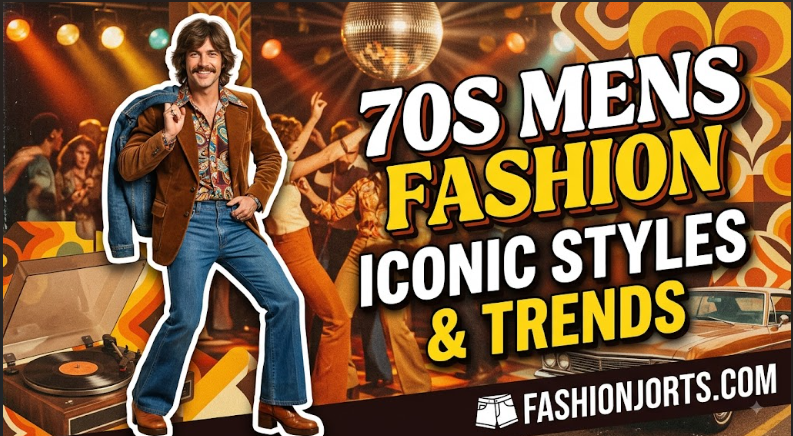
Bell-bottom jeans became one of the strongest symbols of the 1970s. These pants were fitted around the upper legs and widened below the knees, creating a dramatic shape that separated them from traditional trousers. Originally connected with youth culture and alternative fashion, flared jeans eventually became popular among men from different backgrounds. They were worn with denim jackets, boots, patterned shirts, and leather accessories. Flared trousers were not limited to casual clothing. Designers also incorporated the wider shape into formal suits, creating the classic 70s silhouette with a narrow upper body and wider lower half.
Wide-Collar Shirts and Statement Prints
Shirts became one of the most expressive parts of men’s clothing during the decade. The simple button-down styles of previous years were replaced by larger collars, open necklines, and eye-catching designs.
Popular choices included:
- Paisley patterns
- Floral prints
- Stripes
- Geometric designs
- Satin and silky materials
Many men paired these shirts with flared trousers or jackets. The open-collar style became especially popular in nightlife settings, where clothing was designed to attract attention.
Suits With Wider Shapes
The traditional business suit changed dramatically during the 1970s. Jackets became longer, lapels became wider, and trousers gained more volume. Three-piece suits, including matching waistcoats, were common choices for men who wanted a polished appearance. At the same time, leisure suits offered a more relaxed option with matching jackets and trousers made from easy-care fabrics. The disco era pushed suits toward a more dramatic style. White suits, colorful fabrics, and open-collar shirts became closely connected with the nightlife culture of the late 1970s.
Leather Jackets and Suede Outerwear
While disco fashion focused on glamour, another side of 70s menswear embraced rugged style. Rock music and western influences brought leather jackets, suede coats, and denim pieces into everyday fashion. A typical casual outfit might include a suede jacket, faded jeans, boots, and a simple shirt. These pieces created a relaxed appearance that contrasted with the more polished disco look. Leather and suede remained popular because they were practical, durable, and easy to combine with different outfits.
How Music Influenced Men’s Fashion in the 1970s
Music was one of the biggest drivers of fashion trends during the decade. Artists did not just perform songs; they created visual identities that fans wanted to copy.
Disco Fashion
The disco movement introduced some of the boldest menswear trends of the decade. Men wore fitted suits, shiny shirts, platform shoes, and statement accessories for nightlife events.
The 1977 film Saturday Night Fever helped spread the image of the disco-style man through John Travolta’s famous white suit and dance-floor outfits.
Glam Rock Style
Glam rock challenged traditional ideas about men’s appearance. Artists such as David Bowie used dramatic clothing, bright colors, makeup, and unusual designs to create memorable stage personas. This movement encouraged men to experiment with fashion instead of viewing clothing as simply practical.
Rock and Casual Styles
Rock-inspired fashion focused on individuality. Denim, boots, leather jackets, scarves, and vintage pieces became popular among musicians and fans who preferred a less polished appearance.
Colors and Fabrics That Defined the Era
The 1970s had a unique approach to color. Many casual outfits used earthy shades inspired by nature, while evening fashion often featured brighter and more dramatic tones. Common colors included brown, mustard yellow, olive green, orange, burgundy, cream, and navy. Fabrics also played an important role. Denim, corduroy, velvet, polyester, suede, and leather appeared throughout men’s wardrobes. These materials helped create the textures and shapes that made 70s clothing recognizable.
Accessories That Completed the 70s Look
Accessories were an important part of men’s fashion during the decade. They added personality and helped define different styles. Platform shoes became strongly associated with disco fashion, while boots were popular with rock and western-inspired outfits. Large sunglasses, wide belts, necklaces, and rings were also common choices. Jewelry became more accepted in men’s fashion during the 1970s. Chains, pendants, and bracelets were often used to add a personal touch to simple outfits.
How to Wear 70s Men’s Fashion Today
Modern fashion does not require wearing a complete vintage outfit to capture the 1970s style. The most effective approach is combining one or two retro elements with contemporary clothing. A pair of flared jeans can work with a simple sweater and modern boots. A suede jacket can add a 70s influence to an everyday outfit. A patterned shirt can become more wearable when balanced with neutral trousers. The key is proportion. Since many original 70s pieces had exaggerated shapes, mixing vintage-inspired items with cleaner modern designs creates a more balanced appearance.
Why 70s Men’s Fashion Remains Popular
The lasting appeal of 70s menswear comes from its creativity. The decade allowed men to explore different styles without being limited to one definition of how they should dress. Some trends from the era disappeared quickly, but many ideas remained influential. Flared trousers, relaxed tailoring, vintage prints, and textured fabrics continue appearing in modern collections. The 1970s showed that men’s clothing could be expressive, playful, and personal. That freedom is what keeps the decade’s fashion relevant today.
Conclusion
70s men’s fashion was more than a collection of unusual clothing trends. It represented a shift toward individuality and experimentation in menswear. The decade brought together different influences, from relaxed bohemian clothing to glamorous disco outfits and rebellious rock styles. Each movement created its own identity while contributing to the broader fashion culture of the era. Today, the best way to wear 70s-inspired fashion is to take inspiration from the decade rather than copy it completely. A few carefully chosen pieces can bring the confidence and creativity of 1970s style into a modern wardrobe.