The 1950s created some of the most recognizable fashion styles of the modern age. It was a decade where elegance, structure, and personality came together through carefully designed clothing, polished appearances, and changing social attitudes. From fitted dresses and graceful silhouettes to denim, leather jackets, and youthful rebellion, 50s fashion represented both tradition and change The decade followed the hardships of World War II, and people were ready for a fresh approach to clothing. Fashion became more expressive, with designers creating dramatic shapes and individuals using their outfits to show confidence and identity. Even today, the influence of 1950s style can be seen in vintage-inspired clothing, runway collections, and everyday fashion choices.
The Evolution of 50s Fashion
The beginning of the 1950s was strongly connected with a return to glamour. After years of practical wartime clothing, designers introduced styles that focused on shape, detail, and femininity. Clothing was no longer only about function; it became a way to communicate elegance and personal taste. The decade introduced a clear contrast between formal and casual dressing. Women could choose between sophisticated dresses for social events and comfortable everyday outfits for work or leisure. Men balanced traditional suits with new casual styles influenced by music and youth culture. Fashion magazines, films, and television helped spread these trends quickly. People looked toward celebrities and designers for inspiration, turning clothing into an important part of popular culture.
The Signature Silhouette of 1950s Women’s Fashion
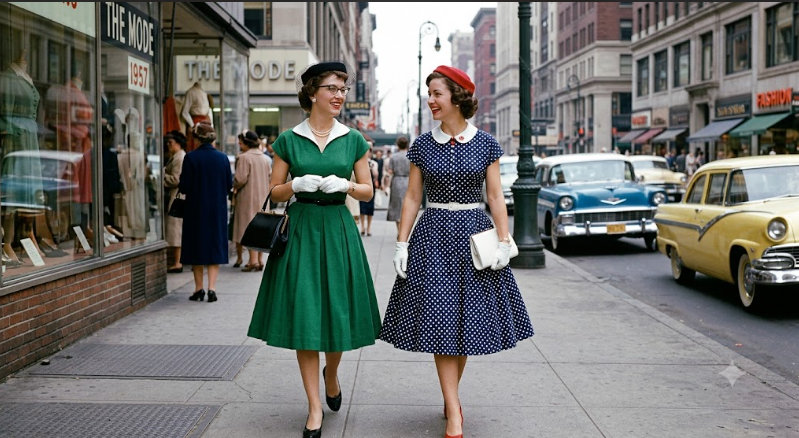
One of the most memorable features of 50s fashion was the emphasis on a defined waist and balanced proportions. Dresses were often designed to create an hourglass shape, with fitted bodices and fuller skirts that created movement. Full skirts became especially popular because they offered both elegance and comfort. Many women wore dresses with structured layers underneath to enhance the shape, particularly for dances and special occasions. This style represented the polished image often associated with the decade. Clothing was carefully arranged, and even simple outfits usually included thoughtful details such as belts, scarves, or matching accessories.
Dresses That Became Symbols of the Decade
The 1950s produced several dress styles that remain popular today. Swing dresses, with their wide skirts and fitted tops, became favorites for their playful movement and flattering shape. Pencil dresses and fitted evening gowns offered a different mood. These designs focused on sophistication and highlighted the natural shape of the body. They became closely connected with Hollywood glamour and formal occasions. Patterns also played an important role. Floral designs, polka dots, checks, and bold color combinations gave everyday clothing a cheerful personality. These details helped make 1950s dresses instantly recognizable.
Everyday Fashion and Practical Clothing
Although glamorous dresses receive much attention, daily clothing during the 1950s was often more practical. Women wore skirts, blouses, sweaters, and tailored trousers for everyday activities. Cardigans became a wardrobe essential because they could be paired with different outfits and provided a simple way to create a neat appearance. Matching sweater sets were especially popular among women who preferred a refined but comfortable style. The decade also saw the growth of casual clothing. Sportswear became more accepted, allowing people to dress comfortably without losing a sense of style.
The Influence of Hollywood on 50s Style
Movies had a powerful effect on fashion during the 1950s. Hollywood stars became style references, and audiences often copied their clothing, hairstyles, and makeup choices. Marilyn Monroe represented a glamorous and confident image through elegant dresses, feminine shapes, and dramatic beauty looks. Her style became associated with classic Hollywood appeal. Audrey Hepburn offered a different approach with simple, graceful outfits. Her preference for clean lines, understated clothing, and elegant accessories showed that fashion could be stylish without being excessive. Grace Kelly became known for timeless sophistication. Her tailored outfits and refined appearance influenced women who admired classic elegance.
Hairstyles and Beauty Trends of the 1950s
Beauty was an important part of completing a 1950s look. Hairstyles were carefully styled, and many women spent considerable time creating polished appearances. Popular hairstyles included soft curls, short waves, ponytails, and carefully arranged updos. Hair accessories such as scarves and decorative clips were often used to add personality. Makeup focused on a clean and feminine appearance. Defined eyebrows, smooth skin, and bold lipstick became recognizable elements of the era. Beauty routines were considered an important part of personal presentation.
Men’s Fashion in the 1950s
Men’s fashion during the decade reflected both traditional values and changing attitudes. Professional men typically wore structured suits, dress shirts, and formal shoes. Suits were often tailored with clean lines, creating a sharp and respectable appearance. Accessories such as ties and hats completed the formal style that was common in workplaces and social settings. However, younger men began moving away from traditional clothing. They embraced more relaxed styles that reflected music, movies, and a growing desire for independence.
The Rise of Rebel Style and Youth Culture
The 1950s marked a major shift in youth fashion. Teenagers started developing their own styles instead of simply following adult clothing trends. Leather jackets, jeans, and simple T-shirts became symbols of rebellion. This style was strongly connected with rock-and-roll culture and famous figures from film and music. For young women, casual skirts, sweaters, and playful accessories became popular choices. Fashion became a way for teenagers to express their interests, friendships, and individuality.
Accessories That Completed the 1950s Look
Accessories were not just finishing touches during the 1950s; they were an important part of the entire outfit. A carefully chosen accessory could completely change the appearance of simple clothing. Women often wore pearl necklaces, gloves, scarves, handbags, and decorative jewelry. Shoes and handbags were frequently coordinated with clothing to create a complete look. Men also paid attention to details through watches, hats, belts, and polished footwear. These small elements helped create the organized and refined appearance associated with the decade.
Why 50s Fashion Remains Popular Today
The continued popularity of 50s fashion comes from its strong visual identity and timeless designs. Unlike trends that quickly disappear, many styles from the decade still feel wearable because they focus on shape, quality, and balance. Modern fashion often borrows elements from the era without copying it completely. A high-waisted skirt, vintage-inspired dress, or leather jacket can bring a touch of 1950s influence into a contemporary wardrobe. The decade remains popular because it offered different styles for different personalities. Some people connect with its elegance, while others prefer its rebellious side.
How to Add 50s Fashion to a Modern Wardrobe
Bringing 1950s inspiration into modern clothing does not require wearing a complete vintage outfit. Small details can create a classic appearance while keeping the look current. A fitted blouse with high-waisted jeans, a swing dress with modern shoes, or a leather jacket over a simple outfit can capture the spirit of the decade. The key is choosing pieces that reflect the confidence and attention to detail that made 1950s clothing memorable.
Conclusion
The 1950s was a defining period in fashion because it combined elegance with self-expression. The decade created styles that reflected changing lifestyles, from carefully designed dresses to casual clothing shaped by youth culture. What makes 50s fashion memorable is not only the clothing itself but the confidence behind it. The era showed that fashion could communicate personality, attitude, and individuality. Today, the influence of the 1950s continues because its best ideas remain relevant: quality design, thoughtful details, and clothing that helps people feel comfortable in their own style.