Introduction
The 1920s was a revolutionary period for men’s fashion. Known as the Roaring Twenties, the decade introduced a new approach to dressing that combined traditional elegance with modern comfort. After years of strict formal styles, men began embracing clothing that allowed more freedom while still maintaining a polished appearance. Influenced by jazz culture, Hollywood, sports, and changing lifestyles, men’s fashion became more expressive. Sharp suits, stylish hats, wider trousers, and refined accessories became symbols of confidence and sophistication. The style of this era continues to inspire modern vintage fashion, weddings, themed events, and classic menswear.
The Classic 1920s Suit: The Foundation of Men’s Style
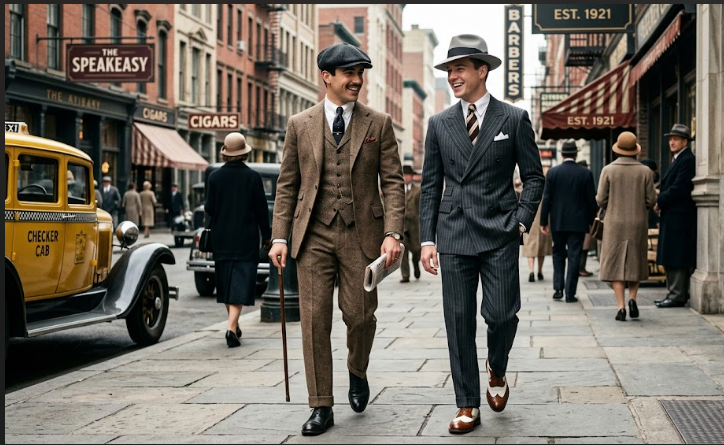
The suit was the centerpiece of a man’s wardrobe during the 1920s. Whether attending business meetings, social gatherings, or evening events, men were expected to look well-dressed and refined. The typical suit featured a matching jacket, trousers, waistcoat, dress shirt, and tie. During the early part of the decade, suits maintained a relatively traditional shape, but styles gradually became more relaxed. Jackets developed broader shoulders, while trousers became wider and more comfortable. This change created the recognizable silhouette associated with 1920s menswear. Three-piece suits were especially popular among fashionable gentlemen. The waistcoat added depth to the outfit and created a sophisticated appearance even when the jacket was removed. Fabrics such as wool, tweed, and flannel were commonly used, while patterns like pinstripes, checks, and subtle textures added character.
1920s Trousers: The Rise of Wider Styles
Men’s trousers experienced a major transformation during the decade. Instead of the narrow fits seen in previous years, men started wearing trousers with higher waists and more relaxed legs. Wide-leg trousers became one of the defining trends of the period. Known for their comfortable fit, these trousers gave men a stylish yet effortless appearance. Many men also wore suspenders because trousers sat higher on the waist, making them an important part of the overall look. Younger men, especially university students, helped popularize relaxed trouser styles that later became strongly associated with the Jazz Age.
Shirts, Ties, and Formal Details
A well-dressed man in the 1920s paid close attention to every part of his outfit. Shirts were usually clean and formal, with white and striped designs being common choices. Collar styles varied, with both traditional and softer options becoming popular. Neckwear provided an opportunity for men to show personality. Silk ties, patterned designs, and bow ties were frequently paired with suits. Small details such as tie pins and pocket squares helped create a more complete and elegant appearance. Unlike earlier decades, men had more freedom to experiment with colors and patterns while still maintaining a respectable style.
Hats: An Essential Part of a Gentleman’s Look
A hat was considered an important finishing touch for most men during the 1920s. It was not simply an accessory but a reflection of personality and social style. The fedora became one of the most recognizable hats of the era, especially among businessmen and city gentlemen. The flat cap offered a more casual option, while the bowler hat remained associated with traditional formal dressing. During warmer months, straw boater hats were popular for outdoor events and summer occasions. A complete 1920s outfit often looked unfinished without the right hat.
Shoes and Accessories That Completed the Outfit
Footwear played an important role in creating a polished appearance. Leather Oxford shoes, brogues, and two-tone spectator shoes were popular choices because they matched the elegance of formal clothing. Accessories helped distinguish a stylish gentleman from an average dresser. Pocket watches with chains, cufflinks, gloves, and pocket squares were common additions to formal outfits. These small details demonstrated attention to style and reflected the importance of presentation during the decade.
Casual Fashion in the 1920s
Although suits dominated men’s fashion, casual clothing became increasingly popular during the decade. Sports and outdoor activities influenced everyday styles, leading to the rise of sweaters, cardigans, sport jackets, and relaxed trousers. Men began adopting clothing that was comfortable but still fashionable. Golf-inspired outfits and casual knitwear became especially popular among younger generations who wanted a less formal appearance.
Great Gatsby Style: The Modern Interpretation of 1920s Fashion
Today, the 1920s is often associated with the luxurious style shown in The Great Gatsby. This interpretation focuses on elegance, confidence, and attention to detail. A Gatsby-inspired outfit usually combines a three-piece suit, crisp shirt, classic tie, polished shoes, and vintage accessories. The style works particularly well for formal events because it creates a sophisticated appearance while maintaining a sense of individuality.
1920s Gangster-Inspired Fashion
The gangster style is another famous interpretation of 1920s menswear. Popularized by movies and television, this look usually features dark suits, pinstripes, long coats, and classic hats. Although entertainment often exaggerates this style, its foundation comes from the decade’s appreciation for sharp tailoring and confident dressing. The focus was always on looking powerful, elegant, and well put together.
Hairstyles and Grooming Trends
Men’s grooming became an important part of achieving a fashionable appearance during the 1920s. Short, neatly styled hair was preferred, with side parts and slicked-back looks being common choices. Many men used styling products to maintain a clean and controlled appearance. Facial hair became less dominant compared with previous generations, and the clean-shaven look became increasingly popular.
How to Wear 1920s Style Today
Bringing 1920s fashion into a modern wardrobe does not require wearing a complete vintage outfit. Instead, men can combine classic elements with contemporary clothing. A tailored suit, leather shoes, a vintage-style watch, or a classic hat can add a touch of 1920s influence without looking like a costume. The goal is to capture the confidence, elegance, and craftsmanship that defined the era.
Final Thoughts
20’s fashion for guys represented a turning point in men’s style. It introduced a balance between traditional sophistication and modern self-expression. From tailored suits and stylish hats to carefully chosen accessories, every detail contributed to the confident gentleman image of the Roaring Twenties. The reason this era remains popular today is simple: the style was timeless. The focus on quality, fit, and personal expression continues to influence men’s fashion nearly a century later.