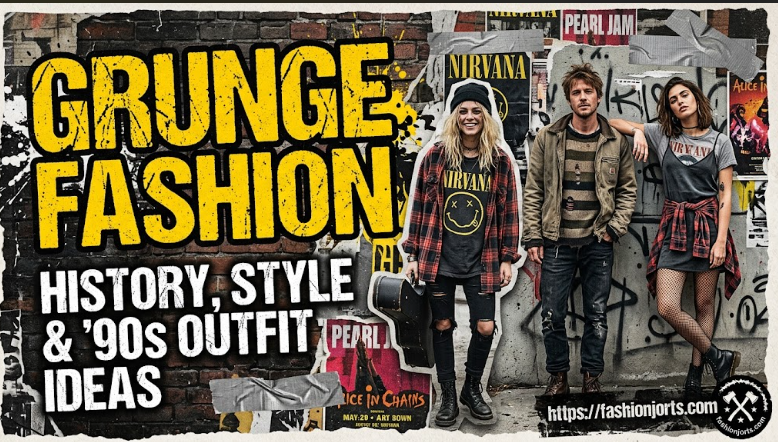
Grunge fashion has never depended on looking perfect. Its appeal comes from loose layers, worn fabrics, comfortable clothes, and the freedom to mix pieces without making an outfit feel carefully planned. What started around the alternative music culture of the late 1980s and early 1990s eventually became one of the most recognizable styles of the decade. Flannel shirts and faded denim are usually the first things people associate with the look, but there is more behind it. Grunge challenged the idea that good style had to appear expensive, coordinated, or new. That attitude is one reason people continue returning to it decades later.
What Is Grunge Fashion?
Grunge fashion is a casual way of dressing that favors comfort and individuality over polished presentation. Oversized shirts, relaxed jeans, old T-shirts, cardigans, boots, and secondhand clothing are closely connected with the style. Pieces often look better together when they aren’t perfectly matched. The original aesthetic also had an unforced quality. People weren’t necessarily building outfits around a strict set of fashion rules. They wore practical clothes that suited their surroundings, budgets, and music culture, and the resulting appearance eventually became a style of its own.
Where Did Grunge Fashion Begin?
The story is closely connected with Seattle and the Pacific Northwest. During the late 1980s, a growing alternative rock scene developed around bands whose music sounded rougher and less polished than much of the mainstream rock dominating popular culture. The clothes surrounding the scene reflected a similarly relaxed attitude. Seattle’s cool, wet climate also made layering practical. Flannel shirts, sweaters, jackets, jeans, and boots weren’t unusual items in everyday wardrobes. As musicians from the area became famous, audiences far beyond Seattle started noticing how they dressed as well as how they sounded.
How Seattle’s Music Scene Shaped Grunge Style
Music gave grunge its identity long before fashion companies began selling their own interpretations. Bands such as Nirvana, Pearl Jam, Soundgarden, and Alice in Chains brought international attention to Seattle’s alternative scene. Their clothes often looked ordinary compared with the carefully constructed stage wardrobes associated with many earlier rock stars. That simplicity became part of the attraction. A faded T-shirt or old cardigan felt accessible because fans could find similar clothes without spending much money. Instead of dressing exactly like a celebrity, young people could adapt the general attitude using pieces already sitting in their closets.
What Did People Wear in the Grunge Era?
A typical outfit could start with loose jeans and a plain or graphic T-shirt. An oversized flannel shirt, cardigan, or sweater provided another layer, while sneakers or sturdy boots completed the outfit. Denim jackets, beanies, worn leather, and secondhand pieces also fitted easily into the wardrobe. Condition wasn’t necessarily a problem. Faded colors, distressed denim, softened fabric, and slightly oversized fits could make clothing feel more appropriate rather than less desirable. This gave older clothes a usefulness that sharply contrasted with fashion built around buying something new every season.
Kurt Cobain and the Grunge Fashion Influence
Kurt Cobain became one of the most recognizable figures connected with grunge style as Nirvana gained worldwide fame. His wardrobe frequently included cardigans, striped shirts, loose jeans, sweaters, T-shirts, and inexpensive-looking layers. The clothes rarely seemed designed to attract attention on their own. His influence came partly from that lack of obvious effort. Fans saw a major musician wearing clothing that didn’t require designer labels or a large budget to imitate. Cobain didn’t create the entire style, but his visibility helped establish the oversized, thrifted appearance that many people now associate with the era.
Women’s Grunge Fashion in the 1990s
Women’s grunge clothing often mixed traditionally feminine pieces with heavier, more practical ones. A simple dress could be worn with boots and an oversized cardigan, while a skirt might appear alongside a band T-shirt or loose sweater. The contrast made outfits interesting without requiring elaborate styling. Slip dresses became particularly associated with the broader 1990s aesthetic and worked naturally within grunge-inspired wardrobes. Makeup could be minimal or deliberately imperfect, while hairstyles tended to feel less controlled than highly styled looks. There wasn’t one required uniform, which allowed people to interpret the aesthetic differently.
Why Thrift Stores Were Central to Grunge Style
Secondhand shopping made sense for a culture that wasn’t centered on displaying wealth. Thrift stores offered worn denim, old flannels, unusual sweaters, jackets, and T-shirts at affordable prices. Every piece could have different fading, texture, or proportions, making outfits harder to duplicate exactly. That history still offers a useful lesson for anyone interested in the style today. Buying a brand-new wardrobe marketed as “grunge” isn’t necessary. An old sweater, faded jeans, or secondhand jacket can feel more convincing because the clothing has developed character naturally.
How Grunge Fashion Reached the Runway
Once grunge music entered mainstream culture, the fashion industry couldn’t ignore the clothing surrounding it. Designers began adapting loose layers, mismatched prints, casual dresses, and other elements for runway collections. Suddenly, an aesthetic associated with inexpensive clothing appeared in a much more expensive setting. This created an obvious contradiction. The original look valued accessibility and showed little concern for conventional fashion, while designer versions turned that appearance into a carefully produced product. Still, the runway moment proved how quickly youth culture could influence established fashion.
How to Wear Grunge Fashion Today
Modern grunge doesn’t require dressing as though you’ve stepped directly out of 1992. A relaxed pair of jeans with a vintage-style T-shirt and oversized flannel can provide a subtle reference. A loose cardigan, denim jacket, simple sneakers, or chunky boots can build on the outfit without making it feel like a costume. Balance matters more than adding every recognizable grunge item at once. If the jeans are heavily distressed, the rest of the outfit can remain simple. If you’re wearing a bold plaid shirt, neutral pieces underneath can keep the overall appearance relaxed rather than overly themed. Secondhand stores are also worth exploring. Vintage clothing often provides natural fading and unusual fits that new garments try to reproduce artificially. More importantly, shopping this way keeps some of the individuality that made the original aesthetic interesting.
Why Grunge Fashion Is Still Popular
Grunge works surprisingly well with modern wardrobes because its basic pieces never disappeared. Jeans, T-shirts, knitwear, flannel shirts, boots, and denim jackets remain everyday clothing. Changing proportions and combinations is often enough to give those familiar pieces a grunge influence. The style also offers an alternative to highly polished outfits. Social media can make fashion feel carefully staged, but grunge leaves room for wrinkles, fading, loose fits, and unexpected combinations. Clothes don’t need to look untouched to look good. Its staying power may ultimately come from flexibility. Someone can borrow one or two elements without adopting the entire aesthetic, while another person can build most of a wardrobe around vintage and oversized pieces. There is enough freedom for the style to change with each generation.
Conclusion
Grunge fashion became memorable because it challenged expectations about what stylish clothing should look like. Instead of demanding new, expensive, or perfectly coordinated pieces, it found character in comfortable layers, secondhand finds, worn denim, and ordinary shirts. Its move from Seattle’s music culture into mainstream fashion changed how those clothes were viewed. Items that once seemed too ordinary to deserve fashion attention became recognizable symbols of an era. The commercial versions may have changed the context, but the original preference for individuality survived. That idea remains useful today. You don’t need to recreate an exact 1990s outfit or buy a collection of deliberately distressed clothes. Start with what feels comfortable, add pieces with genuine character, and leave enough imperfection for the outfit to feel like your own.