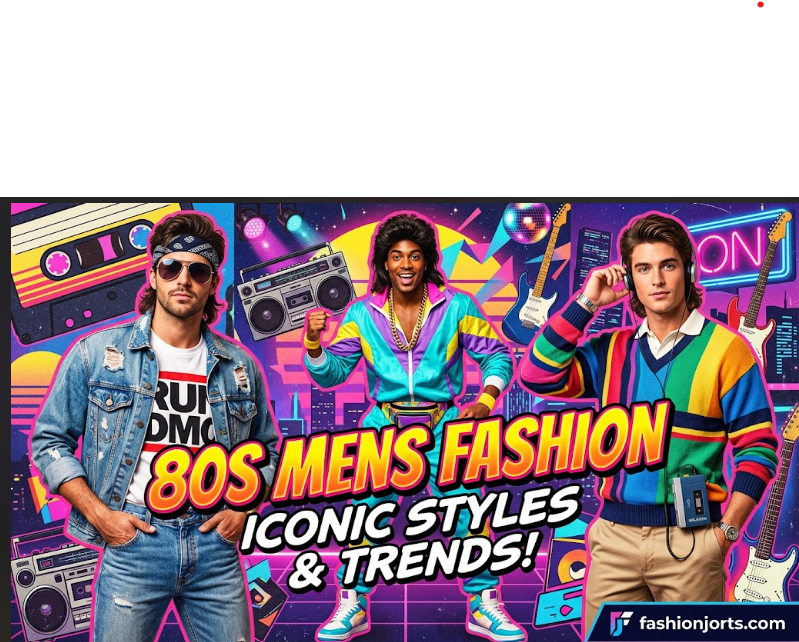
Men’s clothing in the 1980s was difficult to ignore. Jackets had stronger shoulders, sneakers became everyday footwear, and music increasingly influenced what young men wore outside clubs, schools, and workplaces. Yet the decade was more varied than the familiar images of neon shirts and oversized sunglasses suggest. A man heading to an office might choose a sharply tailored suit, while someone dressing for the weekend could reach for jeans, a sweatshirt, or a tracksuit. Preppy dress, hip-hop street style, punk, rock, and athletic clothing all developed distinct identities. That mix is what makes 80s men’s fashion such a useful source of inspiration today.
What Did Men Wear in the 80s?
There was no standard uniform for men during the decade. Clothing changed according to age, occupation, music taste, and social setting. Loose jackets, denim, polos, sweaters, tracksuits, leather pieces, and tailored suits could all belong to an unmistakably 1980s wardrobe. Fit was particularly important. Many jackets created a wider upper body, trousers often sat higher on the waist than modern styles, and casual clothes could have a relaxed shape. Color ranged from conservative navy and gray to bright red, yellow, turquoise, and patterned combinations.
The Most Popular 80s Men’s Fashion Trends
One of the decade’s defining characteristics was confidence. Men became more comfortable wearing noticeable patterns, larger silhouettes, branded sportswear, and accessories that gave an outfit personality. Clothes could make a statement without being reserved for special occasions. At the same time, classic pieces remained important. Jeans, white sneakers, button-down shirts, knitwear, and leather jackets provided a practical foundation for everyday wardrobes. The 1980s look often came from how those familiar items were cut and combined rather than from completely unusual clothing.
Power Suits and Business Style in the 1980s
Business clothing became closely associated with ambition. Suit jackets often featured broad shoulders and generous lapels, creating a strong upper-body shape. Double-breasted jackets, pinstripes, crisp shirts, and noticeable ties helped complete the professional look. The best-known version of this style was polished rather than playful. Dark navy, charcoal, and gray allowed the structure of the tailoring to stand out without relying on loud color. For men who wanted to appear successful and authoritative, the suit became part of their professional image.
80s Men’s Casual Fashion and Everyday Clothing
Away from work, clothing became much more relaxed. Jeans could be paired with sweatshirts, patterned sweaters, denim jackets, sneakers, or simple T-shirts. Bomber-style jackets and leather outerwear also gave men easy ways to add character without dressing formally. Sports clothing became increasingly visible in ordinary wardrobes. Tracksuits and athletic tops were no longer limited to exercise, while sneakers worked with far more than gym clothes. This shift helped create a casual approach that still feels familiar decades later.
Preppy Style and the Rise of the Yuppie Look
Preppy fashion represented the cleaner side of 1980s menswear. Polo shirts, chinos, Oxford shirts, loafers, and knitted sweaters produced outfits that looked neat without requiring a full suit. Pastel shades and traditional patterns could add color while keeping the overall appearance controlled. Young professionals also embraced clothing that communicated financial success and upward mobility. Smart jackets, quality knitwear, tailored trousers, and recognizable labels fit comfortably into that image. The result sat somewhere between traditional collegiate clothing and polished city dressing.
How Hip-Hop Changed 80s Men’s Fashion
Hip-hop gave menswear a completely different source of influence. Instead of fashion being dictated only by designers and formal clothing, musicians demonstrated how streetwear could become part of a recognizable public identity. Tracksuits, sneakers, hats, leather jackets, and bold jewelry became strongly connected with the growing culture. Run-DMC remains one of the clearest examples of this change. Their coordinated sportswear, Adidas sneakers, black hats, and gold chains created a visual identity that was easy to recognize. It also showed that everyday street clothing could carry as much cultural weight as expensive tailoring.
Punk, Rock, and New Wave Style
Music scenes produced some of the decade’s most individual outfits. Rock style favored leather jackets, fitted jeans, boots, band shirts, and longer or deliberately styled hair. The clothes often looked tougher and less polished than mainstream casual fashion. Punk pushed that attitude further with distressed clothing, boots, leather, unusual hairstyles, and DIY details. New wave could move in another direction entirely, experimenting with sharper shapes, dramatic colors, unusual shirts, and more adventurous styling. These scenes made personal identity as important as following a mainstream trend.
Popular 80s Jeans, Jackets, and Shirts
Denim was one of the easiest ways to build a casual outfit. Jeans commonly appeared with tucked-in shirts, sneakers, sweaters, or jackets, while denim jackets offered another practical layer. Different washes allowed the same basic material to work with both understated and more noticeable combinations. Shirts provided even more variety. Men wore everything from plain button-downs and polos to printed short-sleeve shirts and colorful designs. Jackets were equally diverse, ranging from denim and leather to lightweight sporty styles and structured blazers.
Shoes and Sneakers Men Wore in the 80s
Footwear reflected the widening gap between formal and casual dress. Business outfits still worked with polished leather shoes, while loafers complemented preppy clothing. Boots found a natural home in rock, punk, and other alternative styles. Sneakers, however, became increasingly central to casual fashion. Basketball shoes, tennis-inspired designs, and classic low-top sneakers could become the focal point of an outfit rather than an afterthought. That relationship between footwear, music, sport, and identity remains one of the decade’s strongest fashion legacies.
80s Men’s Accessories and Hairstyles
Accessories could change the character of otherwise simple clothes. Sunglasses, watches, belts, baseball caps, ties, and jewelry allowed men to make a look more distinctive. Gold chains became particularly recognizable within hip-hop, while colorful ties brought personality to business clothing. Hair could be equally expressive. Some men preferred neat, controlled cuts, while rock and alternative scenes embraced considerably more volume and length. Rather than one dominant hairstyle, the decade offered different approaches tied closely to lifestyle and music.
How Music and Pop Culture Shaped Men’s Style
Music became one of the strongest visual influences on young men. Hip-hop artists, rock musicians, pop performers, and new wave acts presented sharply different ideas about how masculinity could look. Fans could signal the music they followed simply through their jackets, shoes, hairstyles, or accessories. Film and television added another layer. Business characters helped reinforce tailored professional dressing, while youth-focused entertainment made denim, leather, sportswear, and casual clothing highly visible. Fashion moved between entertainment and everyday life quickly, making celebrity style easier to imitate.
How to Create an 80s-Inspired Men’s Outfit Today
A modern interpretation works better when it borrows selectively from the period. Straight jeans, retro sneakers, and a relaxed denim or bomber jacket can reference the decade without turning the outfit into a costume. A polo and chinos can achieve the same effect for someone who prefers preppy clothing. For formal dressing, consider a slightly roomier blazer and trousers rather than dramatically padded shoulders. Music-inspired looks can use a vintage-style sports jacket, leather outerwear, or classic sneakers as the focal point. One or two recognizable details are usually enough to establish the influence.
Conclusion
What makes 80s men’s fashion memorable isn’t one particular jacket or pair of sneakers. It’s the number of different identities that existed at the same time, from sharply dressed professionals to young men taking cues from hip-hop, punk, rock, and sport. The decade also changed the relationship between casual clothing and personal style. Sneakers and athletic pieces became increasingly important outside their original settings, while music gave street clothing a larger cultural presence. Modern fashion still borrows from these ideas because many of the basic pieces remain wearable. Denim, polos, retro sneakers, leather jackets, relaxed tailoring, and sportswear can all fit comfortably into a current wardrobe. The key is choosing a direction rather than recreating every stereotype at once. A well-selected jacket, pair of sneakers, or period-inspired silhouette can capture the character of the 1980s while still looking appropriate today.