The 1800s fashion era remains one of the most fascinating periods in clothing history because it was a century of constant change. Fashion moved from the soft, flowing elegance of Regency dresses to the highly structured silhouettes of the Victorian age, reflecting changes in society, technology, and ideas about beauty. Clothing during the 19th century was not only about looking fashionable. It showed social position, personal taste, and cultural values. The fabrics people chose, the way garments were shaped, and even the accessories they carried often revealed important details about their lifestyle.
Early 1800s Fashion: The Simplicity of the Regency Era
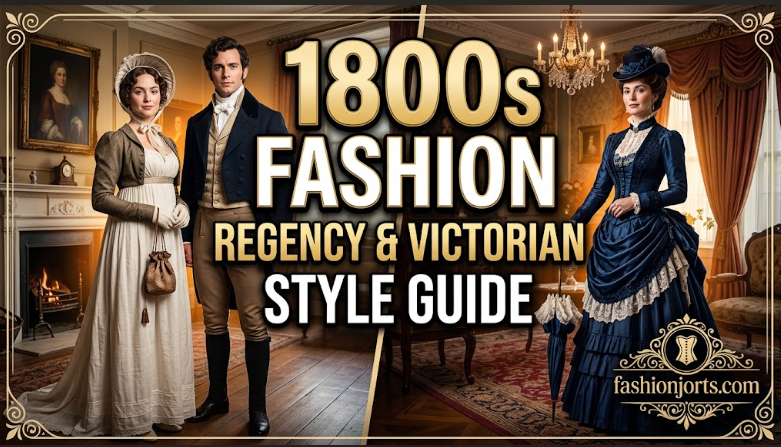
The beginning of the 1800s was defined by the Regency style, which favored elegance and simplicity. Women’s clothing moved away from the heavy decoration of previous centuries and introduced a lighter, more natural appearance. The most recognizable feature of this period was the Empire waist dress. Instead of a tightly fitted waist, these gowns had a raised waistline just below the bust, creating a long and graceful silhouette. Lightweight fabrics such as cotton muslin and silk allowed dresses to move freely. Women often completed their outfits with bonnets, gloves, shawls, and delicate jewelry. The overall look was inspired by classical Greek and Roman fashion, creating an image of refinement rather than extravagance. Men’s clothing during this period focused on sharp tailoring. Coats, waistcoats, trousers, and carefully tied neckwear became important parts of a gentleman’s wardrobe. A polished appearance was considered a sign of character and respectability.
1820s and 1830s Fashion: More Shape and Decoration
As the century progressed, fashion began moving toward more dramatic designs. The relaxed Regency silhouette slowly disappeared, and clothing became more structured. Women’s dresses developed fuller skirts, fitted bodices, and larger sleeves. The shoulders became an important focus, with wide puff sleeves becoming a defining feature of the 1830s. Fashion also became more decorative during this period. Embroidery, ribbons, floral patterns, and detailed trims were commonly used to add personality to clothing. Dresses were carefully designed to create a specific feminine shape. This change reflected a broader cultural shift. Fashion became less about simplicity and more about creating a carefully presented image.
Victorian Fashion: The Most Recognized 1800s Style
The Victorian era began in 1837 with the reign of Queen Victoria and became the style most people associate with the 19th century. Victorian fashion emphasized structure, modesty, and detailed craftsmanship. Women’s clothing often included fitted bodices, layered skirts, high necklines, and decorative elements. Corsets were commonly worn to create a narrower waist, while additional layers underneath dresses helped produce fashionable shapes. The ideal silhouette changed throughout the Victorian period. Early Victorian dresses focused on wide skirts, while later decades introduced different forms, including crinolines and bustles. Clothing also reflected social expectations. Formal and carefully arranged outfits were considered signs of good manners and proper behavior, especially among middle and upper-class women.
1850s and 1860s Fashion: The Rise of Large Skirts and Crinolines
The middle of the century introduced one of the most recognizable trends in fashion history: the crinoline. Crinolines were cage-like structures worn beneath skirts to create a wide, rounded shape. They allowed dresses to appear much larger without requiring countless layers of heavy fabric. During this period, women’s gowns became dramatic and eye-catching. Dresses featured colorful fabrics, decorative patterns, ribbons, and lace. The size of a skirt often became a symbol of fashion and social standing. Advances in textile manufacturing also changed clothing production. New methods made fabrics, colors, and patterns more accessible, allowing fashion trends to spread more quickly.
1870s and 1880s Fashion: The Bustle Silhouette
After the popularity of extremely wide skirts declined, fashion shifted toward emphasizing the back of the dress. The bustle became the defining feature of late Victorian clothing. Instead of creating volume around the entire skirt, dresses were designed with extra fullness at the back. This created a dramatic profile while making the front of the outfit appear slimmer. Women’s dresses during these decades included fitted jackets, decorative layers, long skirts, and luxurious fabrics. Designers focused heavily on details, with lace, embroidery, and carefully arranged fabric creating complex appearances. Men’s fashion also became more familiar to modern eyes during this period. Tailored suits, waistcoats, formal coats, and trousers became standard clothing choices for professional and social settings.
1890s Fashion: The Beginning of a New Era
The final decade of the 1800s brought changes that pointed toward 20th-century fashion. Women’s clothing became slightly more practical, especially as women’s activities expanded beyond traditional social roles. The extreme bustle gradually disappeared, and designers introduced cleaner shapes. One of the most memorable trends of the decade was the large puffed sleeve, often called the leg-of-mutton sleeve. Tailored jackets, shirtwaist blouses, and simpler skirts became increasingly popular. The 1890s represented a transition between Victorian traditions and the more relaxed styles that would appear in the early 1900s.
Men’s Fashion in the 1800s
Men’s fashion throughout the century focused on tailoring, formality, and clean lines. A typical gentleman’s outfit included a coat, waistcoat, trousers, shirt, and neckwear. Formal occasions often required carefully fitted clothing made from quality materials. By the late 1800s, the three-piece suit had become an important part of men’s wardrobes. Dark colors, structured jackets, and practical designs created a style that influenced modern menswear. Accessories such as pocket watches, gloves, walking sticks, and hats also played an important part in completing an outfit.
Fabrics and Accessories That Defined 1800s Clothing
Fabric choice helped distinguish different styles and social classes during the century. Wealthier individuals often wore silk, velvet, fine wool, and lace, while cotton became increasingly common for everyday clothing. Colors also changed as textile technology improved. Rich shades such as deep red, green, purple, and blue became popular, especially during the Victorian period. Accessories added the finishing touch to an outfit. Women used bonnets, parasols, gloves, and jewelry, while men relied on hats, watches, and formal neckwear to complete their appearance.
Why 1800s Fashion Still Inspires Modern Designers
The influence of 1800s fashion can still be seen in modern clothing. Designers continue borrowing elements from Victorian and Regency styles because they create strong visual appeal. Corset-inspired tops, lace details, puff sleeves, romantic dresses, and vintage-inspired accessories regularly appear in contemporary fashion collections. However, modern interpretations usually adapt historical ideas for comfort and everyday wear rather than copying old clothing exactly. The lasting popularity of 1800s-inspired fashion comes from its craftsmanship, elegance, and distinctive character.
Conclusion
The fashion of the 1800s tells the story of a century filled with transformation. From simple Regency gowns to elaborate Victorian dresses, clothing reflected changing attitudes, technology, and social traditions. Although many original garments belong to the past, the creativity and craftsmanship of 19th-century fashion continue to influence designers today. The appeal of 1800s fashion comes from its ability to combine history, artistry, and personal expression in a way that still feels recognizable more than a century later.