The 1920s brought a fresh approach to personal style, with accessories becoming an essential part of everyday and evening fashion. Women experimented with shorter hairstyles, decorative jewelry, and practical hats, while men refined their outfits with carefully chosen ties, watches, and headwear. These details reflected a decade shaped by changing social habits, popular entertainment, and new ideas about modern dressing. Today, 1920s fashion accessories remain popular for vintage outfits, themed events, and anyone who appreciates classic design.
Why Were Accessories Important in 1920s Fashion?
Accessories helped people express their personalities without changing their entire wardrobes. A simple dress could look elegant with a long necklace, a decorative handbag, or a carefully chosen hat. As social dancing and evening entertainment gained popularity, accessories also became a way to create outfits suited to different occasions. The result was a fashion culture that balanced practicality with individual expression.
1. Cloche Hats for a Classic Vintage Look
Cloche hats became one of the most recognizable fashion pieces of the decade. Their rounded, bell-shaped design fitted closely around the head and complemented the short hairstyles that gained popularity during the 1920s. Felt versions were particularly suitable for cooler weather, while lighter materials offered alternatives for warmer seasons. Ribbon bands and small decorative details added character without overwhelming the hat’s simple shape.
2. Long Pearl Necklaces and Elegant Beads
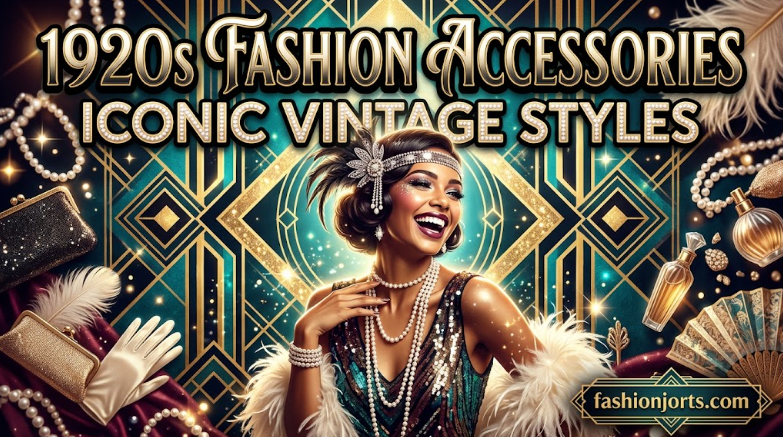
Long necklaces brought movement and decoration to the relaxed silhouettes of the decade. Pearl strands were especially associated with sophisticated outfits, while glass beads offered colorful alternatives at different price points. Women could wear a single strand or double it around the neck to create a layered appearance. These accessories worked particularly well with dresses that had relatively simple necklines.
3. Beaded Headbands and Hair Decorations
Headbands became closely associated with the flapper style, especially for evening occasions. Some featured rhinestones, metallic details, or embroidered patterns, while others included feathers for a more dramatic appearance. Their placement across the forehead helped frame the face and complemented short, waved hairstyles. For a balanced outfit, a decorative headband works best when paired with relatively simple jewelry.
4. Art Deco Earrings and Brooches
The Art Deco movement influenced jewelry through geometric shapes, symmetry, and contrasting materials. Earrings often featured dangling designs that remained visible alongside short hairstyles, while brooches provided a decorative accent for coats, dresses, and scarves. Crystal details and polished metals added sparkle to evening outfits. These styles remain useful sources of inspiration for anyone who wants a vintage appearance without wearing a complete period costume.
5. Vintage Handbags and Beaded Purses
Handbags served a practical purpose while adding another layer of detail to an outfit. Small evening purses often featured beads, embroidery, metal frames, or decorative clasps. Structured leather handbags offered a more understated option for daytime use. Choosing a bag that complements the outfit’s colors and materials can make a vintage-inspired look feel more cohesive.
6. Gloves for Daytime and Evening Wear
Gloves were common accessories in women’s fashion during the 1920s, although their length and material depended on the occasion. Practical styles complemented outdoor clothing, while longer gloves could accompany formal evening dresses. Neutral shades were easy to coordinate with coats and hats, whereas decorative versions added interest to special-occasion outfits. Gloves also offer a simple way to make a modern vintage ensemble look more period-inspired.
7. T-Strap Shoes and Mary Jane Pumps
Footwear became an important part of the overall look as skirts became shorter and shoes were more visible. T-strap designs and Mary Jane-style pumps offered a recognizable vintage appearance, often with buckles and modest heels. These shoes suited dancing as well as formal social occasions. For modern wear, a comfortable pair with a secure strap can provide the same classic look without sacrificing practicality.
8. Feather Boas and Decorative Fans
Feather boas and hand fans are strongly associated with the glamorous side of 1920s entertainment. They appeared in performance settings, evening fashion, and popular images of flappers. However, they were not essential accessories for every woman or everyday occasion. Today, these pieces work best for themed parties, stage costumes, and carefully styled vintage photographs.
9. Scarves and Shawls
Scarves offered a flexible way to add color and pattern to an outfit. Depending on the fabric and styling, a scarf could be worn around the neck or head, while shawls provided extra coverage over dresses and eveningwear. Printed patterns and contrasting colors helped distinguish an otherwise simple outfit. These accessories are also easy to incorporate into contemporary wardrobes because they do not require a particular dress style.
10. Men’s Accessories in the 1920s
Men’s fashion relied on details that complemented tailored suits and everyday clothing. Fedoras, bowler hats, ties, pocket squares, watches, and cuff links helped create a polished appearance. Leather belts and formal shoes completed many outfits, while patterned ties offered opportunities for personal expression. The right combination depended on whether the occasion called for business attire, casual dressing, or formal eveningwear.
How to Style 1920s Fashion Accessories Today
Recreating the decade’s style does not require every accessory associated with the period. Start with the occasion and select a few pieces that work naturally with your clothing. For a flapper-inspired outfit, combine a beaded headband, long necklace, and strap shoes, while a daytime look can feature a cloche hat, gloves, and a structured handbag. Color coordination also matters. Neutral accessories work well with patterned clothing, while metallic details and sparkling jewelry can add interest to a plain dress. If historical accuracy is your goal, look at photographs and museum collections from the specific part of the decade you want to represent.
Common Mistakes When Choosing 1920s Accessories
One common mistake is assuming that every woman in the 1920s dressed like a flapper. Everyday fashion included practical hats, gloves, simple jewelry, and functional handbags, and styles differed according to age, income, and location. Another mistake is combining too many statement pieces, which can make an outfit feel more like a costume than a coordinated look. Selecting accessories that suit the occasion and clothing usually creates a more convincing result.
Conclusion
1920s fashion accessories offer plenty of inspiration for anyone interested in vintage style. Their appeal comes from the balance between decorative details and practical design, from elegant pearl necklaces to everyday hats and handbags. The best approach is to choose pieces that suit your personal style while reflecting the occasion. A few well-matched accessories can capture the spirit of the Roaring Twenties without making the outfit feel overly elaborate.