Early 90s fashion brought a noticeable change in how people dressed. The polished, attention-grabbing looks of the 1980s started giving way to relaxed jeans, loose shirts, sneakers, simple dresses, and comfortable layers. Music and youth culture had a strong influence, so clothing often reflected the scene someone followed. The interesting part of this period was its variety. Grunge favored an intentionally undone appearance, hip-hop introduced roomier streetwear, and minimalism moved in the opposite direction with clean, simple clothing. Together, these styles created an era that still feels familiar today.
What Was Early 90s Fashion Like?
Clothing in the first few years of the 1990s was generally casual and easy to wear. People mixed jeans with basic T-shirts, sweatshirts, jackets, sneakers, and other practical pieces. Clothes didn’t always need to look perfectly fitted or carefully coordinated. Young people also looked increasingly toward musicians and popular culture for inspiration. An outfit could communicate an interest in grunge, hip-hop, sports, or alternative culture without requiring expensive designer clothing. This made personal styling an important part of the period.
The Biggest Early 90s Fashion Trends
Several trends existed at the same time rather than one style controlling the decade. Loose silhouettes were especially common, but fitted and simple clothing also had a place. This contrast gave people plenty of room to create different looks.
Grunge Fashion
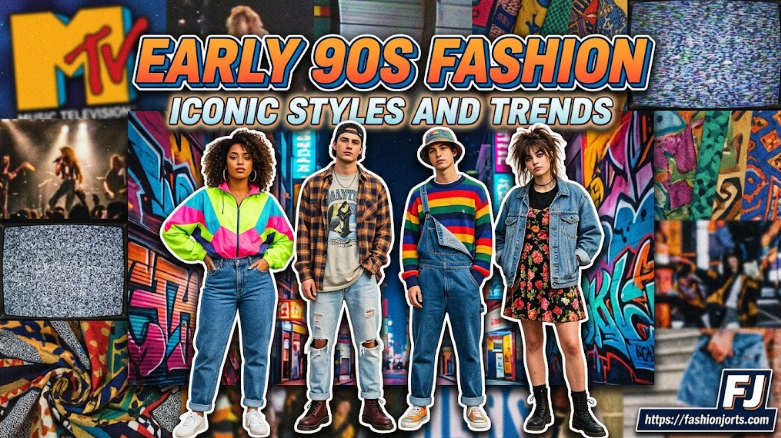
Grunge favored clothing that appeared effortless rather than polished. Flannel shirts, faded jeans, graphic or band T-shirts, loose sweaters, cardigans, and heavy boots captured the mood. Layers were often practical and slightly mismatched instead of carefully coordinated. The style was closely connected with alternative rock culture. Its appeal came partly from accessibility because ordinary and secondhand clothing could create the look. That helped separate grunge from fashion built around expensive labels.
Hip-Hop and Streetwear
Hip-hop created a very different visual identity. Baggy jeans, oversized T-shirts, hoodies, sports jackets, caps, tracksuits, and sneakers became recognizable elements of street style. Strong proportions gave even simple outfits plenty of personality. Branding could also become part of the outfit rather than something hidden on a label. Sports references, bold accessories, and athletic footwear helped build a look that would influence streetwear for decades.
Oversized Clothing
Loose clothing appeared across several early 90s styles. Oversized sweatshirts could be worn with leggings, while roomy shirts worked naturally with jeans or shorts. Men also embraced larger jackets, T-shirts, and casual tops. The appeal wasn’t complicated: these clothes were comfortable and easy to layer. Oversized pieces also created a relaxed silhouette that looked noticeably different from more structured clothing.
Denim and Baggy Jeans
Denim was one of the easiest ways to capture the period. Straight-leg, relaxed, high-waisted, and loose jeans worked with everything from plain shirts to oversized sweaters. Faded and distressed finishes suited more casual looks. Denim jackets and shorts provided additional options. Instead of making every denim piece match perfectly, people could combine different washes and fits. This informal approach made denim useful across several subcultures.
Sportswear and Casual Style
Sports clothing moved beyond exercise and became everyday fashion. Sweatshirts, tracksuits, athletic jackets, baseball caps, basketball-inspired clothing, and sneakers appeared regularly in casual outfits. Comfort became part of the style rather than something sacrificed for it. Sneaker culture also gave footwear greater importance. Shoes could help define an outfit even when the clothing itself was simple. This connection between sports and everyday fashion remains visible today.
Minimalist Fashion
Not everyone wanted oversized layers or bold streetwear. Minimalism offered simple dresses, fitted tops, clean trousers, understated coats, and restrained colors. Instead of relying on heavy decoration, these outfits focused on shape and fit. Simple black, white, gray, beige, and neutral pieces made outfits easy to combine. The look could feel polished without returning to the more dramatic styling associated with the previous decade.
Early 90s Women’s Fashion
Women’s wardrobes moved comfortably between sporty, casual, feminine, and alternative looks. High-waisted jeans could be paired with a tucked-in shirt, while leggings worked with oversized sweatshirts. Mini skirts, denim shorts, simple tops, and casual dresses provided other everyday choices. Slip-style dresses offered a cleaner silhouette. Some women paired feminine dresses with boots or casual jackets, creating a contrast between delicate and tougher pieces. Accessories could remain understated, allowing the clothing’s shape to carry the outfit.
Early 90s Men’s Fashion
Men’s clothing became noticeably more relaxed. Straight or loose jeans, basic T-shirts, flannel shirts, sweatshirts, casual jackets, and sneakers created easy everyday outfits. Layering a shirt over a T-shirt was a particularly simple way to achieve the period’s casual appearance. Streetwear pushed proportions even further. Baggy trousers, oversized tops, sports jackets, caps, and athletic shoes created a stronger silhouette. At the same time, men who preferred simpler clothing could stick with plain shirts, jeans, and understated outerwear.
Early 90s Shoes and Accessories
Footwear depended heavily on the style being worn. Sneakers suited sportswear and street fashion, while combat-style boots complemented grunge clothing. Simple canvas shoes also worked naturally with jeans, shorts, and casual dresses. Accessories ranged from baseball caps and beanies to belts, small sunglasses, hoop earrings, and simple jewelry. Hip-hop looks could feature larger and more visible accessories. Grunge styling generally kept things less polished.
How Music Influenced Early 90s Fashion
Music gave fashion a powerful source of inspiration during this period. Rock and alternative scenes helped make flannel, distressed denim, layered shirts, and boots recognizable beyond their original communities. Fans could borrow elements of a musician’s appearance without copying an entire outfit. Hip-hop had an equally strong but visually different influence. Roomier clothing, sneakers, caps, sports references, and noticeable accessories helped establish a streetwear identity. These influences eventually moved far beyond music audiences.
Early 90s Fashion Icons
Musicians were among the strongest style references of the era. Kurt Cobain became associated with loose cardigans, worn denim, layered shirts, and the grunge aesthetic. Hip-hop performers brought oversized clothing, sneakers, sportswear, and bold accessories to a much wider audience. Models and celebrities represented another side of the period. Cindy Crawford, Naomi Campbell, Kate Moss, and other recognizable faces showed everything from glamorous fashion to increasingly simple styling. There wasn’t one person who defined the entire era because its major trends were so different.
How to Recreate an Early 90s Outfit Today
Start with one recognizable silhouette rather than combining every retro trend. Relaxed jeans, a plain T-shirt, an open flannel shirt, and simple sneakers can create an easy casual look. A loose sweater or cardigan offers another understated option. For women’s styling, high-waisted denim can work with a fitted top, while a simple dress can be paired with heavier boots or a casual jacket. Streetwear can begin with roomy jeans, an oversized top, sneakers, and a cap. Keeping the outfit uncomplicated usually makes it feel more natural.
Why Early 90s Fashion Is Popular Again
Many pieces associated with this period never became difficult to wear. Relaxed denim, oversized sweatshirts, sneakers, flannel shirts, cardigans, and simple dresses fit easily into modern wardrobes. People can reference the decade without dressing like they’re wearing a costume. The era also offers several different aesthetics rather than a single formula. Someone can choose grunge layers, sporty streetwear, loose denim, or clean minimalism depending on personal taste. That flexibility gives early 90s fashion lasting appeal.
Conclusion
Early 90s fashion succeeded because it didn’t demand one specific way of dressing. Comfortable denim and sportswear existed beside grunge layers, oversized streetwear, and simple minimalist clothing. People could borrow from different influences while maintaining their own style. Music also changed how trends reached everyday wardrobes. Alternative rock and hip-hop gave young audiences new references outside traditional fashion advertising. Clothing became closely connected with cultural identity and personal taste. Many of the era’s strongest pieces remain practical today. Jeans, sneakers, flannels, hoodies, cardigans, and simple dresses haven’t lost their usefulness, even as their styling has changed. Recreating the period works best when you borrow its relaxed attitude rather than copying it piece by piece. Choose a clear silhouette, keep the combination simple, and allow one or two distinctly 90s elements to establish the look.