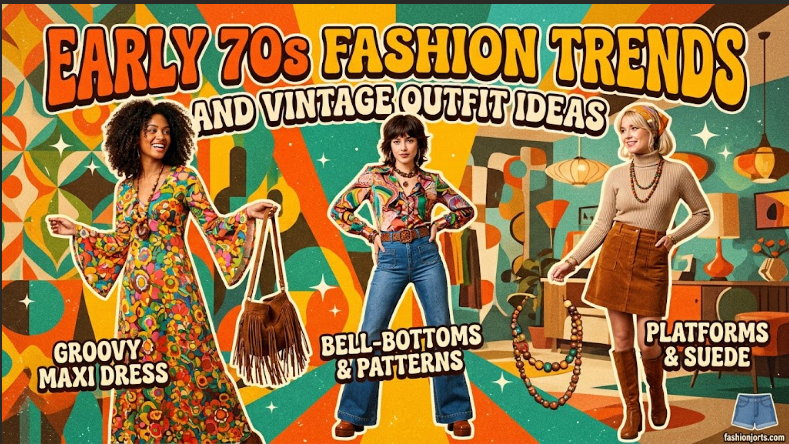
Early 70s fashion brought a fresh sense of freedom to everyday clothing. The years between 1970 and 1973 saw people experiment with wider trouser legs, colorful shirts, flowing dresses, and shoes with thick soles. Instead of following one strict dress code, fashion offered room for personal taste, whether someone preferred relaxed denim, elegant tailoring, or a bohemian look. The appeal of this era lies in its mix of comfort and character. Clothes could feel casual without looking plain, while simple accessories often made an outfit distinctive. From women’s vintage dresses to men’s patterned shirts, early 1970s style continues to inspire people who appreciate clothing with personality.
What Defined Early 70s Fashion?
The early 1970s carried forward the youthful spirit of the previous decade but developed its own recognizable style. Clothing often featured wider collars, flared silhouettes, textured materials, and warm colors. Some outfits looked relaxed and natural, while others used strong patterns and dramatic proportions to attract attention. Individuality was central to the period. Someone might wear faded jeans and a simple knitted top during the day, then choose a coordinated suit or a flowing dress for an evening occasion. This variety made the era interesting because fashion was no longer limited to one dominant appearance.
Early 70s Fashion for Women
Women’s clothing offered a broad choice of shapes, lengths, and materials. Denim became a wardrobe staple, while dresses ranged from short, youthful designs to long styles with soft fabrics and decorative details. Tailored trousers and matching jackets also gave women new ways to dress for work and social occasions.
Flared Jeans and Bell-Bottom Trousers
Flared jeans are among the most recognizable pieces of 1970s clothing. Their narrow upper sections and wider hems created a distinctive shape that worked well with fitted tops and short jackets. High-waisted designs, decorative pockets, and contrasting stitching added further character. For a modern vintage outfit, pair blue flared jeans with a fitted cream top and a brown jacket. A simple belt and ankle boots can complete the look without making it feel overly styled. The key is to let the trousers provide the main visual feature.
Maxi Dresses and Bohemian Clothing
Long dresses offered a softer alternative to denim and tailored separates. Floral prints, loose sleeves, gathered waists, and flowing skirts created a romantic appearance that suited the period’s bohemian influence. Peasant blouses, embroidered details, and fringed accessories complemented this relaxed approach to dressing. These outfits often used natural-looking colors and decorative patterns rather than elaborate tailoring. A printed maxi dress with understated jewelry can still look current because the silhouette is comfortable and easy to wear. For cooler weather, a denim jacket or a suede-style layer adds warmth without hiding the dress.
Miniskirts and Tailored Pantsuits
Short skirts remained part of women’s wardrobes in the early 1970s, even as longer dresses and skirts gained attention. This variety reflected the freedom to choose different styles rather than follow one fixed trend. Skirts could be paired with fitted blouses, knitwear, boots, or simple jackets. Pantsuits also became more visible in women’s fashion. Matching jackets and trousers offered an alternative to dresses for professional and formal settings, with wide lapels and flared legs providing a recognizable period shape. Depending on the fabric and cut, these outfits could look sharp without feeling as restrictive as traditional formalwear.
Early 70s Fashion for Men
Men’s clothing became more adventurous through the use of brighter colors, patterned shirts, fitted tops, and wider trouser legs. Traditional suits remained available, but casual clothing gained greater attention through denim, corduroy, knitwear, and coordinated leisurewear. The result was a style that could move between relaxed daytime outfits and more polished evening looks.
Wide-Collar Shirts and Patterned Tops
Large pointed collars gave men’s shirts a distinctive appearance. Some designs featured stripes, geometric shapes, or floral patterns, while others used solid colors such as brown, cream, and rust. Men often wore these shirts with flared trousers, sometimes leaving the top buttons open for a more relaxed look. A wide-collar shirt can still work well in a contemporary wardrobe. Pair one with dark trousers and a plain jacket to keep the outfit balanced. If the shirt has a bold print, choose simpler pieces elsewhere so the overall look remains easy to wear.
Flared Trousers and Leisure Suits
Flared trousers provided the foundation for many men’s outfits. Denim, corduroy, and synthetic fabrics offered different finishes, from casual everyday clothing to more polished eveningwear. Coordinated leisure suits added another option, often combining matching jackets and trousers with shirts in complementary colors. These outfits were not limited to bright patterns. Neutral trousers with a textured jacket could create a quieter interpretation of the same era. For a vintage-inspired appearance today, focus on the shape of the trousers and the fit of the jacket rather than adding too many decorative details.
Platform Shoes and Other Signature Accessories
Footwear helped complete the distinctive proportions of early 70s outfits. Platform shoes and boots were worn by men and women, while sandals and conventional shoes remained useful for everyday activities. Thick soles worked especially well with flared trousers because they gave long hems a natural fall. Accessories added another layer of personality. Wide belts, pendant necklaces, oversized sunglasses, scarves, and floppy hats could change the character of an otherwise simple outfit. A fringed bag suited bohemian clothing, while a large belt buckle worked well with denim and a fitted shirt. The most effective approach is to choose accessories that complement the clothes. A single statement belt or pair of platform shoes can establish the vintage look without making the outfit feel like a costume.
Fabrics, Colors, and Prints of the Early 1970s
Texture was an important part of the period’s style. Denim and corduroy suited casual outfits, suede added softness to jackets, and knitted fabrics offered comfort during cooler weather. Polyester was also widely used in ready-to-wear clothing, allowing manufacturers to produce garments in different colors, patterns, and shapes. The color palette ranged from earthy shades to brighter tones. Brown, mustard yellow, olive green, cream, and rust worked well together, while orange, turquoise, and red created more striking combinations. Paisley, floral, striped, and geometric prints appeared across shirts, dresses, and coordinated outfits. You can recreate this color palette without buying authentic vintage clothing. Combining two warm shades with denim or cream creates a period-inspired appearance that remains practical for everyday use. Fabric texture matters just as much as color, so mixing denim with corduroy or knitwear can make an outfit feel more convincing.
How to Recreate Early 70s Fashion Today
Start with one recognizable item instead of building an entire outfit around a historical theme. Flared jeans, a wide-collar shirt, a printed dress, or a suede-style jacket can provide a strong starting point. Modern basics can then keep the outfit comfortable and suitable for everyday activities. Pay attention to proportion when combining pieces. A fitted top balances wide trousers, while a shorter jacket can help define the waist of a long dress. Choose shoes that work with the length of your trousers or skirt, and avoid adding too many bold prints at once. Vintage shopping can help you find distinctive fabrics, unusual collars, and details that are less common in modern clothing. Check the garment’s condition, seams, fastenings, and fit before buying. If authentic vintage pieces are difficult to find, contemporary clothing with similar shapes and textures can achieve a comparable effect.
Conclusion
Early 70s fashion remains appealing because it combines recognizable shapes with room for individual expression. Flared trousers, patterned shirts, flowing dresses, and platform shoes each offer a different way to capture the era. The style is varied enough to suit people who prefer understated clothing as well as those who enjoy bolder combinations. The best way to wear these trends today is to adapt them to your own preferences rather than reproduce a complete historical outfit. Focus on fit, texture, and a few well-chosen accessories to create a look that feels natural. Whether you are preparing a themed outfit or adding vintage pieces to your regular wardrobe, early 70s fashion offers plenty of practical inspiration. Start with one item you genuinely enjoy wearing, then build around it with colors and shapes that complement your existing clothes.