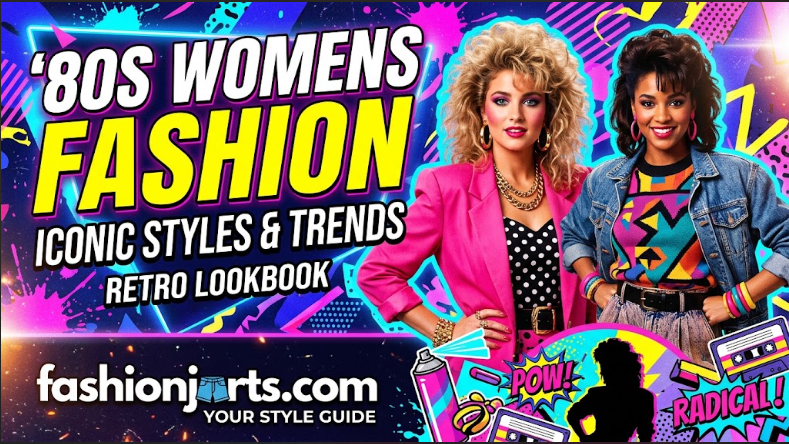
The 1980s gave women more than one way to make an entrance. A sharply tailored suit could create a powerful office look, while high-waisted denim and an oversized sweater suited a relaxed afternoon. After dark, metallic fabrics, dramatic dresses, and oversized jewelry brought a completely different mood. That variety is what makes 80s women’s fashion more interesting than the familiar picture of neon clothes and leg warmers. Music, workplace culture, fitness, movies, and designer fashion all influenced how women dressed. Some looks were deliberately exaggerated, while others were surprisingly practical and easy to wear. Understanding the decade means looking beyond its biggest stereotypes. From padded blazers to party dresses, each trend reveals a different side of 1980s style.
What Did Women Wear in the 80s?
Women’s wardrobes during the decade covered a wide range of styles. Blazers, pencil skirts, high-waisted jeans, oversized sweaters, leggings, jumpsuits, miniskirts, blouses, and statement dresses could all be part of the picture. What someone wore depended heavily on whether she was dressing for work, exercise, an evening out, or an ordinary day. Proportion often made these clothes immediately recognizable. Tops and jackets could be loose or broad, while belts brought definition back to the waist. Even relatively simple outfits often included one noticeable feature, such as large earrings, a strong print, or an oversized jacket.
Power Dressing and the Rise of Shoulder Pads
Few pieces represent the decade better than the padded blazer. Broad shoulders gave jackets and dresses a stronger shape, creating a confident silhouette that became closely associated with professional clothing. A fitted skirt, blouse, pumps, and structured jacket could form the classic office outfit. Power dressing wasn’t limited to plain black suits. Jackets appeared in strong colors, checks, stripes, and other patterns, while belts could emphasize the waist beneath the broader shoulders. The effect was polished and assertive without requiring every part of the outfit to be oversized.
How Fitness Culture Changed Women’s Fashion
Exercise clothing became much more visible during the 1980s. Leggings, leotards, bodysuits, sweatshirts, headbands, and leg warmers moved into popular culture as aerobics and home workouts gained attention. Stretch fabrics also gave women a very different silhouette from the structured tailoring seen in offices. Some of these pieces eventually became everyday casual clothing. An oversized sweatshirt worn with leggings, for example, offered comfort while still looking connected to current fashion. This crossover between activewear and ordinary clothing helped establish a relationship that remains familiar today.
High-Waisted Jeans and Casual 80s Style
Denim offered a simpler way to participate in the decade’s trends. High-waisted jeans worked with tucked-in shirts, loose sweaters, sweatshirts, and denim jackets. Depending on the styling, the same jeans could create a neat daytime outfit or something more youthful and relaxed. Double denim also had a place in casual wardrobes, although matching wasn’t necessary. Women could soften a denim-heavy outfit with a white blouse or knit sweater, or make it bolder with a printed top. Sneakers, ankle boots, and casual flats completed many everyday looks.
Madonna and the Influence of 80s Pop Fashion
Music gave young women another source of fashion inspiration. Madonna became especially associated with an eclectic style built around lace, mesh, short skirts, layered necklaces, bracelets, bows, and other noticeable accessories. Her outfits often looked assembled from contrasting pieces rather than carefully matched sets. That approach made fashion feel personal and easy to reinterpret. Instead of buying an entire designer outfit, someone could change an existing wardrobe through jewelry, lace gloves, belts, or layered clothing. Pop fashion encouraged experimentation, which suited a decade already comfortable with excess.
Princess Diana and 80s Glamour
Princess Diana represented a more polished interpretation of the period. Early in the decade, romantic dresses with large sleeves, decorative collars, bows, and soft fabrics reflected a taste for feminine detail. Her public wardrobe later became sleeker and more confident as fashion moved toward stronger silhouettes. Her evening clothes also showed how dramatic formalwear could become without relying on neon colors or casual trends. Embellishment, elegant fabrics, defined waists, and carefully shaped shoulders created glamour through proportion and detail. It was a different expression of the same decade.
Dresses and Party Fashion in the 1980s
An 80s party dress rarely needed to disappear into the background. Puff sleeves, ruffles, sequins, metallic finishes, fitted waists, bows, and striking prints gave evening clothes plenty of personality. Some dresses created volume above the waist, while others used close-fitting stretch materials to emphasize the body. Mini lengths were popular, but longer dresses remained relevant for formal occasions. Black could look dramatic with sparkling jewelry, while vivid colors created an immediate focal point. The strongest party outfits usually relied on one dominant feature rather than treating every available trend as compulsory.
Popular Shoes and Accessories in the 80s
Accessories could change the character of an outfit almost instantly. Large earrings, chunky bracelets, layered necklaces, wide belts, scarves, sunglasses, and noticeable handbags provided an easy way to make basic clothing feel more current. Costume jewelry was particularly useful because it encouraged experimentation without requiring an entirely new wardrobe. Shoes changed with the occasion. Pumps and heels complemented professional and evening clothing, while sneakers worked naturally with denim and fitness-inspired outfits. Boots could move between casual and dressier wardrobes, making them another versatile option.
Hair and Makeup That Completed the 80s Look
Hair often carried as much visual weight as the clothes. Volume was highly desirable, so curls, teased styles, fringes, and perms became familiar features. Hair accessories such as bows, scrunchies, and headbands offered additional ways to coordinate a look. Makeup could be equally noticeable. Bright eye colors, defined eyeliner, visible blush, and stronger lip shades suited the decade’s expressive approach to beauty. Still, women didn’t all follow the same formula, and everyday makeup could be considerably softer than the exaggerated versions now used for 80s costumes.
Colors, Prints, and Fabrics That Defined the Decade
Bright pink, electric blue, red, purple, green, and yellow all fit comfortably into the decade, but 1980s wardrobes weren’t permanently fluorescent. Black, white, cream, denim blue, pastels, and other quieter shades were equally useful. Color depended heavily on the style being created. Patterns brought another layer of personality. Florals, checks, stripes, polka dots, geometric graphics, and animal-inspired prints could turn straightforward garments into statement pieces. Denim, leather, lace, knitwear, velvet, and shiny synthetic materials added texture and prevented outfits from relying on color alone.
Designers Who Shaped 80s Women’s Fashion
Designer fashion showed just how many directions the decade could take. Giorgio Armani became associated with sophisticated tailoring, while Thierry Mugler created sharply sculpted silhouettes with dramatic shoulders. Donna Karan focused on clothing that could serve the needs of working women, and Azzedine Alaïa became known for designs that followed the body’s shape. Other designers challenged conventional ideas altogether. Rei Kawakubo, Yohji Yamamoto, and Issey Miyake approached shape, construction, and proportion differently from mainstream Western fashion. Their work is an important reminder that the decade wasn’t defined solely by glamorous excess.
How to Create an 80s-Inspired Outfit Today
The easiest way to bring the decade into a modern wardrobe is to choose a clear direction. For an office-inspired look, try a structured blazer with high-waisted trousers and simple heels. Keeping the rest of the outfit restrained allows the stronger shoulder shape to do the work. For casual styling, high-rise jeans can be paired with an oversized knit or sweatshirt and sneakers. A party look might use a dramatic sleeve, metallic fabric, or statement earrings instead. Referencing one or two recognizable details usually feels more wearable than combining every famous 80s trend at once.
Conclusion
The strongest 1980s looks were built around personality rather than restraint. Clothing could make the shoulders broader, define the waist, follow the body closely, or create entirely new proportions. Women had room to move between professional tailoring, relaxed denim, fitness wear, romantic clothing, and glamorous evening styles. Looking beyond the familiar stereotypes makes the decade much more useful as fashion inspiration. A padded blazer tells a different story from an aerobics outfit, just as Madonna’s layered accessories have little in common with minimalist Japanese design. All of them, however, belonged to the same remarkably varied period. For a modern interpretation, copying the entire decade isn’t necessary. Start with a strong silhouette, fabric, accessory, or color reference and build around it. That’s often enough to make an outfit unmistakably inspired by the 80s without turning it into a costume.