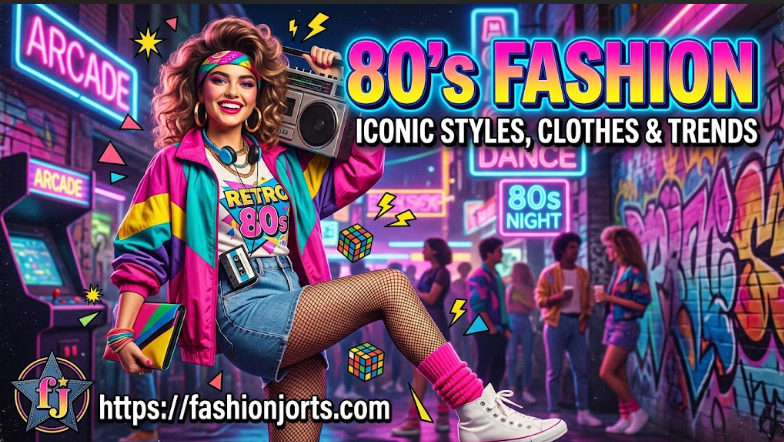
The 1980s didn’t believe in blending into the background. Clothes became a visible part of how people presented themselves, whether that meant a sharply tailored jacket at work, worn denim on the weekend, or something far more experimental for a night out. Strong shapes, noticeable accessories, sportswear, and bright colors all found a place during the decade. Still, the familiar picture of neon leggings and enormous hair tells only part of the story. Some people favored polished preppy clothes, while others chose leather, dark colors, or theatrical pieces influenced by music scenes. Women’s professional wardrobes changed as well, and fitness clothing started appearing outside the gym. That variety is why the decade remains such a useful source of inspiration. There wasn’t one correct 1980s look. Instead, people could move between formal tailoring, relaxed denim, athletic clothing, glamorous evening wear, and alternative styles.
What Made 80s Fashion So Distinctive?
Proportion was one of the clearest features of the period. Jackets could have broad shoulders, tops were often loose, and belts pulled attention toward the waist. These larger shapes created outfits that looked very different from the softer styles associated with much of the previous decade. Color added another layer. Electric blue, hot pink, red, purple, and vivid green appeared alongside black, white, denim blue, and softer pastels. Patterns could be equally noticeable, particularly when mixed with large jewelry or other statement pieces. But dressing boldly didn’t always mean wearing bright colors. An oversized black jacket, leather boots, or a dramatic monochrome outfit could make just as much impact. Shape and styling mattered as much as the color palette.
The Most Popular 80’s Fashion Trends
Several trends became closely connected with the decade. High-waisted jeans gave casual outfits a distinctive shape, while oversized sweaters and sweatshirts created a relaxed upper half. Denim jackets, leather outerwear, fitted trousers, and short skirts provided other everyday options. Layering was common as well. A loose jacket might sit over a fitted top, while jewelry, belts, scarves, and other details added visual interest. Contrasting proportions often made an outfit more memorable than any individual garment. Sportswear also became easier to incorporate into everyday life. Sneakers, leggings, sweatshirts, and tracksuits no longer belonged exclusively to exercise. That shift helped make casual clothing a much bigger part of mainstream style.
How Power Dressing Defined 80s Women’s Fashion
Professional clothing took on a stronger silhouette during the decade. Tailored jackets with padded shoulders became especially recognizable, often paired with skirts, trousers, blouses, heels, and carefully chosen accessories. The result was polished without being visually quiet. Shoulder pads gave jackets a wider upper shape, while a belt or fitted waist created contrast. This combination could make a suit appear structured and commanding rather than simply practical office clothing. Outside work, women’s wardrobes were far less formal. Jeans, miniskirts, leggings, oversized knitwear, fitted dresses, and casual tops provided very different choices. The contrast between these looks shows why reducing women’s 80s clothing to power suits misses much of the decade.
What Did Men Wear in the 80s?
Men’s wardrobes also moved between formal and casual extremes. Business suits often featured broader jackets, while shirts and ties added color or pattern. Away from the office, jeans, polo shirts, sweaters, tracksuits, sneakers, and leather jackets offered a more relaxed direction. Music influenced younger men’s clothing particularly strongly. Rock-inspired wardrobes leaned toward leather and denim, while alternative scenes favored darker or more unconventional combinations. Athletic clothing provided another distinct look. Preppy dressing offered something cleaner. Collared shirts, knitwear, loafers, and neatly cut trousers created an appearance that was deliberately different from rebellious street styles.
Denim and Everyday Style in the 1980s
Few materials worked across as many looks as denim. Jeans could be worn with sneakers and a sweatshirt for an uncomplicated casual outfit or combined with boots and a leather jacket for something tougher. High-rise cuts were especially suited to the decade’s proportions. They defined the waist and worked well with tops that were tucked in, cropped, or deliberately oversized. Denim jackets provided another easy layer and could be personalized to suit individual tastes. The appeal was partly its flexibility. Denim didn’t belong exclusively to one social group or fashion movement, so it could look polished, rebellious, youthful, or practical depending on what surrounded it.
How Fitness Culture Changed 80’s Fashion
Exercise clothing became surprisingly influential during the period. Aerobics encouraged the use of stretchy fabrics and close-fitting pieces, while dance-inspired outfits made movement itself part of the visual appeal. Leggings were among the most recognizable pieces. They could be paired with oversized sweatshirts, bodysuits, or loose tops, creating the fitted-bottom and roomy-top combination associated with many casual looks. Sweatbands, sneakers, leotards, and leg warmers added to the athletic aesthetic. Not every person wore these pieces as everyday clothing, but their cultural visibility helped blur the boundary between workout gear and casual dress.
Punk, Goth and New Romantic Fashion
Alternative scenes offered a sharp contrast to mainstream dressing. Punk-inspired clothing used leather, distressed fabrics, boots, metal details, and deliberately unconventional combinations. The point wasn’t necessarily to look polished. Gothic styles moved toward darker palettes, dramatic makeup, black clothing, and distinctive accessories. These outfits could be just as carefully constructed as glamorous mainstream looks, even though their visual language was completely different. New Romantic fashion went in another direction. Historical references, flowing shirts, decorative fabrics, dramatic makeup, and theatrical silhouettes turned dressing into performance. Together, these subcultures showed how experimental the decade could become.
The Influence of Music and Pop Culture on 80s Style
Music didn’t simply provide a soundtrack to the decade; it gave people new visual references. Performers developed recognizable looks through jackets, jewelry, makeup, hairstyles, gloves, lace, leather, and other details. Music videos made those images easier to see and imitate. Fans could study an artist’s complete appearance rather than relying on album covers or occasional photographs. Clothing became closely connected with the public identity of a performer. Movies and television contributed too. A character’s office suit, dance outfit, prom dress, or casual wardrobe could introduce viewers to a look they might adapt themselves.
Popular 80s Shoes and Accessories
Accessories were rarely an afterthought. Large earrings, layered necklaces, bangles, wide belts, sunglasses, and hair accessories could change the character of relatively simple clothing. Shoes depended heavily on the outfit. Heels suited professional and evening clothes, sneakers complemented athletic and casual looks, and boots worked naturally with punk, rock, and darker styles. The best accessories usually matched the proportions of the clothes. An oversized jacket could handle substantial jewelry in a way that a delicate garment might not.
80s Hairstyles and Makeup
Hair often carried as much visual weight as clothing. Volume was popular, with curls, teased styles, layered cuts, and high ponytails creating noticeable shapes around the face. Makeup could be equally expressive. Strong eye colors, visible blush, eyeliner, and noticeable lipstick complemented outfits designed to attract attention rather than disappear. There were restrained styles too, especially in professional and preppy wardrobes. As with clothing, there was never a single beauty look worn by everyone throughout the decade.
How to Create an 80s-Inspired Outfit Today
A modern interpretation works best when it borrows selectively. Wearing high-waisted jeans with an oversized blazer, for example, references the period without turning the outfit into a costume. For something more casual, try leggings or straight-cut jeans with a roomy sweatshirt and simple sneakers. A leather jacket and boots can move the look toward the rock-inspired side of the decade. Accessories offer an even easier approach. Strong earrings, a wide belt, vintage-style sunglasses, or a structured jacket can provide enough character while the rest of the outfit stays modern.
Why 80s Fashion Still Influences Modern Style
Many pieces associated with the period have become regular wardrobe items. Oversized blazers, high-rise denim, sneakers, leggings, leather jackets, bodysuits, and statement accessories continue to return in updated forms. Modern designers and shoppers usually reinterpret rather than reproduce them. Shoulder lines may be softer, colors more restrained, and styling less crowded, but the connection is still easy to recognize. Perhaps the most lasting idea is confidence in proportion. The decade showed that a jacket could be deliberately too large, an accessory could dominate an outfit, and sports clothing could work far beyond its original purpose.
Conclusion
The 1980s produced memorable clothes because the decade allowed very different ideas about style to exist side by side. A structured business suit, an aerobics-inspired outfit, a preppy sweater, and a distressed leather jacket could all represent the same period while communicating completely different identities. Its influence also reached beyond individual garments. The decade made exaggerated proportions, visible branding, athletic clothing, dramatic accessories, and highly personal styling familiar parts of popular fashion. For modern wardrobes, the most useful lesson isn’t to recreate an old outfit exactly. Borrow the shapes and details that still feel relevant, then combine them with contemporary pieces. That keeps the character of the era without making the clothes feel stuck in it.