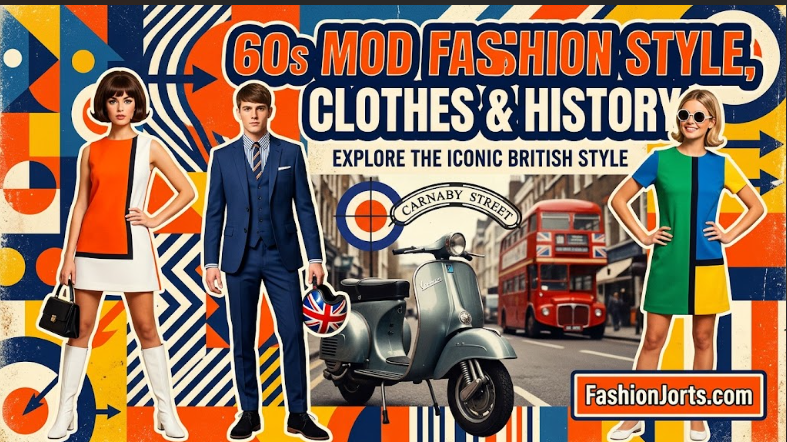
The Mod look of the 1960s was young, precise, and impossible to confuse with the formal clothing that came before it. Short dresses, slim trousers, bright tights, neat jackets, and graphic prints gave fashion a cleaner and more energetic direction. The clothes were designed to be seen in cafés, clubs, record shops, and busy city streets rather than reserved for formal occasions. London became the center of this change. Young shoppers were developing their own tastes, independent boutiques were gaining attention, and music was becoming closely connected with personal style. What started within a particular youth culture eventually influenced mainstream clothing and helped create some of the decade’s most memorable looks.
What Is 60s Mod Fashion?
Mod fashion grew from the British Modernist subculture that appeared before the 1960s and expanded during the decade. Early Mods cared deeply about looking polished, choosing clothes with controlled proportions and a modern European influence. For many young people, dressing well was part of the same culture as discovering records, visiting clubs, and riding scooters. The style later became broader than the original subculture. Women’s youth fashion adopted short hemlines, uncomplicated dresses, colorful hosiery, and strong patterns, while men continued to experiment with fitted tailoring and smart casual clothing. This wider interpretation is largely responsible for what people now picture when they hear “Mod fashion.”
How Mod Fashion Started in 1960s London
British fashion was changing quickly as a younger generation gained more freedom to decide what it wanted to wear. Instead of simply following the tastes of parents or traditional fashion houses, young shoppers looked for clothing that suited their social lives. Smaller boutiques were well positioned to respond with fresher styles and less formal shopping experiences. London streets such as Carnaby Street and King’s Road became strongly connected with this new fashion culture. Shops, music, nightlife, and youth style existed close together, allowing trends to spread rapidly. London wasn’t simply producing clothes; it was selling an image of modern British youth to the rest of the world.
What Did Women Wear in 60s Mod Fashion?
Women’s Mod clothing often relied on simple shapes rather than elaborate decoration. Dresses could hang relatively straight from the shoulders or widen gently toward the hem, creating a youthful silhouette that moved away from heavily emphasized waists. Shorter lengths also placed greater attention on legs, tights, and footwear. The overall effect was confident without requiring complicated clothing. A single dress could make a strong impression through its shape, contrasting panels, unusual buttons, or carefully chosen colors. That simplicity remains one reason Mod-inspired clothing is so easy to recognize today.
Mini Dresses and A-Line Silhouettes
The minidress became one of the strongest visual symbols of mid-1960s youth fashion. Straight shift dresses were particularly effective because their uncomplicated construction worked naturally with shorter lengths. A-line designs offered a slightly different silhouette, fitting more closely toward the shoulders before widening toward the hem. These dresses also suited a more active approach to everyday clothing. Rather than depending on restrictive foundations and carefully constructed hourglass shapes, many youthful designs allowed easier movement. The result looked noticeably different from much of the fashion associated with the previous decade.
Bold Colors and Geometric Patterns
Mod clothing wasn’t restricted to the familiar black-and-white combinations seen in modern retro costumes. Strong reds, oranges, yellows, blues, greens, and pinks could appear alongside neutral shades. Simple silhouettes provided an ideal surface for these confident colors. Geometric patterns created another recognizable feature. Checks, circles, stripes, blocks, and optical designs could turn a straightforward dress into something visually striking. The strongest outfits usually allowed one graphic idea to dominate instead of combining too many competing details.
Tights, Boots, and Accessories
As hemlines became shorter, tights became increasingly visible and therefore more important to the finished outfit. Opaque styles could be coordinated or deliberately contrasted with dresses and skirts. Patterned versions added another graphic element without changing the simplicity of the main garment. Boots worked particularly well with the new proportions. Ankle and taller styles created a clean transition between short clothing and the leg, while flat or relatively practical footwear suited the youthful character of the look. Large sunglasses, compact handbags, simple jewelry, and neat hats could provide finishing touches without overwhelming the outfit.
Mary Quant and the Rise of the Miniskirt
Mary Quant became one of the names most closely connected with British youth fashion during the 1960s. Her designs embraced short dresses, colorful tights, comfortable knitwear, playful details, and clothes that felt appropriate for younger customers. Her London boutique also represented a different approach to fashion retail, one that felt less formal and more connected with contemporary youth culture. The familiar claim that Quant single-handedly invented the miniskirt makes the history sound simpler than it was. Hemlines became shorter through a gradual process, and other designers were experimenting with similar proportions. Quant’s greater contribution was helping make the short skirt accessible, desirable, and inseparable from the image of young London.
60s Mod Fashion for Men
Men were central to Mod culture from its earliest stages. The classic male Mod wardrobe emphasized fit and precision, with narrow trousers, fitted shirts, neat jackets, ties, fine knitwear, and carefully selected footwear. Italian-inspired tailoring was particularly attractive because its slimmer proportions looked younger than conventional British menswear. Presentation mattered as much as individual garments. Clothes were expected to fit properly, shoes needed to complement the outfit, and combinations were carefully considered. As the decade developed, brighter colors and more expressive patterns entered men’s wardrobes, but the original Mod ideal remained rooted in sharp dressing.
Carnaby Street and the Swinging London Look
Carnaby Street became closely associated with the fashionable young men who wanted alternatives to traditional menswear. Independent shops could offer slimmer cuts, stronger colors, and clothing influenced by what musicians and clubgoers were wearing. The street eventually became one of the best-known symbols of London’s youthful reputation. King’s Road developed an equally important connection with changing women’s fashion and boutique culture. Together, these shopping areas demonstrated that influential style no longer had to originate exclusively in expensive fashion houses. What young people wore on the street could now help determine what stores produced next.
Hairstyles and Makeup That Completed the Mod Look
Mod-inspired beauty generally complemented the clean lines of the clothing rather than competing with them. Short geometric haircuts, smooth bobs, and carefully shaped styles suited dresses with simple necklines and strong patterns. Longer hairstyles appeared too, particularly as fashion changed later in the decade. Eye makeup often provided the strongest facial emphasis. Defined lashes, eyeliner, and carefully shaped eyes could be paired with a comparatively understated lip. The combination created a youthful graphic effect that worked naturally with the bold shapes found in clothing.
Mod Fashion vs. Hippie Fashion
Mod and hippie clothing both belong to the 1960s, but treating them as the same style creates a misleading picture of the decade. Mod dressing generally favored controlled silhouettes, urban polish, short skirts, slim trousers, and graphic visual details. Its appearance was modern and deliberate. Hippie and bohemian styles moved in another direction, particularly during the later years of the decade. Clothing became looser and more decorative, with longer lengths, flowing fabrics, embroidery, beads, suede, and influences drawn from different cultures and historical periods. The contrast shows how dramatically fashion changed within a single decade.
How to Wear 60s Mod Fashion Today
A modern Mod-inspired outfit works best when the references are selective. For women, a structured A-line dress can be paired with opaque tights and simple ankle or knee-high boots. Adding one strong color combination or geometric print is usually enough to establish the influence. Men can start with narrow trousers, a fitted shirt or fine roll-neck sweater, and a cleanly tailored jacket. The fit should remain sharp without becoming excessively tight. Rather than recreating a costume, the goal is to borrow the clarity and discipline that made original Mod dressing distinctive.
Why 60s Mod Fashion Still Influences Style
Many elements associated with Mod clothing have become ordinary parts of modern wardrobes. A-line dresses, miniskirts, slim trousers, ankle boots, roll-necks, color blocking, and geometric prints continue to return in different forms. Their survival shows how adaptable the basic Mod vocabulary can be. Its larger legacy is equally important. The period demonstrated that young consumers could establish trends instead of merely following fashion designed for older generations. Street culture, boutiques, musicians, and young shoppers became powerful influences, helping change the relationship between fashion businesses and the people wearing their clothes.
Conclusion
60s Mod fashion represented more than short skirts and bold prints. It developed from a youth culture that treated clothing as an important expression of taste, modernity, and belonging. That attitude helped move fashion away from the assumption that established designers alone determined what was stylish. Its most memorable clothes succeeded because they combined visual confidence with relatively simple construction. A clean dress, sharp suit, bright pair of tights, or carefully chosen pair of boots could make a strong statement without excessive decoration. That restraint is one reason the look remains recognizable decades later. Mod also captures an important turning point in fashion history: young people were becoming trendsetters in their own right. Understanding that background makes it easier to appreciate the clothes as more than retro imagery. For anyone adapting the style today, accuracy comes from restraint rather than excess. Focus on proportion, fit, color, and one or two period references, and the Mod influence can still look remarkably current.