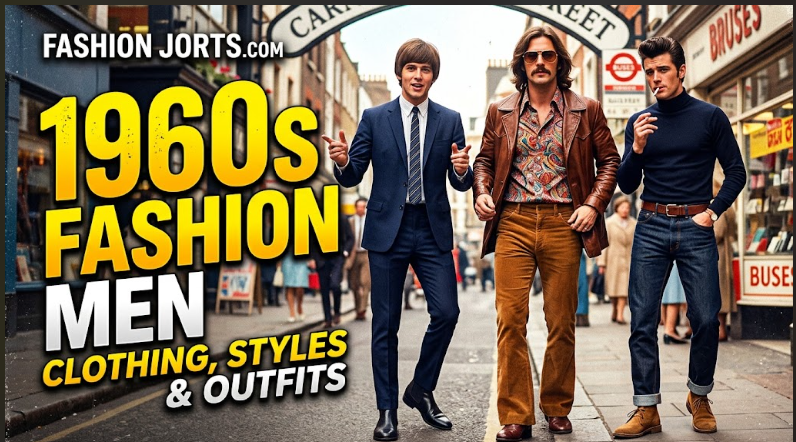
Men’s style went through a remarkable shift during the 1960s. The decade started with structured suits, narrow trousers, crisp shirts, and conservative colors. As younger generations gained more influence over music and popular culture, clothing became less restricted by the rules that had shaped men’s wardrobes for years. By the second half of the decade, brighter colors, patterned shirts, textured jackets, boots, and longer hairstyles had become increasingly visible. Some men stayed with traditional clothing throughout the period, while others embraced Mod, rock-inspired, or counterculture styles. That contrast is essential to understanding the decade accurately. There was no single outfit that defined every year. A businessman in 1962, a London Mod in 1965, and a young music fan in 1969 could all look strikingly different.
What Did Men Wear in the 1960s?
Everyday clothing depended heavily on age, occupation, location, and occasion. Adult men often wore suits or sports coats for work and social events, while younger men had more freedom to experiment. Shirts, sweaters, trousers, jackets, and leather footwear formed the practical foundation of many wardrobes. The biggest change was in how those familiar pieces were styled. Fits became sharper, colors grew stronger, and casual clothing gained greater acceptance. By the end of the decade, men had far more ways to express themselves through clothing than they had at its beginning.
Early 1960s Men’s Fashion
Early-decade style was generally polished and controlled. Suits had clean shapes, trousers tended to be narrow, and shirts were often white or softly colored. Slim ties completed an appearance that worked equally well in offices, restaurants, and formal social settings. Younger men could make this traditional formula look more contemporary through fit. A shorter, closer-fitting jacket paired with narrow trousers created a leaner silhouette. Details mattered more than decoration, so an outfit could look fashionable without relying on bright colors or unusual patterns. Casual clothing remained fairly neat as well. Polo shirts, button-downs, cardigans, lightweight sweaters, chinos, and simple jackets provided alternatives to suits. Even relaxed outfits usually looked more structured than the casual clothing that emerged later in the decade.
Mod Style Brought a Younger Attitude
Mod fashion placed greater emphasis on precision and personal presentation. Slim tailoring, fitted shirts, fine knitwear, narrow trousers, and sleek boots created a youthful appearance without abandoning smart clothing. The style was particularly associated with British youth culture and the growing influence of London fashion. A typical Mod outfit depended on balance. Trousers sat close to the leg, jackets followed the body, and shirts avoided unnecessary bulk. Roll-neck sweaters and polo shirts could replace formal shirts, allowing the wearer to look sharp without relying on a tie. The appeal went beyond individual garments. Young men were increasingly choosing clothing specifically designed for their generation rather than simply adopting traditional adult wardrobes. Fashion became closely connected with music, nightlife, scooters, and social identity.
How Men’s Suits Evolved
The suit never disappeared during the 1960s, but designers and wearers became more adventurous with it. Earlier styles favored narrow lapels and relatively restrained fabrics. Dark gray, navy, brown, and black remained useful choices for men who needed professional clothing. As the decade progressed, the suit became a platform for experimentation. Jackets appeared in richer fabrics and stronger colors, while shirts underneath them could feature stripes, checks, florals, or other noticeable patterns. Wearing boots or a roll-neck instead of the expected dress shoes and tie could completely change the character of an outfit. Toward the end of the decade, proportions also began shifting. Lapels became more noticeable and trousers started moving away from the narrow shapes of earlier years. These changes anticipated many of the silhouettes that would dominate the following decade.
Shirts and Knitwear Became More Expressive
A plain dress shirt remained useful throughout the 1960s, but it was no longer the only option for a fashionable man. Patterns and stronger colors gave shirts a much larger role in an outfit. Stripes and checks were easy to wear, while floral and abstract designs offered a more adventurous appearance. Knitwear provided another route between formal and casual dressing. Fine sweaters could be layered over shirts, while cardigans worked with both tailored and relaxed trousers. These pieces were practical but still allowed men to create a considered appearance. The roll-neck became especially distinctive. Worn beneath a jacket, it removed the need for both a shirt collar and tie while preserving a clean silhouette. That combination remains one of the simplest ways to reference the period without making an outfit look theatrical.
The Peacock Style Added Color and Luxury
Mid-to-late-decade fashion challenged the assumption that men should dress in subdued colors and simple fabrics. Some fashionable wardrobes began incorporating velvet, corduroy, decorative shirts, bold prints, and richer shades. Clothing could be playful without abandoning tailoring altogether. Jackets became particularly useful for experimentation. A velvet or patterned jacket worn with plain trousers allowed a man to make a strong statement without dressing head to toe in bright color. Wider ties, scarves, and distinctive footwear could add another layer of personality. This more decorative approach was highly visible among musicians and fashionable urban crowds. It shouldn’t be mistaken for the everyday uniform of every man, however. Traditional business and casual clothing continued alongside these more adventurous styles.
Trousers, Jeans and the Changing Silhouette
Slim trousers are one of the strongest visual markers of early and mid-decade menswear. They worked naturally with fitted jackets, narrow ties, knitwear, and boots. Straight cuts were also practical for men who wanted a modern appearance without adopting a particularly fashion-forward look. The silhouette became less restrictive toward the end of the period. Trouser legs gradually widened, and flared shapes started appearing more frequently. This is why extreme bell-bottoms make more sense for a late-1960s-inspired outfit than one intended to represent the beginning of the decade. Denim also became more prominent in casual wardrobes. Jeans suited the growing preference for informal clothing and could be combined with T-shirts, shirts, sweaters, or jackets. Their increasing visibility pointed toward the much broader acceptance of denim that followed in the 1970s.
Shoes and Accessories That Completed the Look
Traditional lace-up shoes and loafers remained dependable choices, particularly with business clothing. Younger styles brought greater attention to boots, which paired especially well with narrow trousers. A sleek pair could make an otherwise simple combination of trousers and a sweater feel distinctly connected to the era. Accessories varied according to the style being followed. Early outfits worked best with restrained ties, simple belts, and classic watches. Later looks allowed more room for colorful neckwear, scarves, sunglasses, and stronger patterns. Restraint still matters when recreating the period today. Several carefully chosen details usually look more convincing than piling every recognizable 1960s accessory into the same outfit.
Late 1960s Style Moved Toward the 1970s
The closing years of the decade were noticeably more relaxed. Young men increasingly mixed denim, patterned shirts, vintage jackets, wider trousers, and less structured layers. Clothing no longer needed to follow the precise coordination associated with earlier Mod dressing. Counterculture encouraged experimentation with secondhand garments and influences from outside conventional Western menswear. Textures, prints, embroidery, and unusual combinations could coexist within the same wardrobe. Longer hair strengthened the visual separation between younger dressers and the conservative standards of previous years. By 1969, many trends associated with the following decade were already developing. Wider trousers, bolder collars, relaxed tailoring, and expressive casual clothing didn’t suddenly arrive in 1970. They grew naturally from changes already underway.
1960s Men’s Hairstyles and Grooming
Short, controlled hairstyles suited the formal clothing of the early decade. Hair was generally kept neat around the sides and back, often with a defined part. For professional men, conservative grooming remained normal even while younger fashions were changing. Popular music helped make longer hairstyles increasingly familiar. Young men gradually allowed more length around the ears, forehead, and neck, creating softer shapes than earlier cuts. By the closing years, substantially longer hair had become part of the countercultural image. Facial hair became more varied as well. Sideburns grew more pronounced, while mustaches and beards appeared more frequently among younger men. As with clothing, grooming reflected the widening gap between traditional and experimental styles.
How to Create an Authentic 1960s Outfit
Start by deciding which part of the decade you want to represent. For an early look, choose narrow trousers, a fitted jacket, simple shirt, slim tie, and polished shoes. Keep patterns restrained and pay close attention to proportion. For a Mod-inspired outfit, combine slim trousers with fine knitwear, a fitted shirt or roll-neck, and sleek boots. Mid-decade dressing gives you more freedom to introduce stronger colors, textured jackets, and patterned shirts while maintaining a relatively sharp silhouette. A late-decade outfit can be looser and more expressive. Denim, wider trousers, floral or abstract shirts, vintage-inspired jackets, and longer hairstyles all fit more naturally here. Keeping the pieces within roughly the same period will make the final result look considered rather than costume-like.
Conclusion
What makes the 1960s memorable isn’t one jacket, haircut, or pair of trousers. It is the speed at which men’s choices expanded. Traditional tailoring remained available while younger dressers developed entirely different ways of presenting themselves. That variety also explains why the decade continues to work as a source of style inspiration. Slim tailoring and roll-necks can feel understated today, while patterned shirts, textured jackets, and boots offer stronger references without requiring a full period costume. For an authentic look, focus on a specific moment rather than trying to represent ten years at once. Early tailoring, Mod precision, colorful mid-decade dressing, and relaxed late-1960s style each tell a different part of the story.