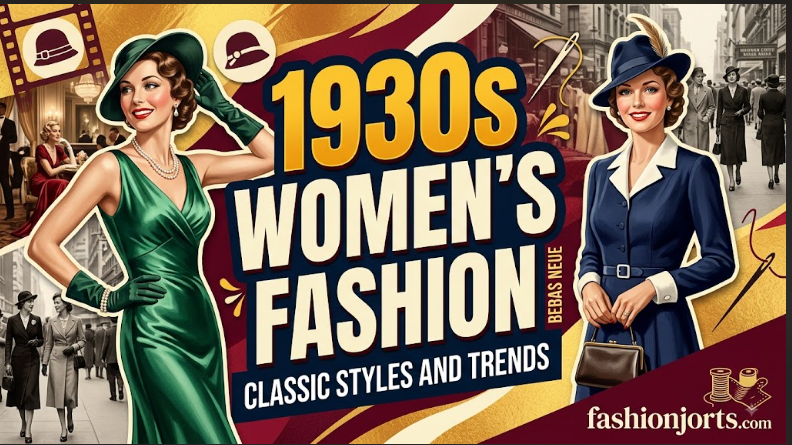
The 1930s was a decade of contrast in women’s fashion. It was a period marked by economic hardship, social change, and a growing fascination with Hollywood glamour. While many women needed practical and affordable clothing during the Great Depression, fashion designers and movie studios continued creating elegant styles that shaped the decade’s identity. Women’s clothing moved away from the relaxed silhouettes of the 1920s and embraced a more refined appearance. Dresses became longer, waistlines returned to their natural position, and designers focused on creating graceful shapes that followed the female figure. The result was a fashion era remembered for sophistication, creativity, and timeless elegance.
The Return of the Feminine Silhouette
At the beginning of the 1930s, women’s fashion experienced a major transformation. The straight, youthful shapes popular during the flapper era were replaced by designs that highlighted the waist and created a longer, slimmer appearance. Dresses featured fitted bodices, flowing skirts, and carefully placed details that enhanced the natural shape of the body. Instead of the loose styles of the previous decade, women’s clothing became more structured while still maintaining comfort and movement. The ideal silhouette of the 1930s was tall, elegant, and graceful. Designers used fabric, tailoring, and draping techniques to create clothing that moved beautifully when women walked.
The Popularity of Bias-Cut Dresses
One of the most important developments in 1930s fashion was the widespread popularity of the bias-cut dress. This design technique involved cutting fabric diagonally, allowing materials to stretch and fall naturally around the body. Designer Madeleine Vionnet became famous for mastering this method. Her approach changed the way designers viewed fabric because clothing could now follow the body’s movements without relying on heavy structure or complicated construction. Bias-cut gowns were especially popular for evening occasions. Made from luxurious materials such as silk and satin, these dresses often featured:
- Soft draping
- Long flowing skirts
- Open backs
- Elegant necklines
- Simple but sophisticated designs
These gowns became a symbol of 1930s glamour and continue to influence modern eveningwear.
How Hollywood Changed Women’s Fashion
Hollywood had a powerful influence on what women wore during the 1930s. As cinema became more popular, movie stars became fashion inspirations for millions of women. Actresses such as Greta Garbo, Jean Harlow, and Marlene Dietrich introduced audiences to sophisticated clothing, dramatic hairstyles, and glamorous evening looks. Film costumes were designed to create memorable images, and many women tried to recreate those styles in their own wardrobes. Hollywood promoted a vision of elegance that included satin gowns, tailored suits, fur accessories, and carefully styled hair. Even women who could not afford luxury clothing often adopted smaller details from movie-inspired fashion.
Everyday Clothing During the Great Depression
Although the 1930s is often remembered for glamorous dresses, everyday fashion was much more practical. The economic difficulties of the Great Depression affected how women purchased and made clothing. Many women chose affordable fabrics and versatile designs that could be worn in different situations. Homemade clothing and careful alterations were common because families needed to make garments last longer. Popular daytime clothing included shirtwaist dresses, simple skirts, blouses, and cotton dresses. Small details such as collars, buttons, belts, and decorative stitching helped create fashionable looks without expensive materials. Rayon became a popular alternative to silk because it provided a similar appearance at a lower cost. This allowed more women to enjoy fashionable clothing despite financial limitations.
Evening Fashion and Formal Dresses
Formal fashion in the 1930s created some of the most memorable styles of the decade. Evening dresses focused on elegance rather than excessive decoration. Long gowns became the standard choice for formal events. Designers used flowing fabrics and dramatic shapes to create a sophisticated appearance.
Common features included:
- Floor-length skirts
- Draped fabric
- Low backs
- Halter necklines
- Satin and velvet materials
The back of the dress became an important design feature. Many gowns appeared modest from the front but included dramatic open-back designs that created visual interest.
The Rise of Women’s Tailored Suits
Women’s suits became increasingly popular during the 1930s, especially among working women and those seeking a more confident appearance. These outfits borrowed ideas from traditional menswear but adapted them for women. Jackets usually had structured shoulders, fitted waists, and matching skirts. Tailored suits represented independence and modern femininity. They were suitable for professional environments, travel, social gatherings, and public appearances. Designers proved that women’s clothing could be both practical and stylish without relying only on dresses.
Women and the Growing Acceptance of Trousers
The 1930s was an important decade for women’s relationship with trousers. Although pants were not yet common everyday clothing for most women, they became more accepted for leisure activities. Wide-leg trousers, beach pajamas, and casual pants became fashionable choices for holidays, gardening, sports, and relaxed settings. Famous women such as Marlene Dietrich helped challenge traditional ideas about women’s clothing by confidently wearing tailored trousers and menswear-inspired outfits. This gradual acceptance helped prepare the way for trousers becoming a normal part of women’s wardrobes in later decades.
Fabrics, Colors, and Patterns of the 1930s
Fashion in the 1930s used a wide range of materials depending on the occasion and budget. Luxury clothing often featured silk, satin, velvet, and chiffon, while everyday garments commonly used cotton, wool, and rayon.
Popular colors included:
- Navy blue
- Burgundy
- Emerald green
- Cream
- Brown
- Soft pastel shades
Patterns were also important. Floral prints, stripes, checks, and geometric designs appeared on many day dresses and blouses. The decade favored elegant colors and balanced designs rather than the bright, experimental combinations seen in some earlier periods.
Hairstyles and Beauty Trends
Beauty standards in the 1930s focused on polished and feminine appearances. Hairstyles became softer compared with the sharp bob cuts of the 1920s.
Women commonly wore:
- Finger waves
- Soft curls
- Short waved hairstyles
- Side-parted looks
Makeup emphasized defined eyebrows, dark eyelashes, and carefully shaped lips. Red lipstick became one of the most recognizable beauty trends of the decade. Accessories also played an important part in completing an outfit. Gloves, hats, handbags, pearls, scarves, and decorative shoes helped create a finished appearance.
Designers Who Defined the Decade
Several designers shaped the direction of 1930s fashion. Madeleine Vionnet influenced fashion through her innovative approach to fabric and movement. Her bias-cut designs remain some of the most admired examples of 20th-century clothing. Elsa Schiaparelli introduced a more artistic approach to fashion. Her designs often included unusual shapes, bold ideas, and creative details that challenged traditional expectations. Coco Chanel continued promoting comfortable yet elegant clothing. Her designs emphasized simplicity, practicality, and effortless style.
Why 1930s Fashion Remains Popular Today
The appeal of 1930s fashion comes from its ability to combine beauty with practicality. The decade produced clothing that looked elegant without depending on excessive decoration. Modern designers continue to borrow elements from this period, especially flowing gowns, tailored suits, vintage-inspired dresses, and Hollywood-style glamour. The decade also shows how fashion responds to society. Economic conditions, changing lifestyles, and popular culture all influenced what women wore.
Conclusion
1930s women’s fashion remains one of the most admired periods in clothing history because it combined elegance, creativity, and practicality. The decade introduced designs that celebrated movement, confidence, and feminine style. From flowing bias-cut gowns to everyday dresses and tailored suits, the fashion of the 1930s reflected a changing world. Its influence continues today because the era proved that thoughtful design can remain timeless long after trends disappear.