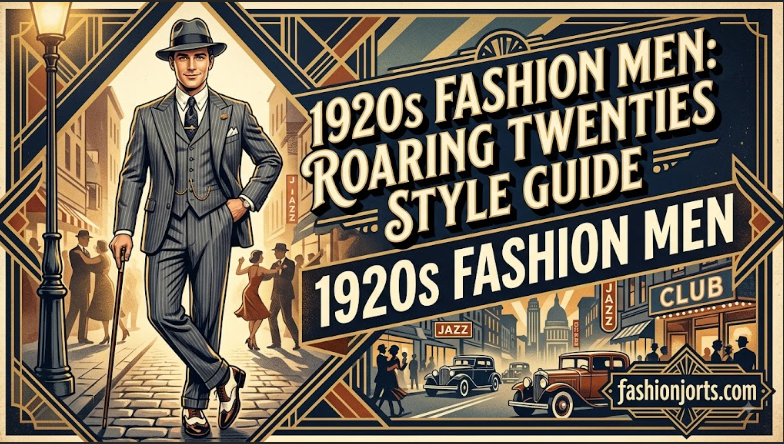
The 1920s changed the way men dressed. After the strict styles of the early 20th century, fashion moved toward a more relaxed and expressive look that reflected a new era of confidence, entertainment, and social change. Men still valued sharp tailoring, but they began choosing clothing that offered more comfort and freedom. Known as the Roaring Twenties, the decade introduced some of the most recognizable elements of classic menswear. Structured suits, wide-leg trousers, stylish hats, polished shoes, and carefully chosen accessories became symbols of a well-dressed man. While films often focus on the gangster image of the period, everyday men’s clothing was much broader and included professional, casual, and sports-inspired styles.
How Men’s Style Changed in the 1920s
The beginning of the 1920s still reflected older traditions. Many men continued wearing formal suits with high waistlines, stiff collars, and carefully tailored silhouettes. Dressing well was considered an important part of daily life, especially for businessmen and professionals. As the decade continued, fashion became less restrictive. Younger men influenced trends through jazz culture, university life, sports, and entertainment. Clothing started to feel more practical, with softer fabrics, wider trousers, and more relaxed cuts becoming popular. The change was not only about appearance. Men’s fashion reflected a changing lifestyle where leisure activities, travel, and social gatherings became more important.
The Importance of the Three-Piece Suit
The three-piece suit was one of the defining looks of 1920s men’s fashion. It usually included a jacket, trousers, and a matching waistcoat. This style provided a polished appearance and was suitable for business meetings, dinners, weddings, and formal events.
Suits during this period typically featured:
- High-waisted trousers
- Defined shoulders
- Longer jackets compared with modern styles
- Wide lapels in later years
- Matching or contrasting waistcoats
Wool was the most common fabric because it was durable and suitable for different seasons. Tweed and heavier materials were also popular, especially for country clothing and outdoor activities. A waistcoat was more than decoration. It allowed men to maintain a formal appearance even after removing their jackets, which was common during social gatherings.
Oxford Bag Trousers and the Move Toward Comfort
One of the most recognizable trends of the late 1920s was the rise of Oxford bag trousers. These trousers became popular among students at Oxford University before spreading to fashionable circles. Unlike the narrow trousers worn earlier, Oxford bags had a much wider leg and created a more relaxed silhouette. They were often paired with fitted jackets to maintain balance between comfort and elegance. The popularity of wider trousers showed how men were beginning to prioritize movement and practicality without abandoning style.
Shirts, Ties, and Collar Styles
Shirts played an important role in creating a complete 1920s outfit. White shirts remained a classic choice, but striped patterns and softer fabrics became increasingly popular. Earlier generations often preferred stiff detachable collars, but many men in the 1920s started choosing attached collars that were easier to wear. This reflected the overall movement toward comfort. Neckties were usually made from silk and featured patterns such as stripes, geometric designs, and small prints. A carefully selected tie could add personality to an otherwise traditional suit.
Hats That Defined 1920s Men’s Fashion
A hat was an essential part of a man’s outfit during much of the 1920s. Men commonly wore hats when leaving home, and the style often depended on their occupation, social position, and the occasion.
Fedora
The fedora became one of the most famous hats associated with the decade. It worked well with both formal suits and everyday clothing, making it a versatile choice.
Bowler Hat
The bowler, also known as a derby hat, remained popular among professionals and businessmen. Its rounded shape gave it a traditional and respectable appearance.
Flat Caps and Newsboy Caps
Flat caps and newsboy caps were widely worn for casual activities and became especially associated with working-class style.
Homburg Hat
The Homburg was a more formal option often worn by men looking for a sophisticated appearance.
Shoes and Accessories of the 1920s Gentleman
Accessories helped complete the carefully planned appearance of a fashionable man. Shoes were usually made from leather and were expected to be clean and polished.
Popular footwear included:
- Oxford shoes
- Two-tone spectator shoes
- Leather boots
Men also used accessories such as pocket watches, cufflinks, suspenders, tie clips, and pocket squares. These small details showed attention to personal presentation. The 1920s gentleman’s style was not only about expensive clothing. It was about looking neat, confident, and well-prepared.
Casual Fashion and Sports Influence
The decade also saw the growth of casual menswear. Sports and outdoor activities became more popular, creating demand for comfortable clothing that could be worn outside formal settings.
Men began wearing:
- Sweaters
- Cardigans
- Knitted vests
- Sports jackets
- Casual trousers
Golf, tennis, and other leisure activities influenced clothing choices. This period helped establish the idea that men could dress stylishly without always wearing a complete formal suit.
The Truth Behind 1920s Gangster Fashion
The gangster image is one of the most famous representations of 1920s men’s style. Movies often show criminals wearing dark suits, wide-brim hats, and expensive accessories. While some wealthy criminals did wear luxurious clothing, this was not the everyday style of most men. Office workers, shop owners, students, and professionals usually wore more practical suits suitable for their daily lives. The gangster look represents one part of the decade, but it does not define all 1920s fashion.
How to Create a 1920s-Inspired Outfit Today
A modern version of 1920s style works best when it focuses on the main elements rather than copying a costume. Start with a well-tailored suit featuring classic lines. Add a waistcoat, leather shoes, and a traditional hat for a stronger vintage appearance. Accessories such as a pocket square or vintage-style watch can add character without making the outfit feel unrealistic. The goal is to capture the elegance of the era while keeping the clothing suitable for modern life.
Why 1920s Men’s Fashion Remains Popular
The influence of 1920s menswear continues because the decade introduced a balance between sophistication and comfort. Many modern suit designs still borrow ideas from this period, including relaxed tailoring and classic accessories. The era also represents a moment when men began using clothing to express personality rather than simply follow strict traditions. Whether used for weddings, themed events, photography, or everyday inspiration, 1920s style remains popular because it combines confidence, craftsmanship, and timeless design.
Conclusion
1920s men’s fashion represented a turning point in clothing history. The decade kept the elegance of traditional tailoring while introducing more relaxed shapes, comfortable fabrics, and personal expression. From three-piece suits and Oxford trousers to fedoras and polished accessories, the style of the Roaring Twenties created a lasting influence on menswear. For anyone interested in recreating this look, the most important elements are quality tailoring, balanced proportions, and attention to detail. The true appeal of 1920s fashion is not just how it looked, but how it represented a new sense of confidence and modern style.