The 1950s was a turning point in men’s fashion. It was a decade where traditional dressing met a new sense of freedom, creating styles that still influence clothing today. Men moved between two very different worlds: the polished appearance of tailored suits and the relaxed confidence of denim, leather jackets, and casual shirts. This period was not only about what men wore but also about what clothing represented. A suit reflected professionalism and responsibility, while a leather jacket and jeans represented independence and youthful rebellion. The decade introduced some of the most recognizable menswear pieces, many of which remain wardrobe staples today.
How Men’s Fashion Changed in the 1950s
At the beginning of the decade, men’s clothing was still strongly influenced by the formal standards of the post-war years. Looking well-dressed was considered a sign of respect and maturity. Many men wore suits regularly, even outside the workplace, with carefully chosen shirts, ties, and polished shoes completing their appearance. However, the younger generation began to challenge these traditional ideas. The rise of television, popular music, and Hollywood created new style influences. Teenagers and young adults wanted clothing that reflected their personality rather than simply following the expectations of previous generations. By the late 1950s, men’s fashion had become more diverse. Some men preferred the classic gentleman’s look, while others embraced styles connected to rock and roll and youth culture.
The Timeless Appeal of the 1950s Suit
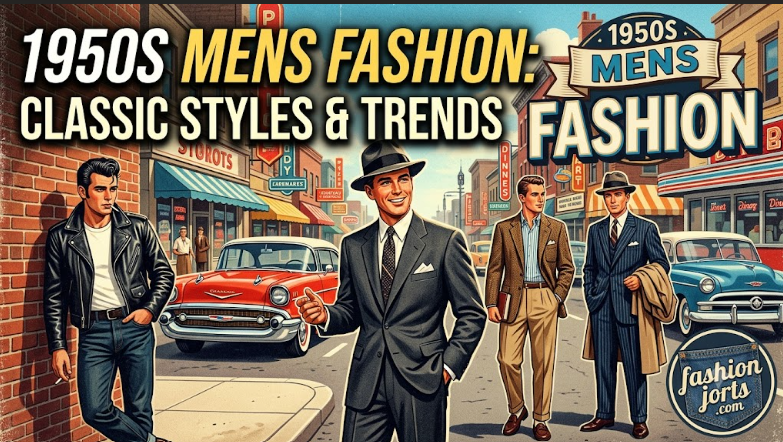
The suit remained the foundation of a man’s wardrobe throughout the decade. Whether worn for business, weddings, dinners, or social events, a well-fitted suit represented confidence and sophistication. Most 1950s suits had a structured but comfortable shape. Jackets usually featured broad shoulders, clean lines, and a slightly relaxed fit compared with later slim styles. Trousers were often worn higher on the waist, creating a balanced silhouette. Gray flannel became one of the most recognizable suit styles of the period. Navy, brown, and darker shades were also popular because they worked well for professional settings and formal occasions. Accessories were an important part of the complete look. Men often paired suits with leather shoes, simple ties, pocket squares, and hats. The attention to small details helped create the polished image associated with the era.
The Rise of the Ivy League Look
The Ivy League style introduced a more relaxed approach to men’s clothing. Popular among college students and young professionals, this style focused on looking refined without appearing overly formal. The foundation of this look was simple, practical clothing. Button-down shirts, chinos, sweaters, blazers, and loafers became popular choices because they could easily move between casual and formal settings. Unlike flashy fashion trends, Ivy League style depended on quality and balance. The clothing was clean, comfortable, and easy to combine, which is one reason the style continues to influence modern menswear.
The Greaser Style and the Influence of Rock and Roll
The greaser look became one of the most recognizable fashion movements of the 1950s. It represented a different side of masculinity compared with the traditional businessman. Instead of suits and ties, the style focused on confidence, attitude, and individuality. A typical greaser outfit included a leather jacket, plain T-shirt, denim jeans, and boots. The combination was simple but powerful. It showed that everyday clothing could become a symbol of personality. Movies and musicians played a major role in spreading this style. Actors such as James Dean and Marlon Brando became closely associated with the rebellious image of young men who valued freedom and self-expression.
Denim Became a Symbol of Youth Culture
Before the 1950s, denim was mainly associated with workers, farmers, and practical clothing. During this decade, jeans gained a completely different meaning among younger men. Teenagers began wearing denim as a way to separate themselves from older generations. Paired with a T-shirt or jacket, jeans became a symbol of independence and casual confidence. The popularity of denim during this era helped establish it as one of the most important pieces in modern fashion. Today, jeans remain a basic part of men’s wardrobes because of the influence that began during this period.
Casual Shirts and Everyday Clothing Trends
The 1950s also changed how men approached casual dressing. Clothing that was once reserved for specific activities became acceptable for everyday wear. Polo shirts, bowling shirts, patterned button-down shirts, and lightweight jackets became popular choices. These pieces offered men more options outside of traditional suits. The simple white T-shirt also became a major fashion item during this time. Once considered an undergarment, it became a visible part of an outfit and gained popularity through film and music culture.
Hairstyles That Completed the 1950s Look
Men’s hairstyles during the decade were carefully styled and played an important role in personal appearance. Grooming products such as pomade helped create controlled shapes and a polished finish. The pompadour became one of the most famous hairstyles of the era, featuring volume at the front and hair swept backward. It became strongly connected with rock and roll performers. Other popular styles included the side part, which suited professional clothing, and the crew cut, which offered a shorter and practical option. The ducktail hairstyle was also popular among younger men who followed the greaser style.
Shoes and Accessories That Defined the Era
Accessories helped complete the carefully planned appearance of 1950s men’s fashion. Shoes, watches, belts, and hats were not just functional items; they were part of the overall style. Formal outfits were often paired with leather Oxford shoes, while casual looks worked well with loafers or boots. Watches became common accessories, adding a touch of maturity and professionalism. Hats were also still an important part of men’s clothing during the early part of the decade. Fedoras and similar styles were often worn with suits before becoming less common toward the end of the era.
How to Wear 1950s Fashion Today
Modern fashion does not require copying an entire vintage outfit. The best way to use 1950s inspiration is by choosing individual pieces and combining them with contemporary clothing. A leather jacket with dark jeans creates a simple vintage-inspired look. An Oxford shirt with chinos and loafers offers a cleaner Ivy League appearance. For formal events, a well-tailored suit with classic accessories captures the elegance of the decade. The key is fit. Clothing from the 1950s worked because it was carefully chosen and properly fitted, not because it followed a strict formula.
Why 1950s Men’s Fashion Still Matters
The influence of 1950s men’s fashion can still be seen everywhere today. Many modern styles borrow from the decade because the clothing was practical, recognizable, and easy to wear. The era created a balance between discipline and individuality. Men could look professional in a suit or express their personality through casual clothing, and both approaches became equally meaningful. The lasting popularity of 1950s fashion comes from its focus on confidence, simplicity, and timeless design. Whether someone prefers classic tailoring or vintage-inspired casual wear, the decade continues to provide ideas that feel relevant today.
Conclusion
The 1950s created some of the most recognizable styles in men’s fashion history. It was a decade where traditional elegance existed alongside new ideas about youth, music, and personal expression. From sharp suits to casual denim, each style represented a different way of presenting yourself. The clothing was simple, practical, and focused on confidence rather than unnecessary details. Today, the best lesson from 1950s fashion is that strong style does not need to be complicated. A few well-made pieces, the right fit, and personal confidence can create a look that lasts for decades.