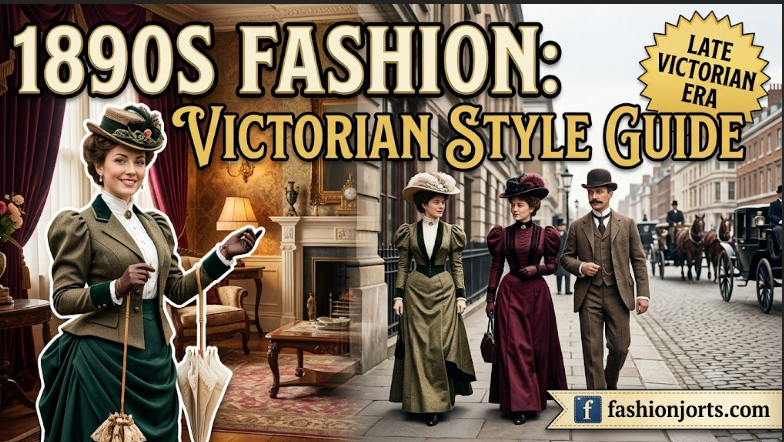
The 1890s were a defining decade in fashion history, known for elegant silhouettes, dramatic details, and the gradual shift from traditional Victorian clothing toward more modern styles. Fashion during this period reflected a society that was changing rapidly. Women were entering new areas of education and work, while clothing began adapting to more active lifestyles. From oversized sleeves and tailored suits to romantic gowns and carefully styled accessories, 1890s fashion created a look that remains instantly recognizable. The decade is especially remembered for the Gibson Girl image, which represented a fashionable woman who appeared confident, graceful, and independent.
The Signature Shape of 1890s Women’s Fashion
The most recognizable feature of 1890s fashion was the hourglass silhouette. Women’s clothing focused on creating a contrast between a narrow waist, fuller hips, and a strong shoulder line. Corsets were commonly worn to shape the body according to the fashionable ideals of the time. Skirts during this decade became smoother compared with the large bustle styles of the previous years. Instead of heavy fabric at the back, dresses followed the natural shape of the body before widening near the hem. This created a graceful and balanced appearance. The overall effect was a structured but elegant look. Clothing was carefully fitted, and every part of an outfit, from the neckline to the accessories, was designed to create harmony.
The Popularity of Large Sleeves
One of the most memorable trends of the 1890s was the dramatic puffed sleeve. Known as the leg-of-mutton sleeve, this style featured a large, rounded shape around the upper arm that narrowed toward the wrist. These sleeves became especially fashionable during the middle years of the decade. They changed the appearance of dresses by making the shoulders look wider and creating a stronger contrast with the small waist. Although the style was bold, it did not last forever. By the end of the decade, sleeves became smaller and more natural, preparing the way for the softer fashions of the early 1900s.
The Influence of the Gibson Girl
The Gibson Girl became one of the strongest fashion symbols of the 1890s. Created by illustrator Charles Dana Gibson, this image represented an idealized woman who was stylish, intelligent, and socially active. The Gibson Girl appearance included a tall hairstyle, a slim waist, fitted blouses, and long skirts. She was different from earlier Victorian ideals because she appeared more independent and comfortable in public spaces. However, this image represented an artistic ideal rather than the daily reality of every woman. Many women wore simpler clothing based on their work, financial situation, and lifestyle.
Dresses, Blouses, and Everyday Clothing
Women’s dresses in the 1890s varied greatly depending on the occasion. Formal gowns were made with luxurious fabrics and decorative details, while everyday dresses were more practical and easier to maintain. Day dresses often included high collars, fitted bodices, long sleeves, and full skirts. Popular materials included cotton, wool, silk, and velvet. Decorative elements such as lace, embroidery, ribbons, and buttons added personality to clothing. The shirtwaist blouse also became an important part of women’s wardrobes. Inspired by men’s shirts, it offered a practical option for women who wanted a fashionable but comfortable outfit. It was often paired with a long skirt and became popular among students, office workers, and women involved in outdoor activities.
Women’s Suits and Changing Lifestyles
The 1890s saw a growing interest in women’s tailored suits. These outfits usually featured a fitted jacket and matching skirt, giving women a more structured alternative to traditional dresses. Walking suits became especially popular for city life. They were suitable for shopping, travel, social visits, and everyday activities. Their popularity reflected changing expectations as women spent more time outside the home. Sports also influenced clothing choices. Activities such as cycling and tennis encouraged designers to create garments that allowed greater movement while still maintaining the modest appearance expected during the Victorian era.
Accessories That Completed the Look
Accessories were an important part of 1890s fashion. A fashionable outfit was rarely complete without carefully chosen additions such as hats, gloves, jewelry, handbags, and parasols. Large hats decorated with flowers, ribbons, and feathers were especially popular for outdoor occasions. Gloves were often worn in public settings, while jewelry added elegance to formal clothing. Hair styling was equally important. Women often arranged their hair high on the head, creating volume and shape. The popular hairstyles of the period helped complete the tall, graceful appearance associated with late Victorian fashion.
Men’s Fashion in the 1890s
Men’s fashion during the decade focused on formality and careful tailoring. Suits were the foundation of a gentleman’s wardrobe, often worn with waistcoats, dress shirts, ties, and formal hats. Business clothing usually featured darker colors and simple designs, while evening wear followed strict rules of appearance. A well-fitted suit represented professionalism and social respectability. Although men’s fashion changed less dramatically than women’s clothing, the 1890s helped establish many classic suit styles that continued into the following century.
Fashion Differences Between Social Classes
Not every person experienced 1890s fashion in the same way. Wealthier women could afford custom-made dresses, expensive fabrics, and elaborate accessories. Their clothing often showed social status through detail and quality. Working-class women usually wore simpler garments designed for durability and daily responsibilities. Their clothing followed popular trends but was adapted to practical needs and limited budgets. This difference shows that fashion was not only about style. It was also connected to occupation, income, and social position.
The Lasting Influence of 1890s Fashion
The appeal of 1890s fashion continues today because of its strong visual identity. Modern designers often revisit Victorian-inspired elements such as puff sleeves, fitted jackets, romantic dresses, and vintage silhouettes. Costume designers also frequently use 1890s clothing in films and television productions set during the late Victorian period. The decade provides a recognizable style that immediately communicates elegance and historical character. More than just a collection of beautiful garments, 1890s fashion represents a period of transition. It preserved Victorian traditions while showing the early signs of a more modern approach to clothing and women’s lifestyles.
Conclusion
The fashion of the 1890s captured a unique moment between tradition and change. It maintained the elegance of the Victorian era while introducing clothing that reflected new lifestyles and social expectations. From Gibson Girl hairstyles to dramatic sleeves and tailored suits, the decade created styles that remain memorable more than a century later. Its influence can still be seen in modern fashion collections and historical costume design. For anyone interested in vintage clothing, the 1890s offer a fascinating example of how fashion can reveal the values, ambitions, and changing identity of a society. The decade’s styles remain popular because they combine craftsmanship, personality, and timeless visual appeal.