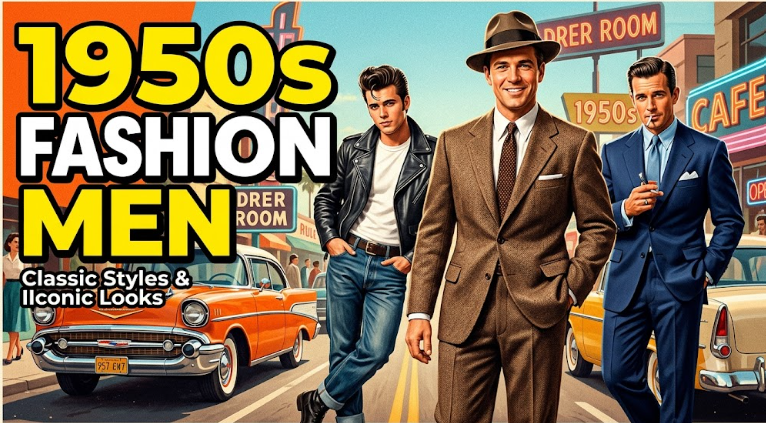
The 1950s was a turning point in men’s fashion, creating a balance between traditional elegance and youthful rebellion. It was a decade where a man could look completely different depending on his lifestyle. A businessman might wear a perfectly tailored suit and polished shoes, while a teenager could express himself through denim jeans, a leather jacket, and a carefully styled haircut. The decade followed years of wartime restrictions, and men’s clothing reflected a renewed sense of confidence and optimism. Fashion became less about following one strict dress code and more about personal identity. From Hollywood stars to musicians and college students, different groups shaped the way men dressed and created styles that remain recognizable today.
The Changing Face of Men’s Fashion in the 1950s
At the beginning of the decade, men’s fashion was still strongly connected to formal dressing. Wearing a suit was common for office work, travel, social events, and even many everyday activities. A well-dressed man was expected to appear neat, respectable, and carefully groomed. As the 1950s progressed, younger generations began challenging traditional ideas about clothing. The rise of television, popular music, and youth culture introduced new influences. Men started adopting more relaxed clothing outside professional settings, creating a clear difference between workwear and leisurewear. The decade became known for two contrasting ideas: the polished gentleman and the independent rebel. Both became important parts of fashion history.
The Classic 1950s Suit: A Symbol of Elegance
The suit remained the foundation of men’s wardrobes during the 1950s. Unlike the extremely broad styles of earlier decades, suits became slightly more comfortable while maintaining a sophisticated appearance. Typical 1950s suits featured structured jackets, wider lapels, higher trousers, and fabrics such as wool and flannel. Colors were usually practical and refined, including charcoal gray, navy, brown, and black. The gray flannel suit became especially associated with professional success and suburban life. It represented the image of the hardworking man building a stable career and family life after the war. Formal dressing was not only about the suit itself. Men paid attention to details such as matching ties, leather shoes, pocket squares, and hats. Accessories helped create a complete and polished appearance.
Casual Clothing Becomes Part of Everyday Style
One of the biggest changes in the 1950s was the acceptance of casual clothing. Men began wearing relaxed outfits for weekends, vacations, and social activities instead of reserving comfortable clothing only for work around the house. Button-down shirts, knit sweaters, chinos, and casual jackets became popular choices. Polo shirts offered a sporty but refined appearance, while patterned shirts reflected the decade’s growing interest in leisure and entertainment. This period helped establish the idea that men needed different styles for different occasions. A wardrobe could include formal business clothing, casual weekend outfits, and fashionable evening looks.
The Greaser Style and Youth Rebellion
The greaser look became one of the most memorable styles of the decade. It represented independence, confidence, and a rejection of traditional expectations.
The style was built around simple pieces:
- Dark denim jeans
- White T-shirts
- Leather jackets
- Boots
- Slicked-back hair
Movies and music played a major part in spreading this image. Young men looked toward Hollywood figures such as James Dean and Marlon Brando, whose appearances made casual clothing appear bold and fashionable. The popularity of this style changed how people viewed everyday clothing. A simple T-shirt and jeans were no longer just practical workwear; they became symbols of attitude and personality.
Ivy League Fashion: The Smart Casual Movement
While the greaser style represented rebellion, Ivy League fashion represented sophistication and education. Inspired by American university campuses, this style became popular among young men who wanted to look relaxed but refined. The typical Ivy League wardrobe included Oxford shirts, sweaters, chinos, blazers, loafers, and clean-cut hairstyles. This style avoided the formality of a full suit while still appearing carefully put together. Its influence can still be seen today in modern preppy fashion, where classic pieces are combined in a simple and comfortable way.
Hairstyles That Completed the 1950s Look
Hair played an important role in men’s appearance during the decade. A stylish outfit was often completed with carefully maintained grooming. The pompadour became one of the most recognizable hairstyles of the era. It featured volume at the front and hair swept backward, creating a dramatic appearance. The ducktail hairstyle, also known as the “DA,” involved combing the sides of the hair toward the back. It became closely associated with rebellious youth culture. For men who preferred a cleaner appearance, shorter styles such as the crew cut and Ivy League haircut offered a more traditional look. Hair products like pomade helped men maintain these structured styles throughout the day.
Shoes and Accessories That Defined the Era
Accessories gave men more ways to express their personal style. Even simple outfits were usually finished with carefully selected details. Popular footwear included leather dress shoes, loafers, boots, and saddle shoes. Each style worked with different parts of the 1950s wardrobe, from business suits to casual weekend clothing. Common accessories included watches, belts, narrow ties, sunglasses, and hats. Fedora hats remained popular among many adult men, although younger generations gradually moved toward more relaxed styles.
Hollywood Icons Who Influenced Men’s Fashion
Hollywood had a powerful effect on men’s fashion during the 1950s. Actors became style references, and audiences often copied their clothing choices and hairstyles. James Dean became associated with youthful rebellion through his simple combination of jeans, T-shirts, and jackets. Marlon Brando helped popularize the motorcycle-inspired leather jacket look. Elvis Presley introduced a more energetic approach with bold outfits, unique hairstyles, and performance clothing. Meanwhile, actors known for classic elegance continued influencing formal fashion. Their tailored suits and refined appearances represented the traditional side of 1950s menswear.
How to Wear 1950s-Inspired Fashion Today
Modern men can incorporate 1950s influences without creating a vintage costume. The goal is to use individual elements that still fit today’s lifestyle.A classic-inspired outfit might include a well-fitted jacket, button-down shirt, trousers, and leather shoes. Someone interested in the rebellious side of the decade could combine a leather jacket, dark jeans, boots, and a simple T-shirt. The most important elements are quality, fit, and confidence. The 1950s style worked because clothing was intentional and reflected personality.
Why 1950s Men’s Fashion Still Matters
The popularity of 1950s men’s fashion comes from its timeless appeal. Many pieces from the decade remain essential parts of modern wardrobes, including denim jeans, leather jackets, loafers, tailored jackets, and classic hairstyles. The decade showed that men’s clothing could represent more than social expectations. Fashion became a way to communicate individuality, lifestyle, and personal taste. Whether someone prefers the elegance of a traditional suit or the relaxed confidence of denim and leather, the influence of 1950s fashion continues to shape how men dress today.
Conclusion
1950s men’s fashion remains memorable because it captured a period of change. Traditional suits existed alongside new casual styles, giving men more choices in how they presented themselves. The decade introduced clothing combinations that still feel relevant today. A simple jacket, a well-fitted pair of jeans, or a classic hairstyle can carry the confidence associated with 1950s style. Rather than copying the past completely, modern fashion lovers can take inspiration from the decade’s strongest ideas: quality clothing, thoughtful styling, and a look that reflects personal character.