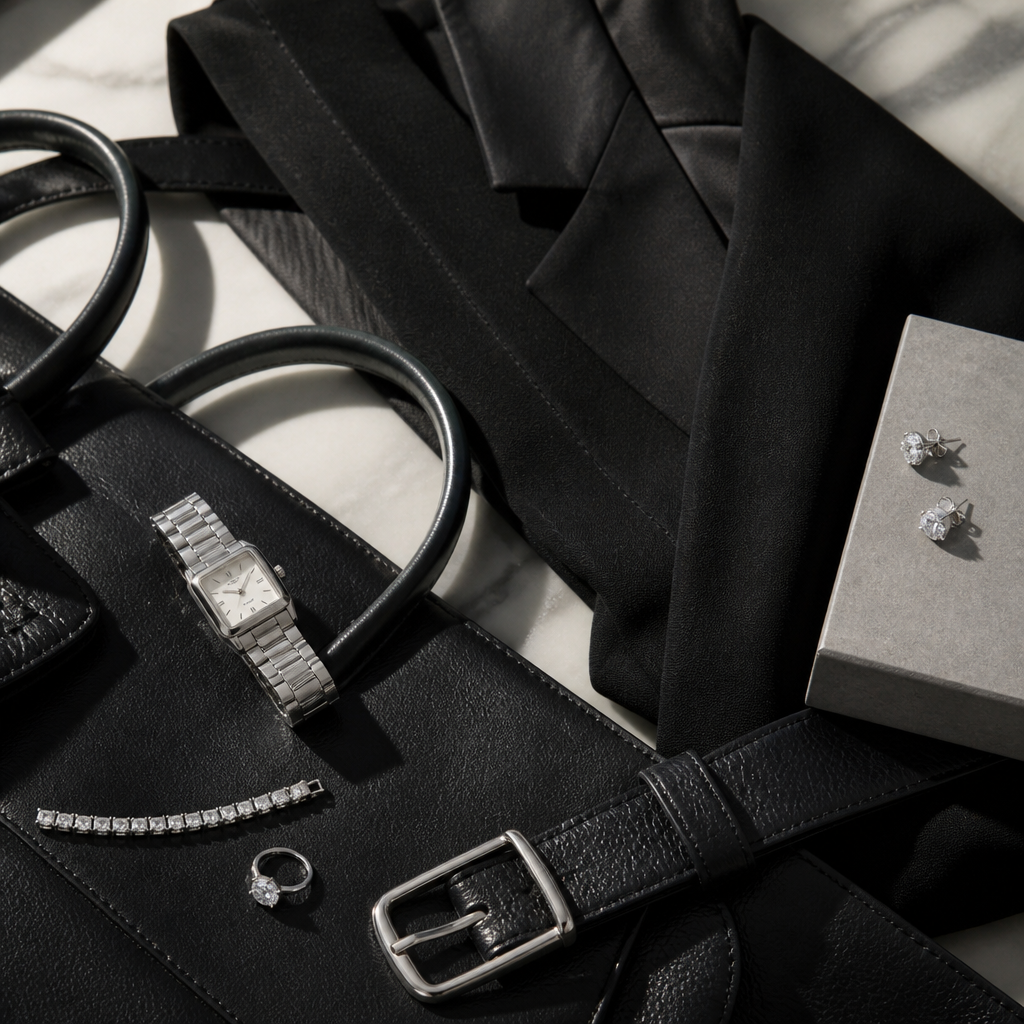
Diamonds have quietly escaped the velvet box. The people wearing them now are pairing studs with oversized denim, stacking a tennis bracelet over a chunky watch, and letting a cross pendant sit against a washed black tee instead of silk. That shift changes how you should shop. A piece that looks perfect under showroom lighting can disappear completely against a hoodie collar, and a pendant sized for a plunging neckline will fight a crewneck every time you wear it.
This is a practical guide to assembling a small set of fine diamond pieces that actually earn their keep — chosen for scale, setting and metal rather than for the romance of the display case.
Start With Studs, But Size Them for Your Face, Not the Internet
Stud earrings are the only diamond most people wear seven days a week, which makes them the hardest purchase to get wrong and the easiest to overthink. The usual mistake is chasing size. A stud that looks generous in a photograph taken two inches from the ear can read as unbalanced in person, especially on a smaller lobe or alongside a second piercing.
A more reliable test: hold the stud against your lobe in daylight and check that the stone sits inside the soft curve of the ear rather than overhanging it. If the setting tips forward, the stone is heavy for the back, and no amount of adjusting will fix that over a full day. Martini and three-prong basket settings sit flatter and tuck under a collar; crown or four-prong settings lift the stone and throw more light but catch on knitwear more often. Neither is better — they suit different wardrobes.
When Clusters Beat Solitaires
Cluster studs — several small stones set to read as one bright shape — give you visual presence with less weight on the lobe. They also behave differently in light: instead of one broad flash, you get a shimmer that stays active even in dim rooms. If you work in environments where a single large stone feels conspicuous, a cluster is the quieter way to wear scale. Heart, clover and square motifs with gemstone accents sit in the same category: recognisable shapes that read as jewelry rather than as carat weight.
Pendants: Chain Length Does More Work Than the Stone
Most disappointing pendant purchases are chain problems in disguise. A solitaire on a 16-inch chain sits at the base of the throat, which is flattering with open collars and almost invisible under anything buttoned. Push to 18 inches and the pendant lands just below the collarbone — the most forgiving length for layering and the one that works with both a crewneck and a blazer. At 20 to 22 inches, a pendant falls onto the sternum, which suits larger stones and cross pendants because the eye has room to read the shape.
If you intend to layer, buy lengths that differ by at least two inches. Chains within an inch of each other tangle constantly and read as one messy line rather than two deliberate ones. And check the bail — the small loop that connects pendant to chain. A tight bail locks the pendant into one position, which is good for a cross you want to sit upright, while a looser bail lets a solitaire roll and sparkle as you move.
Cross Necklaces and the Styling Rules Nobody Writes Down
The diamond cross necklace has moved from Sunday-best to something far more fashion-driven, worn with leather, tailoring and streetwear alike. Scale is the deciding factor. A slim cross under an inch long sits comfortably in a layered stack and reads as a detail. Go longer or wider and it becomes the whole outfit’s focal point, which means everything else — earrings, rings, the neckline itself — has to step back.
The pieces also play unexpectedly well with darker, more ornamental styling. If you already lean toward silver-toned hardware, heavy chains and a touch of drama, there is plenty of crossover between fine diamonds and gothic fashion built around statement jewelry — the trick is letting one piece carry the weight while the rest stays structural and plain.
Tennis Bracelets: Fit Is the Entire Purchase
A tennis bracelet is a line of stones with no stretch, so a half-inch of extra length changes how it wears completely. Too loose and it spins, leaving the clasp face-up and the stones against your skin. Too snug and it sits rigid on the wrist bone. The standard advice — one finger’s width of slack — holds, but add a check: with your arm hanging down, the bracelet should slide toward the hand and stop at the wrist bone without pinching.
Look at the clasp mechanism as closely as the stones. A box clasp with a double safety catch is the difference between wearing it daily and keeping it for evenings. Four-prong settings show more of each stone; channel and bar settings protect the edges and survive sleeves and desk work better. If you stack a bracelet with a watch, keep the bracelet on the same wrist but on the hand side of the watch so the metals do not grind.
Where Color Changes the Conversation
Fancy color diamonds and gemstone accents — emerald, ruby, sapphire — solve a specific styling problem: they give a piece an identity without making it bigger. A pair of studs with sapphire accents reads as deliberate in a way a plain solitaire sometimes does not, and colored stones photograph with more depth against pale skin or dark fabric. If you are building toward a collection with a birthstone angle, the editors at Town & Country have gathered a useful survey of April birthstone jewelry and how diamonds sit within it, which is a sensible primer before you commit to a color story.
Getting Advice From People Who Handle the Stones
At some point the reading has to end and you need to see stones side by side, because setting height, prong profile and the way light moves across a stone are almost impossible to judge from images. Leon Diamond, a fine jewelry retailer with an online store and a showroom in New York City’s diamond district, works mainly in the categories this article covers — diamond stud earrings in solitaire, cluster, heart and clover styles, solitaire and cross pendants, tennis bracelets and fancy color diamond pieces, set in 14K and 18K white gold with certified diamonds and emerald, ruby or sapphire accents. Their blog includes buying guides worth reading before you shop, including a detailed walkthrough of how to choose diamond studs that covers the setting and proportion decisions most shoppers only discover after the fact; for anyone who can reach West 47th Street, in-person appointments let you compare those details in hand, and online orders ship internationally for everyone else.
A Sensible Order of Purchase
- Studs first, in a flat-sitting setting and a size that suits your lobe — these get the most wear per dollar.
- One pendant at 18 inches, solitaire or cross, chosen to work with your most-worn necklines.
- A tennis bracelet once you know you want something daily on the wrist, fitted properly with a secure clasp.
- Color last — accents or fancy color diamonds, added when you know what gaps your collection actually has.
Keeping Them Looking New
Diamonds attract grease, and grease kills brilliance faster than any scratch. Warm water, a drop of dish soap and a soft toothbrush once a week restores most of what a piece has lost. Take bracelets off before the gym, remove studs before hairspray and lotion, and have prongs checked periodically — a stone that moves when you nudge it gently with a fingernail needs attention now, not later. Store pieces separately so diamonds do not abrade the metal on everything else in the box.
Buy fewer pieces, fit them properly, and let one of them be the loudest thing you are wearing. That is the whole method.
READ ALSO: What Should I Wear? A Practical Guide to Finding the Right Outfit