The charm of 1940s fashion often came from the small details. A neatly tied scarf, a structured purse, or a simple brooch could turn an ordinary outfit into something distinctive. Although World War II changed the way people dressed, accessories remained a useful way to express personality and maintain a polished appearance. From practical daytime pieces to elegant evening details, accessories reflected the changing lifestyles of the decade. Understanding how people wore them makes it easier to recreate authentic vintage outfits without relying on a complete period wardrobe.
How Everyday Life Influenced 1940s Fashion
The 1940s brought significant changes to clothing and personal style. Wartime shortages encouraged people to repair garments, reuse materials, and make practical choices. Accessories offered a simple way to refresh familiar outfits without purchasing new clothes. Fashion also depended on the occasion. A woman heading to work might choose a headscarf and sturdy shoes, while someone attending a formal event could wear gloves, jewelry, and a small handbag. These differences made accessories an important part of everyday dressing.
As the decade progressed, fashion gradually became more decorative. Postwar styles introduced fuller skirts, carefully defined waists, and new opportunities for coordinated accessories.
Essential Accessories of the 1940s
Vintage Hats and Berets
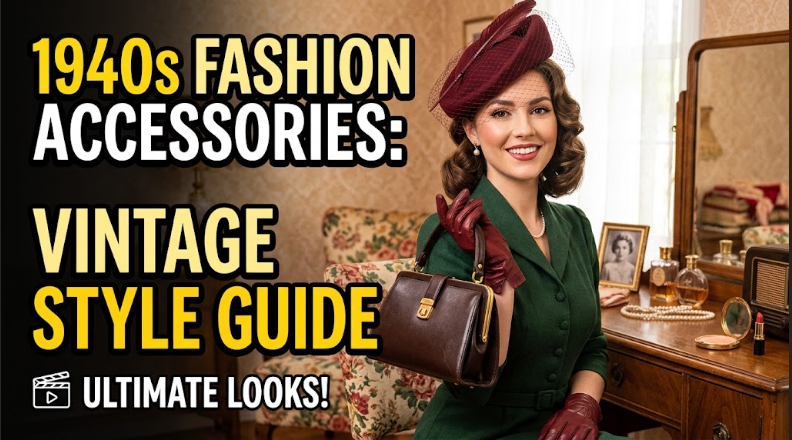
Hats gave many outfits a finished appearance. Women wore small tilted hats, berets, and other decorative headpieces with coats, dresses, and tailored suits. Their shapes and embellishments varied, allowing wearers to choose styles suited to their clothing and personal taste. For a vintage-inspired outfit, select a compact hat that complements your hairstyle and face shape. A simple beret works well with casual clothing, while a structured hat can add character to a more formal ensemble.
Gloves for a Polished Appearance
Gloves were a familiar accessory for outings and formal occasions. Short styles suited daytime clothing, while longer gloves could accompany evening dresses. Neutral shades were versatile, although colored gloves could provide contrast. You can recreate this look with simple cotton gloves or a pair in a classic dark shade. Match them to your handbag or shoes for a coordinated appearance without making the outfit feel overly formal.
Handbags with Structured Shapes
A handbag was both a practical possession and a finishing detail. Compact purses, firm frames, short handles, and clasp closures suited the tailored silhouettes popular during the decade. Women could carry everyday essentials while keeping their outfits neat and balanced. Choose a small top-handle bag for a traditional vintage look. Brown, black, and other understated shades work with many outfits, while a brighter purse can add personality to a plain dress.
Brooches and Decorative Pins
Brooches were an effective way to personalize jackets, dresses, and coats. Floral designs, metal pins, and decorative shapes could add interest to a simple neckline or lapel. Some pins also served a practical purpose by fastening scarves or securing fabric. One carefully chosen brooch can be enough to create a vintage-inspired appearance. Place it on the lapel of a fitted jacket or near the neckline of a dress, where it becomes a natural focal point.
Headscarves and Hair Accessories
Headscarves combined practicality with style. They helped keep hair in place during work and everyday activities, while their colors and patterns added detail to otherwise simple outfits. Snoods and hair nets also helped secure longer hairstyles. A printed cotton scarf is an easy way to introduce this style into a modern wardrobe. Wear it over your hair or tie it at the back of your head, keeping the rest of the outfit relatively simple.
Belts That Define the Waist
Belts complemented the shaped silhouettes of many 1940s dresses and suits. Matching fabric belts created a coordinated appearance, while separate belts helped define the waist of a dress or high-waisted trousers. For an authentic look, choose a belt that follows the shape of the garment. A medium-width belt can work well with a shirtwaist dress, while a narrower option may suit trousers or a fitted cardigan.
Stockings and Classic Footwear
Stockings were commonly associated with women’s formal and everyday dressing. Wartime shortages made silk and nylon stockings harder to obtain in some places, encouraging people to make use of existing pairs or find alternatives. Shoes also needed to balance appearance with practicality. Low heels, lace-up oxfords, and wedge styles suited a range of outfits. Today, these footwear styles can complement vintage dresses, tailored trousers, and simple blouses.
Men’s Accessories in the 1940s
Men’s accessories helped complete the decade’s traditional approach to dressing. Brimmed hats, ties, belts, and pocket squares were common elements of many outfits, especially when paired with tailored suits and button-up shirts. A fedora-inspired hat can give a modern outfit a recognizable period reference. Add a simple tie and a neatly folded pocket square, but avoid combining too many decorative details if you want a natural appearance. Everyday practicality also mattered. Accessories needed to work with the clothing and activities of the wearer, so the right combination depended on whether the outfit was intended for work, travel, or a formal gathering.
How to Wear 1940s-Inspired Accessories Today
Recreating vintage fashion does not require buying every accessory associated with the decade. Start with a well-fitting dress, a tailored jacket, or high-waisted trousers, then choose a few pieces that suit the clothing. For a daytime outfit, pair a simple dress with a structured handbag and low-heeled shoes. A headscarf can give trousers and a blouse a more relaxed vintage appearance, while gloves and a decorative brooch work well with a formal ensemble. Pay attention to the period you want to represent. Early-1940s styles often emphasized practical clothing, while late-1940s fashion increasingly embraced fuller skirts and more defined waists. Choosing accessories that suit the same period helps the entire outfit look consistent.
Conclusion
1940s accessories show how practical choices and personal style could work together. Everyday pieces such as scarves, handbags, belts, and shoes helped people create distinctive outfits even when clothing options were limited. The decade also reminds us that fashion changes with the circumstances of daily life. Wartime practicality and postwar elegance produced different approaches to dressing, each with its own recognizable details. If you want to bring this style into your wardrobe, begin with one accessory that suits clothes you already own. A carefully selected vintage-inspired piece can capture the character of the decade without making your outfit feel like a costume.